
The Auditor-General has disclosed that a total of GH¢57.2 million unearned salaries has been recovered from public sector workers who remained on government payroll despite being absent from post or failing mandatory validation checks.
The recoveries, made between 2023 and April this year, were paid into a special recoveries account maintained with commercial banks and subsequently transferred to the Consolidated Fund, official records show.
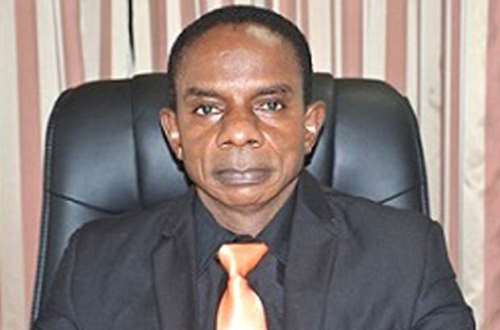
The Auditor-General, Johnson Akuamoah Asiedu, tell the Daily Graphic in an exclusive interview that the latest figures demonstrated the government’s resolve to eliminate ghost names from the payroll system once and for all.
“Auditors will comply fully with validation checks and surcharge every person who is paid unearned salaries. We are determined to completely do away with ghost names on the payroll,” the Auditor-General stated.
According to the official schedule from the Auditor-General’s Department, the period covering 2023 and 2024 saw GH¢29.5 million recovered from individuals who had either abandoned their posts or could not be validated. In 2025, recoveries totalled GH¢20.4 million following intensified audit exercises.
Then between January and April 2026, an additional GH¢7.3 million has been recovered, bringing the cumulative amount since inception to GH¢57.2 million.
All the monies were initially paid into a special recoveries account. The Auditor-General confirmed that after final reconciliations, each tranche was transferred to the Consolidated Fund in line with financial regulations.
Mr. Akuamoah Asiedu warned that managers and supervisors of public institutions who certified payrolls without verification of the presence of their staff would face the full rigours of the law.
“Supervisors who see to these payments are also going to be held accountable. If you as a supervisor certify a payroll knowing that a named person is not at post, you will be surcharged personally,” he said.
He explained that during routine payroll audits, his team cross-checked validation data, attendance records and posting letters.
Where an individual is found to have been paid without being at post or fails to undergo mandatory biometric validation, a surcharge is issued.
The affected person is then required to refund the unearned amount into the Special Recoveries Account.
If they fail to do so, the Auditor-General’s Department can issue a certificate of indebtedness, enabling the amount to be deducted from future payments due to the individual or recovered through the courts.
Mr Asiedu further noted that the Public Accounts Committee of Parliament had welcomed the recoveries, which it described as a major blow against payroll fraud.
He said heads of institutions who aided and abetted such practices should face not only surcharges, but also disciplinary action.
According to him, although such recoveries were important, soon there would be full publication of the names of all surcharged individuals and their supervisors to serve as a deterrent.
The Auditor-General assured the public that validation exercises were now being conducted quarterly, and that no public sector worker would be allowed to remain on the payroll without proof of being at post.
“Ghost names will become a thing of the past,” he declared.
As of press time, the department was still processing appeals from some surcharged persons, but the Auditor-General stressed that recoveries would continue unabated until the payroll was fully cleansed.