

The Black Star Experience Secretariat has held regional stakeholder engagements in the Western and Central Regions and announced a National Choral Contest as part of measures to broaden the scope and impact of the Black Star Experience.
Held under the theme “Enhancing National Understanding and Ownership of the Black Star Experience,” the engagements took place on September 30 in the Western Region and October 2 in the Central Region.
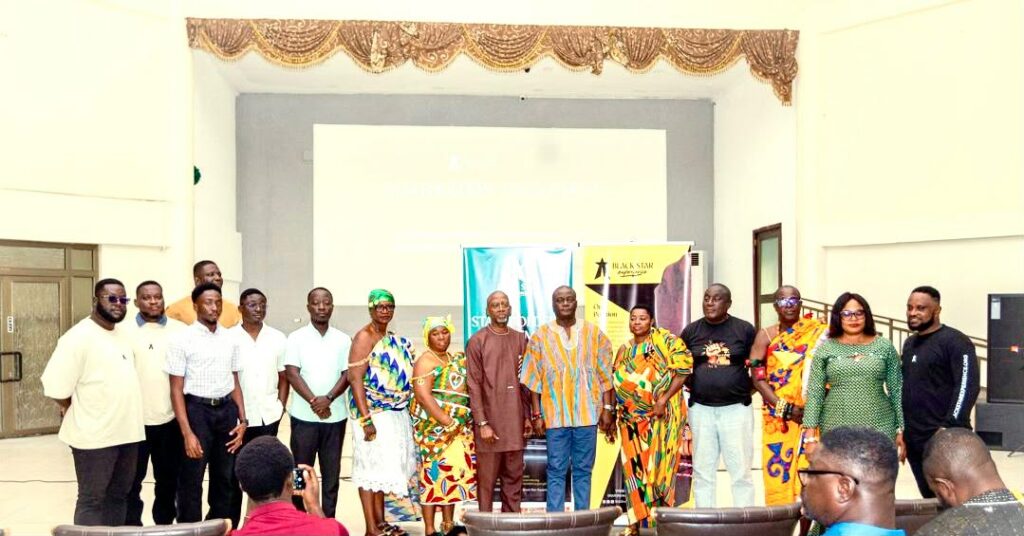
They brought together Members of Parliament, Metropolitan, Municipal and District officials, traditional leaders, and players in the creative sector.
In his opening remarks, the Coordinator of the Black Star Experience, Rex Owusu Marfo, expressed gratitude to stakeholders for their support and cooperation.
He described them as pivotal partners, noting that without their knowledge and support, the success of the initiative would not be achieved.
Rex Marfo said measures have been outlined to ensure implementation of the various policies under the Experience.
He disclosed activities including the recently launched Black Star Comedy Experience, the upcoming Black Star Fashion Week and Summit, and the Choral Contest, among others.
He emphasised that the activities form part of the national reset agenda of President John Dramani Mahama and are geared towards promoting the cultures of the various ethnic groups.
The Western Regional engagement recorded strong participation from key stakeholders and community representatives, including representatives of the National Commission on Culture, chiefs and queen mothers, pastors, and other faith-based leaders.
Heads and representatives of choral groups from across the region also attended in large numbers, showing significant interest in the national choral music initiative.
The Western Regional Minister, Joseph Nelson, commended the Secretariat, stating that the Black Star Experience offers Ghana a platform to tell its own story to itself and to the world, stressing that national ownership is key to its success.
“The Black Star Experience offers Ghana an opportunity to tell its story, both to itself and to the world. But for that story to resonate, Ghanaians must first understand, value, and own it,” he said.
The Minister noted that the Western Region has a rich contribution to make with its traditional institutions, festivals, music, cuisine, coastline, and creative talents, adding that the task is to preserve these assets and create opportunities for communities who are custodians of these stories.
He said the initiative also promotes national unity, patriotism, and collective belonging, calling for stakeholder ownership involving government, MMDAs, traditional authorities, the private sector, and the media.
“When we recognise that the diverse histories and cultures of our regions are all chapters of one Ghanaian story, we strengthen our collective sense of belonging,” he added.
The Central Regional engagement on October 2 also brought together a broad range of stakeholders, including the Regional Minister, Ekow Panyin Okyere Eduamoah, the Mayor, Members of Parliament, Metropolitan, Municipal and District Chief Executives, representatives of the National Commission on Culture, and the Regional Director of the Ghana Tourism Authority, Charles Buabin.
Also present was the Regional Chairman of the Musicians Union of Ghana (MUSIGA), Clarence Kenneth Ekow Pieterson, alongside other stakeholders from the creative and cultural sectors.
According to the Secretariat, both engagements provided an opportunity to bring together government representatives, traditional leaders, faith-based leaders, cultural institutions, musicians, choral groups, and other stakeholders to support the objectives of the Black Star Experience and the national choral contest.
The Black Star Choral Music Contest is a signature project under the Music Pillar of the Black Star Experience.
It is designed to discover, develop, and promote exceptional choral music talents from every region of Ghana, while fostering national unity, cultural pride, and creative excellence.
The competition will begin at the regional level, where choral groups from schools, churches, tertiary institutions, communities, and other organised bodies will compete for the opportunity to represent their regions at the national finals in Accra.
Through this structured progression, the contest seeks to create a sustainable national platform that celebrates choral music as an important component of Ghana’s cultural identity.
According to the Secretariat, beyond competition, the initiative serves as a vehicle for talent development, cultural preservation, creative industry growth, and national engagement, providing participants with exposure and an opportunity to improve their artistic skills while contributing to the promotion of Ghanaian music and culture on both national and international stages.
By Nana Kwakye Ababio