
For decades, the story of cashew farming in Ghana’s Bono East Region has been one of bitter irony. Farmers wake before dawn, clear sprawling acres of bush, and nurture their trees through unpredictable weather, only to watch middlemen cart away their harvests in raw form for export.
By the time those nuts are roasted, packaged, and sold on supermarket shelves abroad, the wealth has already left Ghana, leaving the people who grew the crop struggling to pay off farm loans.
In communities like Prang and Seikwa, that struggle has long weighed heavily on smallholder growers. Amedin Ampoma Dickson, a cashew farmer and Secretary for the Cashew Farmers Association in the area, knows the frustration intimately. For years, he and his fellow farmers have battled two relentless enemies: soaring labour costs and volatile farm-gate prices.
“What is really troubling our farmers, especially, is how to manage our finances properly to maintain our farms until the trees grow,” Dickson explains. “And even when they do grow, getting a good price to sell our cashew nuts is a major problem. Sometimes buyers come to fix a price for us, say selling cashew at 6 cedis per kilo. But as time goes on, they stop buying at certain periods, leaving your farm abandoned and in a messy state.”
When the bumper harvest hits in March, the market dynamics turn cruel. Instead of reaping a windfall, farmers watch middlemen slash buying prices down to around 3 cedis per kilo just as labour costs spike.
Hiring day labourers to clear land and pick nuts requires paying daily wages alongside food allowances running anywhere from 60 to 100 Ghana cedis per worker each day.
“When we go harvesting and I hire 10 people and pay each 100 cedis, just imagine!” Dansco says, shaking his head. “So if you go and get only 5 bags from the farm to take home, you’ve practically made nothing.”
For years, farmers have pleaded for a solution that keeps value at home — a local processing factory that buys directly, pays fairly, and turns raw harvests into finished goods.
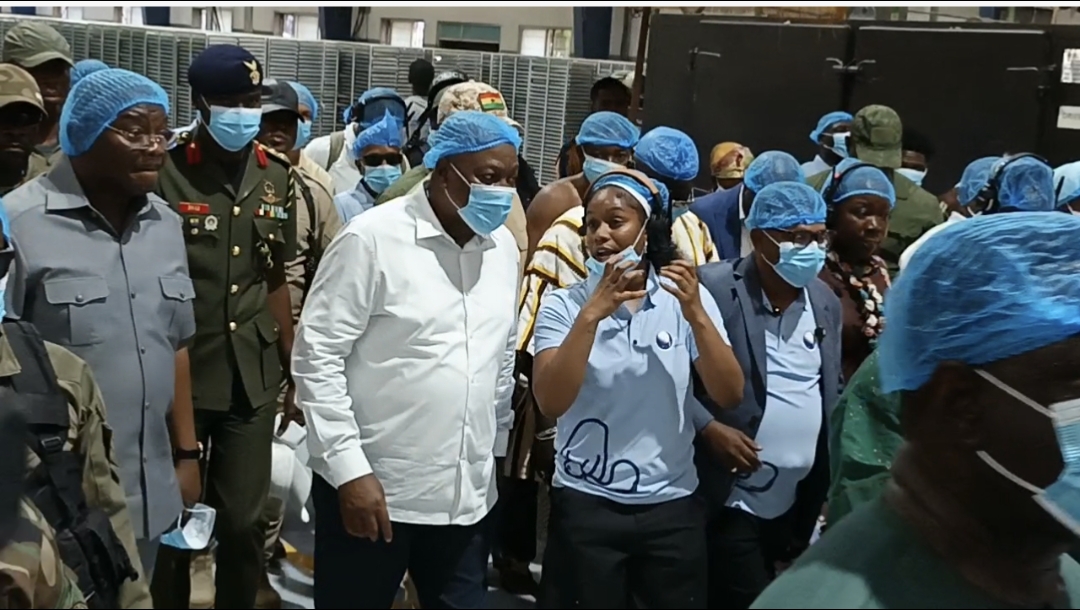
That turning point arrived in Techiman with the official commissioning of Nadkansco Processing Company Limited by President John Dramani Mahama. Financed by the Ghana Export-Import Bank (GEXIM), the state-of-the-art facility boasts a capacity to process 100 metric tonnes of raw cashew nuts every single day.
Beyond shelling and grading kernels for domestic and international markets, the facility operates a zero-waste model. In an adjacent extraction unit overseen by plant specialist Selvakumar, discarded cashew shells are crushed under high pressure to produce Cashew Nut Shell Liquid (CNSL).
After rigorous laboratory checks for acid, moisture, and ash content, the oil is pumped into tanks and exported to Europe, China, Sri Lanka, and across Asia for use in paint manufacturing and road-marking materials. Even the leftover sludge is fed back into the factory’s boilers as fuel.
The factory is projected to generate 1,500 direct jobs and roughly 3,000 indirect livelihoods, offering young people in the Bono East Region a reason to build their futures at home rather than migrating south to Accra or Kumasi.
To ensure the factory never sits idle for lack of raw nuts, President Mahama announced the enforcement of a three-month ban on raw cashew exports at the start of every harvest season so local processors get first priority, backed by an export levy on raw nuts and dedicated GEXIM financing to help Nadkansco stockpile supplies year-round.
The Tree Crop Development Authority (TCDA) is also stepping in to reinforce those gains. According to Kumasi Office Manager Summit Alilu, the authority is working toward enforcing a standard minimum farm-gate price to shield growers from exploitation.
As the machines inside Nadkansco hum to life, they carry the promise that in Techiman, the wealth of the land will finally stay with the hands that tilled it.
By Belinda Tetteh Djabakwor