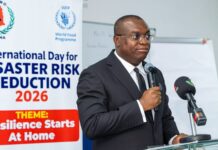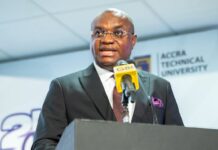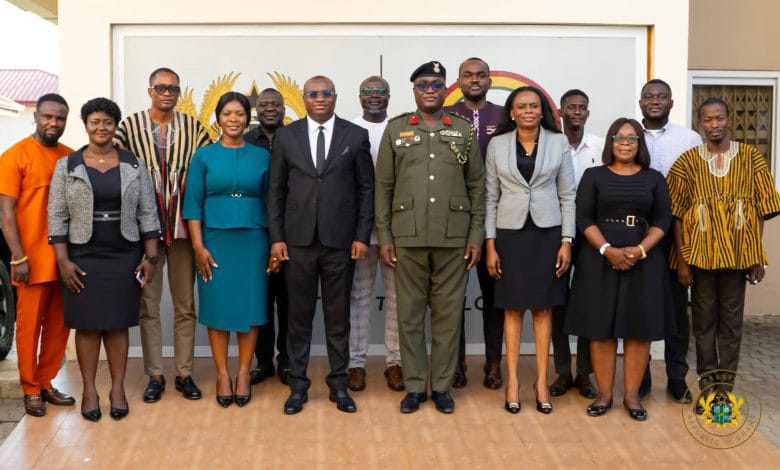

Pursuant to the directive of President John Dramani Mahama to undertake a comprehensive assessment of Ghana’s national resilience and emergency preparedness architecture, the Presidential Advisor on National Resilience and Emergency Preparedness (NAREP), Ernest Brogya Genfi, has started a series of stakeholder engagements with Ministries, Departments and Agencies (MDAs), as well as Metropolitan, Municipal and District Chief Executives (MMDCEs).
In a statement on his Facebook page, on Wednesday, October 28,2026, he said the nationwide exercise is aimed at assessing the current state of Ghana’s resilience and emergency preparedness systems, identifying gaps and vulnerabilities, and proposing reforms to strengthen the country’s capacity to prevent, withstand, respond to, and recover from emergencies and disasters.
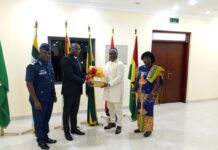
As part of the exercise, he has engaged the Ministry of Communication, Digital Technology and Innovations led by Sam Dzata George, together with its agencies and affiliated institutions.
The engagement centred on assessing existing systems, capacities, coordination mechanisms, and technological frameworks that contribute to national resilience and preparedness for emergencies and disasters.
The discussions explored how digital technology, innovation, and effective communication systems can be leveraged to enhance early warning dissemination, emergency response coordination, and public awareness during crises.
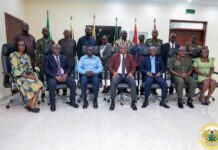
Mr Brogya Genfi also held strategic consultations with the National Signals Bureau (NSB) and the National Centre for the Coordination of Early Warning and Response Mechanism (NCCRM).
The meetings were to evaluate existing intelligence, surveillance, risk monitoring, and early warning systems in the country.
The engagements explored opportunities to strengthen national situational awareness, enhance inter-agency information sharing, improve crisis anticipation and response capabilities, and leverage emerging technologies to support a more robust and responsive national resilience framework.
According to him, these engagements form part of a broader nationwide assessment aimed at identifying strengths, gaps, vulnerabilities, and opportunities for reform within Ghana’s resilience and emergency preparedness ecosystem.
The ultimate objective, is to develop comprehensive recommendations to enhance Ghana’s capacity to prevent, withstand, respond to, and recover from emergencies and disasters, in line with President Mahama’s vision of building a resilient Ghana that is well-prepared for any eventuality.
The assessment exercise is expected to continue with engagements with other key MDAs, security agencies, and MMDCEs across the country.
By Benjamin Aidoo