
As customers walked out of a restaurant in Accra carrying food wrapped in leaves and packaged in paper bags, few appeared to miss the familiar plastic containers that have become a staple of everyday commerce.
Plastics entered the country in the late 1990s, with some close to 120 companies manufacturing over 52,000 tonnes of various plastics and plastics products per year.
The Environmental Protection Authority (EPA) announced that from January 2027, the production, importation, sale, distribution and use of Styrofoam takeaway packaging will be prohibited nationwide as part of measures to reduce plastic waste and improve environmental sustainability.
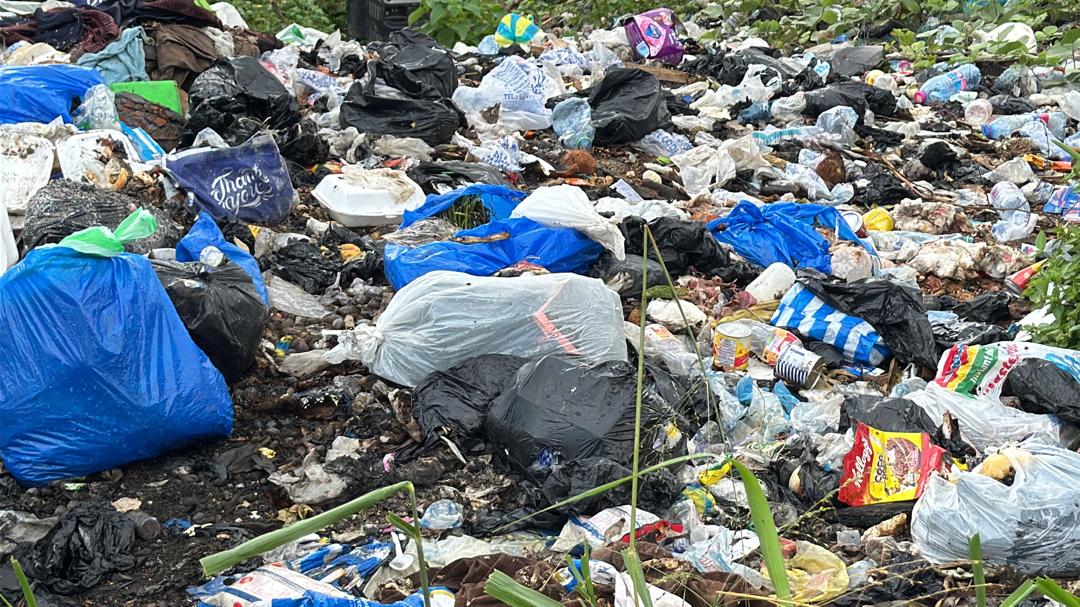
According to the World Bank, Ghana generates about 1.1 million tonnes of plastic waste annually, with only about five percent recycled. The remainder often ends up in drains, waterways, landfills and open spaces, contributing to flooding and environmental degradation.
For some businesses, the shift away from plastic is no longer a future possibility but a present reality. The transition comes at a time when Ghana is preparing to intensify efforts to tackle plastic pollution, a challenge that continues to threaten public health, sanitation and the environment.
The move has reignited conversations about the broader problem of single-use plastics and the alternatives available to businesses and consumers.
For environmental activist Awula Serwaa, the country’s growing plastic problem requires urgent action. “It is a step in the right direction. We’ve been asking for a ban for a while,” she said.
She noted that plastic waste has become a common feature of gutters, pavements and beaches, while growing evidence suggests that fish, livestock and even humans are increasingly exposed to microplastics.
“If you look at our gutters, the pavements, our oceans, what are they full of? Full of plastics,” she said.
While the environmental cost of plastics is becoming increasingly clear, some businesses have already begun experimenting with alternatives.
At SSNIT Guest House, Head Chef John Kwao said customer concerns about plastic packaging encouraged management to rethink how food is presented and packaged.
“Most of the clients, when they come, complain about the plastic things,” he said.
In response, the hotel introduced paper bags and began wrapping foods such as banku and kokonte in leaves instead of plastic packaging. Traditional earthenware bowls are also used for some meals.
The changes, he explained, were intended to improve customer experience while reducing dependence on plastic materials.
Although the transition has increased operating costs, Mr Kwao believes the benefits outweigh the challenges.
“The leaves are more expensive than the plastic,” he acknowledged.
However, he said the initiative has helped attract more customers.
“Although the financial burden is there, it has also given us more clients because people appreciate the new way we package our food,” he said.
The experience suggests that environmentally friendly packaging can be both a sustainability measure and a business opportunity.
Consumer response appears to support that view, Job Laboja, a customer who prefers paper packaging, said alternatives to plastic offer a practical way of addressing the country’s waste challenge.
“I prefer paper packaging to plastic bags because it’s good for the environment. It also reduces the plastic waste problem in the country,” he said.
Beyond paper packaging, reusable tote bags are also emerging as a potential alternative to single-use plastic bags.
At Osu Market, local artisan Mr Allesou produces tote bags for individuals, organisations and businesses. Depending on demand, he says he can produce between 200 and 300 bags a week.
The bags are designed to be used repeatedly, reducing the need for disposable plastic carrier bags that are often discarded after a single use.
Environmental advocates argue that wider adoption of reusable bags could significantly reduce the volume of plastic waste entering the environment.
Awula Serwaa believes Ghana can learn from countries such as Rwanda, Kenya, Tanzania and Malawi, where restrictions on single-use plastics have been implemented with varying levels of success.
She also sees opportunities for local innovation, suggesting that agricultural waste such as cassava, banana and plantain fibres could be transformed into environmentally friendly packaging materials.
Such innovations, she said, could create jobs while helping to address pollution.
However, stakeholders caution that alternatives are not without challenges.
Cost remains a major concern, particularly for small businesses. Some food vendors fear that environmentally friendly packaging may increase operating expenses and ultimately affect prices for consumers.
Production capacity is another challenge. While local manufacturers such as Mr Allesou are already producing reusable bags, meeting nationwide demand would require greater investment, equipment and labour.
Consumer behaviour may also influence the success of any transition. The widespread use of plastic bags has become deeply embedded in daily life, and changing long-established habits may take time.
Awula Serwaa argues that effective enforcement will be critical.
“There are so many rules and regulations, but our challenge is enforcing them,” she said.
For her, the success of efforts to reduce plastic waste will depend not only on the availability of alternatives but also on the willingness of authorities, businesses and consumers to embrace change.
As Ghana moves towards a future with fewer single-use plastics, experiences from businesses already using paper bags, leaves and reusable tote bags suggest that alternatives exist.
The challenge now is ensuring that they are affordable, accessible and widely adopted enough to make a lasting difference.
By Princess King-Quaye, Mildred Mensah and Grace Hammoah Asare