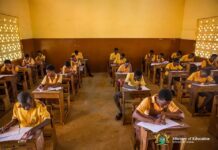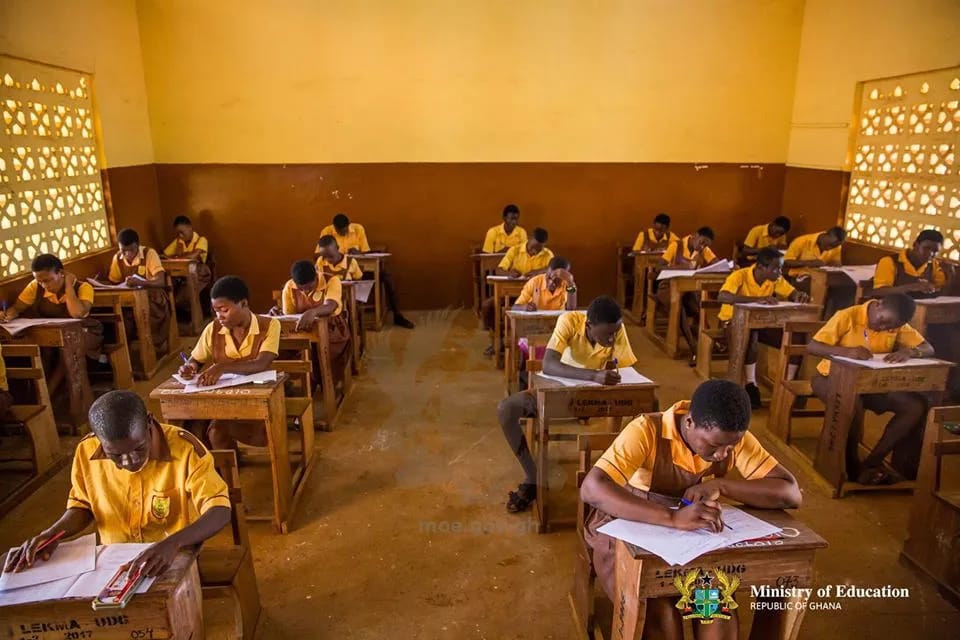

The release of the 2026 Basic Education Certificate Examination results has sparked mixed reactions, with many parents expressing disappointment over their wards’ performance.
While the West African Examinations Council attributes its intensified measures against examination malpractice to the outcome, education policy analysts argue that the conversation should extend beyond curbing exams malpractice to reforming the examination system itself.
Now, a comparison with previous years presents a mixed picture.
In 2024, WAEC cancelled the subject results of 380 candidates—377 school candidates and three private candidates—and cancelled the entire results of 42 candidates comprising 41 school candidates and one private candidate. The results of 36 candidates were also withheld pending investigations.
In 2025, the number of malpractice cases increased. Out of 603,328 candidates who sat the BECE, WAEC cancelled 895 subjects or entire results, withheld the results of 1,333 candidates over suspected malpractice, and eventually cancelled the results of candidates from 119 schools.
This year’s figures rather suggest improvement in some areas, although concerns remain.
Out of the 620,243 candidates who sat for the exams, WAEC has cancelled the subject results of 496 candidates and the entire results of 105 candidates.
It has also withheld the subject results of 119 candidates and the entire results of 48 candidates. In addition, the subject results of 2,722 candidates from 229 schools have been withheld pending the outcome of ongoing investigations.
In an interview with TV3, Head of Public Affairs, WAEC, John Kapi said this year’s decrease in numbers is the results of the work done.
“Generally, we are impressed with our performance because of a number of parameters that we look at when we are dealing with results. And I believe that I’m looking at the amount of work we have put in and being able to churn out the results in this manner.
We have recorded some irregularities, some examination practices. But thankfully, we haven’t had any high numbers, you know, in relation to last year’s numbers.”
He noted that investigations are still ongoing concerning some of the results that have been withheld.
“Usually what happens is that when we have cases of this nature, we would ask the team leaders, the chief examiners, to take a look at the nature of the offences. They look generally at the scripts, and they come out with clear-cut, I mean, clear evidence of collusion.
That is, if there’s any copying, if there’s any. And then this is presented to us. And so, we present that evidence to the candidates and ask them to explain to us exactly what happened in the course of the examination.”
Mr Kapi urged candidates to go to approved WAEC sites to check for updates.
“Those whose results have been withheld, or those whose have been cancelled, they can go to the WAEC site, and then they’ll be able to tell the status of their results. And we are working to ensure that, by the end of August, every single person who should receive results for the BEC 2026 will certainly receive them.”
Meanwhile, the Executive Director of Africa Education Watch, Kofi Asare, also speaking to TV3 argued that examination malpractice continues to exist and must be taken seriously.
“There are several candidates involved in cancellations, reducing from about 900 in 2025 to about 600 in 2026. So that reflects the downward trend, which suggests that the malpractice may be low. But we are still high, and I want us to get to a point where we are getting perhaps single-digit candidates involved in cancellations.”
He further explained that it is about time the government pursues reforms that place greater emphasis on competency-based assessment while safeguarding the credibility of the system, especially with the grading system.
“I am of the view that the Criteria Reference Assessment Model should be adopted. I’ve always had issues with the normal reference test, because it doesn’t give us a true picture. I think that nothing stops us from, you know, adopting that one, because we have been using it at the secondary school and also at the tertiary level.”
He also suggested the need for GES to ensure that the 30% protocol allocation for public schools to get good schools are maintained and that candidates write only the core subjects with a solid-based cumulative assessment as a foundation.
Following the release of the results, attention now turns to the Computerised School Selection and Placement System.
The Ghana Education Service is expected to begin the placement process in the coming weeks, after which qualified candidates will be assigned to senior high schools across the country, marking the next stage of their academic journey.