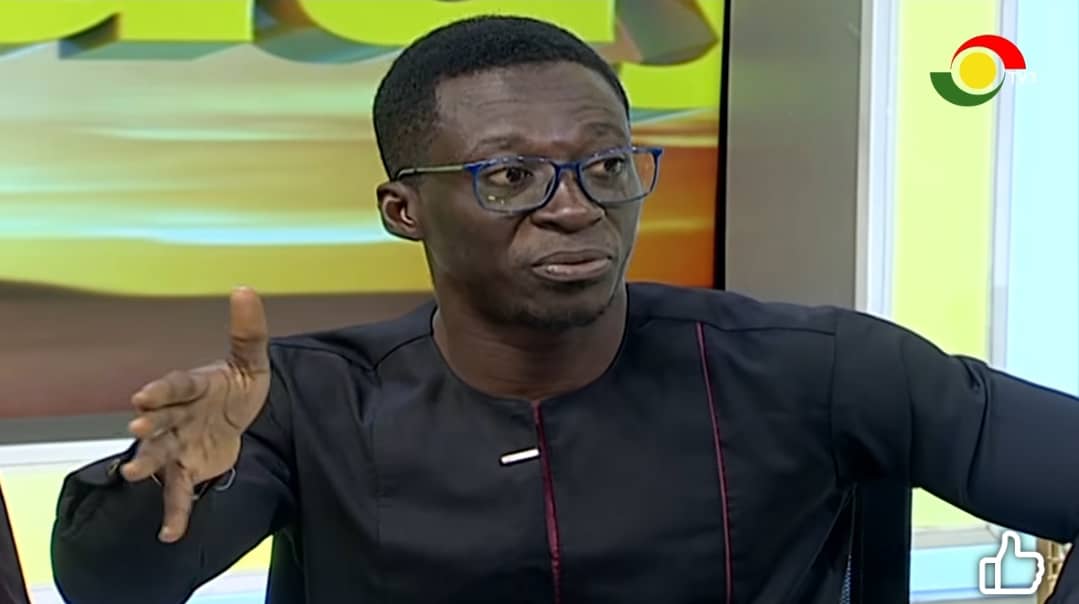

Private legal practitioner and policy analyst, Austin Kwabena Brako-Powers, has criticised the Commission on Human Rights and Administrative Justice (CHRAJ) for allegedly acting outside its constitutional mandate in its investigation of the former Ghana Revenue Authority (GRA) Commissioner-General, Rev. Dr Ammishaddai Owusu-Amoah, over corruption and procurement breaches.
Speaking on 3FM’s Sunrise Show with Eric Mawuena Egbeta on Thursday, November 6, 2025, Mr Brako-Powers argued that under Ghana’s legal framework, the Office of the Special Prosecutor (OSP) holds the exclusive jurisdiction to investigate and prosecute corruption-related offences, including procurement breaches.
“CHRAJ’s jurisdiction under Article 218 of the 1992 Constitution is limited. It covers violations of fundamental rights and freedoms, injustice, corruption, abuse of power, and unfair treatment by public officers. But when it comes to procurement-related corruption, that falls squarely under the OSP,” he explained.
His comments follow CHRAJ’s recent report which found Rev. Dr Owusu-Amoah culpable of procurement and administrative irregularities, reportedly costing the state over GH₵8.9 million.
The Commission’s investigation was triggered by a petition filed on August 15, 2022, by the Movement for Truth and Accountability (MFTA), a civil society group that alleged inflated contract prices, fraudulent duplication of suppliers, and nonexistent contractors in the procurement of vehicles for the GRA.
In its 157-page report, CHRAJ barred the former GRA boss from holding public office for five years and referred him and directors of three companies to the Attorney-General’s Office for possible prosecution for causing financial loss to the state, fraud, and corruption.
But according to Mr Brako-Powers, CHRAJ acted without jurisdiction in probing procurement-related corruption, insisting that such matters are within the exclusive purview of the Special Prosecutor under Sections 2 and 3 of the Office of the Special Prosecutor Act, 2017 (Act 959) and the Public Procurement Act, 2003 (Act 663).
“When it comes to procurement breaches or corruption arising from such breaches, the law is clear — the Office of the Special Prosecutor must investigate and prosecute where appropriate. CHRAJ has no business doing that,” he asserted.
He maintained that while CHRAJ was right to refer aspects of its findings relating to financial loss to the Attorney-General, it should have similarly referred the procurement corruption elements to the OSP instead of assuming investigative jurisdiction over them.
Mr Brako-Powers referenced a precedent from the Cecilia Dapaah case, where the OSP, after discovering potential money laundering issues, referred the matter to the Economic and Organised Crime Office (EOCO) for further investigation. “We expect CHRAJ to show the same institutional restraint,” he said.
“CHRAJ’s report is faulty because when you investigate matters clearly within the jurisdiction of another state institution, your duty is to refer them, not to conclude on them,” he added.
He stressed that overlapping mandates among anti-corruption bodies often lead to institutional friction, weaken accountability, and create opportunities for accused persons to challenge investigations on jurisdictional grounds.
“If CHRAJ continues to assume the roles of the OSP and other specialised institutions, we risk confusion in the enforcement of our anti-corruption laws. The Commission should stay within its boundaries,” he cautioned.
Mr Brako-Powers concluded by urging CHRAJ to respect the legal boundaries set by the Constitution and the various anti-corruption statutes, arguing that a coordinated approach between CHRAJ, OSP, and EOCO would better serve the national interest.
“The fight against corruption requires collaboration, not competition. CHRAJ must be careful not to undermine the very institutions we rely on to uphold accountability,” he said.