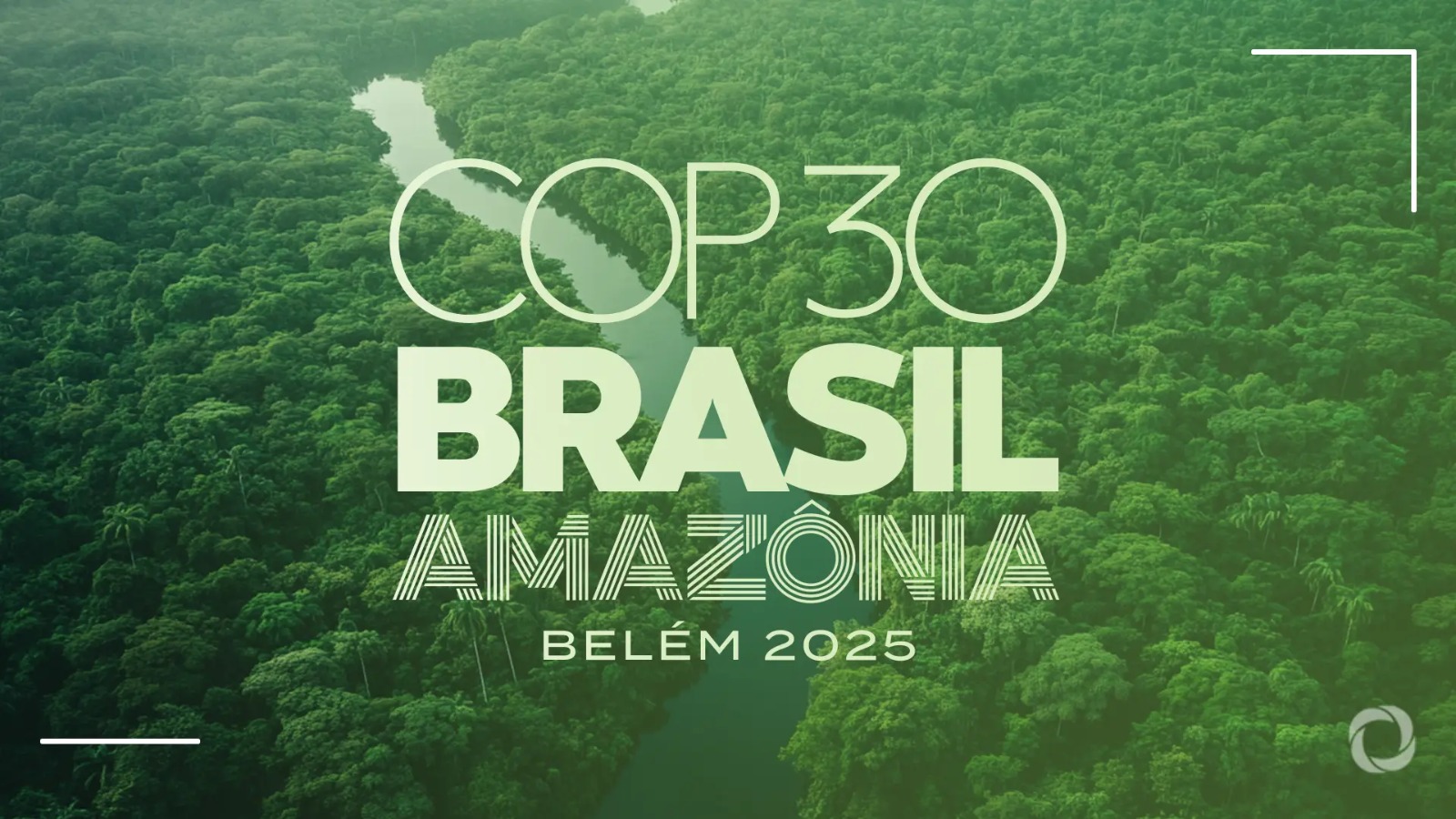

The world will converge on Belém, Brazil, between November 10 and 21, 2025, for the 30th United Nations Climate Change Conference, known as COP30.
This meeting of the Conference of the Parties to the UN Framework Convention on Climate Change is one of the most significant global gatherings since the Paris Agreement of 2015.
It will take place in the capital of Pará, a city at the mouth of the Amazon River that sits in the heart of the world’s largest tropical rainforest. The symbolism is unmistakable. For the first time, delegates will conduct high-level climate negotiations inside the lungs of the planet itself, where the stakes of environmental preservation are most visible.
Brazil’s selection as host followed the rotational system of the United Nations Framework Convention on Climate Change, which moves the presidency among five regions. After COP28 in the United Arab Emirates and COP29 in Azerbaijan, it became Latin America’s turn, and Brazil emerged as the consensus candidate.
Belém was chosen intentionally to place the Amazon front and center, emphasizing forests, biodiversity, and sustainable development. A Brazilian official remarked that the intent was to make participants “see the reality of the challenges of development in a changing climate.” Brazil’s presidency has already branded the summit as the “Amazon COP” and the “forest COP,” positioning it to highlight the role of tropical forests in mitigating global warming.
President Luiz Inácio Lula da Silva is said to have halved deforestation since 2022 and intends to unveil a major Tropical Forest Forever Fund at the conference. The site selection sends a deliberate message. Belém, distant from São Paulo or Rio de Janeiro, stands as a frontier between progress and preservation.
Its hosting of COP30 signals that Brazil wants the world to witness the challenges of balancing climate action with economic realities. The city’s infrastructure is being expanded with new roads and airport renovations, even as some critics question its readiness to receive tens of thousands of delegates. For Brazil, these growing pains are part of the story — a demonstration of how development and climate adaptation must coexist.
The Amazonian setting will anchor the conference’s emphasis on multilateral cooperation, science, and forest conservation. Brazil’s presidency argues that bringing the event to Belém will inject new trust into global cooperation and remind the world that climate change is not abstract but a lived, daily reality. In an unprecedented move, Brazil will also hold a summit of heads of state on November 6 and 7, ahead of the main sessions.
The decision aims to allow deeper strategic reflection before the full negotiations begin. Afterward, from November 10 to 21, the official sessions — known as the Blue Zone — will see nearly 200 countries negotiating over mitigation, adaptation, finance, technology, and equity.
Alongside the negotiations, the Green Zone will host exhibitions, public discussions, and a new digital platform called Maloca. This innovative virtual environment, supported by the United Nations Development Programme, will allow remote participation with AI translation and virtual climate assistants.
Maloca’s goal is to include civil society voices worldwide, especially from the Global South, linking communities that cannot be physically present in Belém. Brazil’s three priorities for COP30 — strengthening multilateralism, connecting climate policy to people’s lives, and accelerating implementation of the Paris Agreement — are embedded in this approach.
The political context is equally important. The 1992 Rio Earth Summit, also hosted by Brazil, launched the UNFCCC itself, but in the years since, Brazil’s global influence has fluctuated. COP30 is a return to prominence and a test of leadership. Unlike the oil-rich authoritarian hosts of recent summits, Brazil presents a democratic, pro-climate government under Lula.
Yet the global political environment is unsettled. The United States, the world’s largest historical emitter, has withdrawn once again from the Paris Agreement under the new administration of Donald Trump, who has called climate change a “green energy scam.” Analysts warn that COP30 may have to proceed without U.S. leadership, even as other nations such as Brazil, the United Kingdom, and the European Union strengthen their nationally determined contributions with greater ambition.
Against this backdrop, COP30 carries the weight of translating the Paris Agreement’s promises into tangible action. Its agenda builds on the first Global Stocktake, completed in Dubai at COP28, which revealed that current commitments fall far short of what is required to keep global warming below 1.5°C.
Brazil has framed COP30 as the moment to turn that assessment into a concrete action plan. The presidency has outlined six thematic pillars covering mitigation, adaptation, finance, technology, capacity building, and social equity. Within these, 30 objectives will guide negotiations, side events, and partnerships.
Mitigation will dominate much of the debate. The Intergovernmental Panel on Climate Change has warned that to meet the 1.5°C target, global carbon dioxide emissions must fall by 45% from 2010 levels by 2030. Current pledges remain far off that mark. COP30 is expected to pressure countries to submit new or updated nationally determined contributions that align with these pathways.
Negotiators will revisit commitments to phase down fossil fuels, triple renewable energy capacity by 2030, and decarbonize transport and industry. Since COP29 finalized the long-awaited Article 6 carbon market rules, Belém will shift the focus to implementation, ensuring that carbon trading systems are transparent and deliver real emission cuts.
Adaptation will form the second major focus. Countries will seek to operationalize the Global Goal on Adaptation and agree on measurable indicators for resilience, from coastal defenses to drought management. Africa and other vulnerable regions will argue for immediate, front-loaded funding to protect lives and livelihoods. The Loss and Damage Fund established in Sharm El Sheikh must now be fully capitalized, with predictable financial flows to countries already suffering irreversible climate impacts.
Climate finance remains the lifeblood of these ambitions. Developed nations originally pledged $100 billion per year in climate aid but consistently failed to meet the target. At COP29, they agreed to triple public climate finance to $300 billion per year by 2035.
However, developing countries insist that even this is inadequate. Experts estimate that at least $1 trillion annually will be required by the mid-2030s. In Baku, negotiators issued a call to mobilize $1.3 trillion from all sources by 2035, but specifics were deferred to Belém.
Brazil’s presidency has since launched a “Baku to Belém Roadmap” to clarify how both public and private capital can be scaled up. Ghana and other African nations will demand easier access to existing funds such as the Green Climate Fund, flexibility through debt-for-climate swaps, and financing models that respect national ownership.
Equity and justice will thread through every negotiation. COP30 is designed as a people-centered summit, reflecting Brazil’s vision of “circles” that bring together presidents, finance ministers, and civil society. These dialogues aim to place indigenous peoples, farmers, women, youth, and coastal communities at the heart of global climate decisions.
For Ghana, these groups are not abstract categories but real constituencies whose survival depends on fair and urgent action. The conference will link the Paris goals with the Sustainable Development Goals, tackling poverty, hunger, and inequality as inseparable from climate resilience.
Beneath these broad themes lie the realities of data and impact. Global emissions currently hover between 40 and 50 gigatonnes per year, while the planet’s temperature has already risen by about 1.1°C above pre-industrial levels. In Ghana, climate impacts are no longer projections. Floods, droughts, and heat waves are displacing thousands. The 2020 drought alone caused an estimated $95 million in direct losses, and without intervention, the annual figure could reach $325 million by 2050. Agriculture, which employs nearly 45% of Ghana’s labor force and contributes over 21% of its GDP, faces severe risks. Cocoa, Ghana’s flagship export, is increasingly threatened by erratic rainfall and encroaching salinity along the coast.
Ghana’s delegation will arrive in Belém with clear priorities. The government’s updated climate plan targets a reduction of 33 million tonnes of CO₂ equivalent by 2030 through renewable energy expansion, energy efficiency, reforestation, and sustainable transport. Achieving these goals requires between $9.3 and $15.5 billion in investment. Ghana’s Energy Transition Plan, launched at COP28, aims to eliminate coal and scale up solar and wind power. To mobilize resources, the country will advocate for debt-for-climate swaps and climate debt relief, framing them as issues of justice rather than charity. As Minister Seidu Issifu has emphasized, Ghana spends more on debt servicing than on climate resilience — a situation he argues must change if global equity is to mean anything.
Institutionally, Ghana has prepared a lean, focused delegation coordinated by an inter-ministerial technical working group involving the ministries of environment, finance, energy, agriculture, and foreign affairs. The Environmental Protection Agency and academic advisors are leading technical inputs, with Professor Nana Klutse, a noted climate scientist, contributing expertise. The government has held national consultations, including the Road to COP30 meeting in Accra, where over 200 stakeholders from government, finance, and academia discussed how to align Ghana’s projects with global sustainable finance worth more than $40 trillion.
Ghana’s participation in carbon markets will be a central theme. Having completed the world’s first authorized Article 6 transaction, Ghana stands at the forefront of high-integrity carbon trading. Its negotiators will argue for strong safeguards ensuring that carbon credit schemes generate real benefits for local communities and biodiversity. Ghana’s emerging forest and waste-to-energy projects may attract investment under the new Article 6.4 mechanism. It will also align with Brazil and other tropical nations to push for a dedicated global fund for rainforest conservation, possibly under the proposed Tropical Forest Forever Fund.
Adaptation and agriculture will feature heavily in Ghana’s agenda. With climate-smart cocoa farming, irrigation initiatives in the north, and coastal protection programs near Accra, Ghana will showcase its progress while seeking international finance to scale these efforts. The country will call for rapid capitalization of the Loss and Damage Fund and greater inclusion of smallholder farmers, fishers, and women entrepreneurs in adaptation financing.
Technology transfer and energy transition are also priorities. Ghana is exploring a memorandum of understanding on green development with China, aiming to expand renewable energy infrastructure under the Forum on China-Africa Cooperation framework. China has pledged to support 30 clean energy projects across Africa, and Ghana intends to position itself among the first beneficiaries. Belém will thus serve as a platform to announce new bilateral and South-South partnerships that link technology, financing, and development.
Within the negotiation halls, Ghana will operate through several blocs — the African Group, the Group of 77 plus China, and the Climate Vulnerable Forum. Each provides leverage for collective bargaining on finance, adaptation, and technology. Ghana may also speak on behalf of the African Group during subsidiary sessions, as it has in previous COPs. Civil society and youth groups from Ghana will join these efforts, using the Maloca platform to highlight stories of farmers, traders, and students directly affected by climate change.
Logistically, COP30 will be one of the largest conferences ever hosted in the Amazon region, with tens of thousands of participants. The sessions will include the 30th meeting of the Conference of the Parties, the 7th meeting of the Paris Agreement’s governing body, and the 20th session under the Kyoto Protocol. Side events, exhibitions, and thematic pavilions will fill both the Blue and Green Zones. Ghana is expected to co-host events with Brazil on topics such as climate-smart agriculture, forest-positive cocoa, and South-South cooperation.
After the conference, Ghana’s technical working group will translate COP30 outcomes into national policy. Any new adaptation or finance mechanisms agreed in Belém will be integrated into Ghana’s climate budget and development strategies. The government has pledged accountability and measurable results for climate spending, ensuring that COP outcomes lead to tangible benefits for communities.
As the world approaches the mid-decade mark, COP30 represents a turning point. It is halfway to the 2030 milestones and halfway to the Paris vision of net zero by mid-century. For Brazil, it is an opportunity to showcase leadership rooted in forest stewardship. For Ghana and the rest of Africa, it is a platform to demand fairness, finance, and technology. And for the planet, it may be the last chance to restore confidence that global cooperation can still hold the line at 1.5°C.
The Amazon will set the scene, but the decisions made there will echo across oceans and continents. COP30 will test whether promises can finally become progress and whether the world can unite to preserve not just forests, but the future itself.
By Wisdom Sarfo