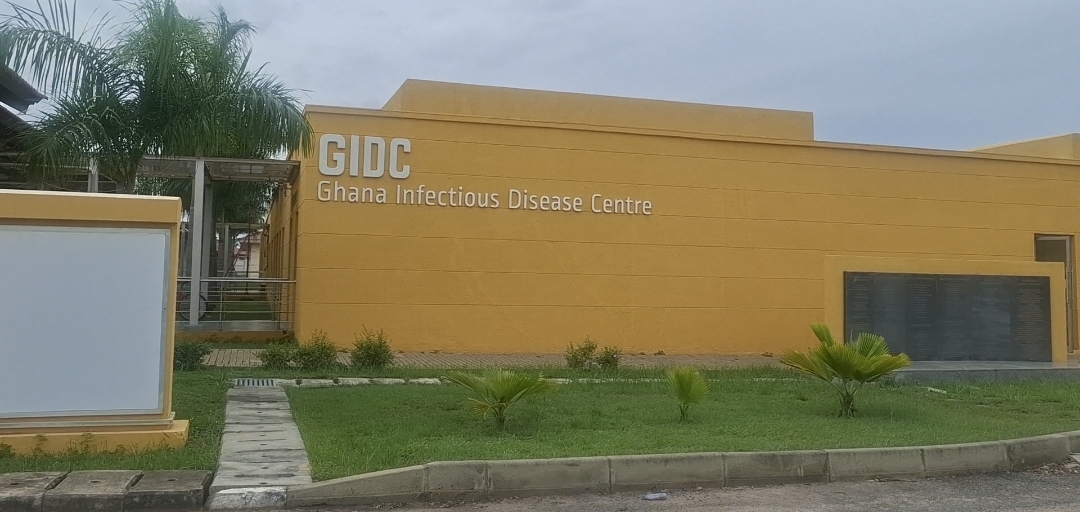

Healthcare workers at the Ghana Infectious Disease Centre are set to begin simulation exercises next week as part of efforts to test Ghana’s emergency response systems and readiness to manage any suspected Ebola cases.
The exercises are expected to assess the country’s preparedness levels, including case detection, isolation procedures, treatment protocols and coordination among frontline health personnel in the event of a possible outbreak.
The Medical Director of the Centre, Dr. Oliver Commey, disclosed this during a visit by the Minister for Health, Kwabena Mintah Akandoh, and officials of the World Health Organization to inspect Ghana’s preparedness measures against the disease.
According to Dr. Commey, frontline health workers will continue to undergo regular simulation exercises while isolation centres, laboratory systems and screening mechanisms are being strengthened to ensure a rapid and coordinated response should Ghana record a case.
He noted that although health workers remain committed to protecting the public, many are expressing concern about the risks associated with managing Ebola infections, describing the virus as more frightening and complex than the COVID-19 pandemic.
Dr. Commey, however, indicated that Management is continuously engaging and motivating staff to make the necessary sacrifices despite the risks involved, while ensuring that adequate personal protective equipment and safety protocols are available for their protection.
‘‘We will start the simulation exercise and continue until we are perfect. Initially there will be mistakes. Just like COVID-19, we did simulation until the first case was brought in. Another thing is also talking to the workers to motivate them. They know it’s not like COVID and so some are skeptical but they will always have the country at heart so we will keep talking to them.’’ He said.
The Minister for Health and WHO officials also inspected facilities at the Kotoka International Airport and the Noguchi Memorial Institute for Medical Research as part of broader national preparedness efforts.
Health authorities say Ghana has intensified surveillance at ports of entry amid rising concerns over Ebola cases within parts of the West African sub-region.
Ebola is a highly infectious viral disease transmitted through direct contact with bodily fluids of infected persons, with symptoms including fever, weakness, vomiting and bleeding in severe cases.
By Sarah Apenkroh