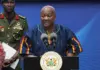

The Minister of Education, Haruna Iddrisu, has extended the two-year ban on students in Forms one and two at the Junior High School level, who sit the Basic Education Certificate Examination (BECE) prematurely, to headteachers and district directors who facilitate the practice.
The Minister insists the directive will remain in force despite criticisms form various stakeholders. He argued that it is necessary to protect the integrity of Ghana’s education system and ensure students follow the approved academic progression.
Speaking at a meeting with education stakeholders and development partners in Accra, Haruna Iddrisu said the West African Examinations Council (WAEC) and other stakeholders had raised concerns about students being allowed to skip academic levels to s it for the BECE.
He warned that school authorities and district education officials who encourage or facilitate the practice would also face sanctions.
“Even though in my first announcement the ban was limited to pupils, I have extended it to headteachers and district directors who are responsible for this. That is just not acceptable,” he stated.
Meanwhile, the Education Minister has assured pre-tertiary teachers that government is working to address outstanding concerns relating to their conditions of service, including deprived-area allowances and promotion arrears.
He disclosed that the 20 per cent deprived-area allowance is expected to be paid next year, while outstanding promotion arrears owed teachers who have already been promoted will also be addressed.
The assurance comes amid concerns over possible industrial action by teachers over unresolved conditions of service.
Haruna Iddrisu said government remains committed to honouring its promise to teachers but stressed the need for proper mapping to identify beneficiaries of the deprived-area allowance.
“We will honour the pledge we made to you when President Mahama promised that we will give you the 20 per cent deprived-area allowance. What we have to do is to do the mapping well,” he said.
Using Tumu as an example, the Minister explained that a teacher posted to a deprived area could lose eligibility after being transferred to a non-deprived school.
“For example, a teacher in Tumu is in a deprived area. If we put him on the 20 per cent allowance and, after three months, he is transferred to PRESEC, will he still be deserving of the deprived-area allowance? This is why we have to do the mapping well,” he added.
At the same meeting, the Registrar of the National Teaching Council (NTC), Robert Yeli-Oni Balema, reaffirmed the Council’s commitment to protecting the integrity and credibility of teacher licensure examinations.
He acknowledged the progress made in reaching teachers across the country but noted that more work was needed to expand the Council’s engagement and reach.
“Teachers have shown us how much more there is to do. There are more teachers to reach, more regions and more stories untold,” he said.
The meeting brought together education stakeholders and development partners to discuss ways of improving teachers’ welfare, strengthening collaboration and securing support for the delivery of quality education across the country.
By Daniel Opoku