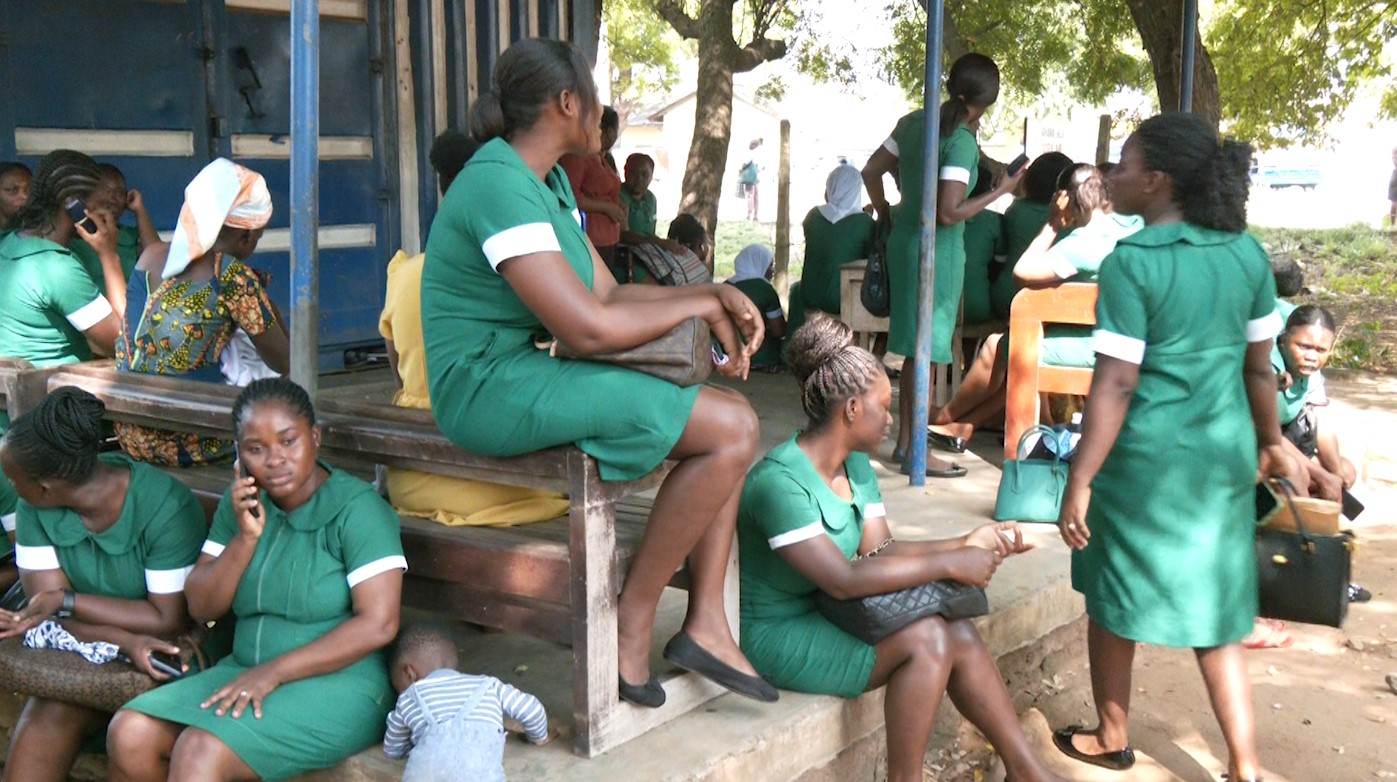

Health services provision across Ghana is facing mounting pressure as nurses and midwives, beginning today, June 4, have withdrawn all emergency services from various health facilities.
The latest escalation in the ongoing strike follows a directive issued by the Ghana Registered Nurses and Midwives Association (GRNMA), instructing members to stay away from duty from June 4 to June 8.
The industrial action affects staff across Outpatient Departments (OPDs), public health services, specialist clinics, as well as antenatal and postnatal care units. According to GRNMA, the strike is in response to the government’s prolonged delay in implementing a collective agreement reached with the Association.
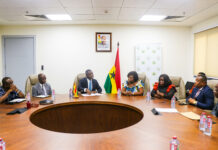
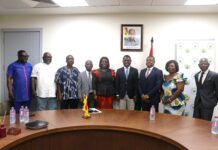
Despite a high-level meeting held with Employment and Labour Relations Minister Dr. Rashid Pelpuo on the sidelines of the 113th International Labour Conference in Geneva, GRNMA insists the strike will proceed in full.
Speaking on Midday News with Beatrice Adu on 3FM 92.7 on June 4, General Secretary of GRNMA, Dr. David Tenkorang-Twumasi, confirmed that while the engagement with the Minister was cordial and constructive, it yielded no concrete solutions.
“We met him yesterday, he wanted to understand exactly the nuances of the issue,” Dr. Tenkorang-Twumasi said. “He appealed to us to rescind our decision, but after we explained the issues to him, he saw that we had a point.”
However, he was clear that the meeting did not go far enough to warrant a suspension of the strike. “The discussion was fruitful, but it fell short. We were very exact in our demands. There is nothing new on the table that justifies calling off the strike.”
Dr. Pelpuo is reported to have promised to engage key stakeholders, including Dr. Ato Forson and the sector minister, in a bid to resolve the matter. But GRNMA maintains that until their demands are formally met with actionable commitments, the industrial action will continue as planned.
The withdrawal of emergency services is expected to severely disrupt healthcare delivery nationwide, with particular impact on vulnerable communities and patients requiring urgent care.
Health sector observers and advocacy groups are calling on the government to treat the situation with urgency, warning that prolonged inaction could compromise the country’s already stretched health infrastructure.
With frontline healthcare workers holding their ground, the need for immediate, meaningful dialogue has never been more critical.