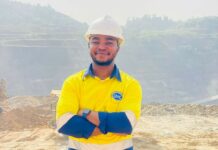

Engineers and Planners (E&P), the wholly Ghanaian-owned company operating the Damang Mine, has created employment opportunities for nearly 400 people barely four months after taking over the operation.
The early gains are emerging as one of the clearest indications yet of how greater Ghanaian ownership and management of the country’s mineral resources can translate into tangible economic opportunities for citizens, particularly communities that have hosted mining operations for decades.
Of the nearly 400 candidates in the recruitment pipeline, 135 have been selected for various positions and are at different stages of the employment process, including medical examinations and induction, while another 85 have completed interviews and are awaiting results.
The recruitment covers maintenance, heavy-duty driving, security, general operations and other positions required to sustain the mine’s activities.
But for the communities in the mine’s catchment area, the significance of these numbers lies in what they potentially represent: a greater share of the economic value generated from Ghana’s mineral resources being retained within Ghana and distributed among Ghanaian workers, businesses and communities.
That is the bigger promise of indigenous ownership.
For years, the debate around mining in Ghana has centred on whether communities and the wider Ghanaian economy receive sufficient value from the country’s mineral wealth. The Damang experience is now providing an opportunity to examine that question through the performance of a Ghanaian-owned company operating a major mining asset.
And so far, the employment figures are providing an encouraging starting point.
A Ghanaian company proving Ghanaian capacity
Perhaps the most important feature of the Damang transition is not simply that the mine is now Ghanaian-owned, but that Ghanaians are increasingly occupying positions across the operational and management structure of the mine.
The involvement of Ghanaian professionals in key positions is significant because indigenous participation in mining must ultimately go beyond ownership on paper.
For indigenous ownership to transform the sector, Ghanaian companies must demonstrate the capacity to operate technically demanding mines, employ and develop local professionals, build indigenous management expertise and compete against established international operators.
Engineers and Planners’ experience at Damang is beginning to provide evidence that this is possible.
The company’s emergence as the operator of the mine challenges the notion that major mining operations must necessarily depend on foreign ownership and management to maintain international standards of production, safety and efficiency.
Its experience also provides a potential blueprint for a broader indigenous mining ecosystem in which Ghanaian companies can progress from contractors and service providers to owners and operators of major mineral assets.
That distinction is crucial.
The ultimate value of indigenous ownership is not merely who owns the concession, but who controls the expertise, jobs, procurement, management and economic activity generated around it.
Turning local ownership into local opportunity
The catchment communities are particularly encouraged by an arrangement under which 60 per cent of the company’s employees are expected to come from the local communities, with the remaining 40 per cent sourced externally, including employees’ wards, corporate sources and Ghana at large.
For communities that have lived alongside mining for more than three decades, the arrangement addresses one of their longstanding concerns: that the presence of valuable mineral resources should create meaningful opportunities for the people living closest to them.
The chiefs and youth representatives therefore want the current recruitment momentum sustained, but they also want it to evolve.
They are calling for employment to be accompanied by skills development, professional training and clear career pathways so that young people from the catchment communities can progressively qualify for technical, supervisory and managerial positions.

That would give indigenous ownership a much deeper economic footprint.
A young person who secures employment at Damang does not simply earn a salary. The income supports a household, stimulates local commerce and contributes to the wider economy. A Ghanaian professional who develops specialised mining expertise becomes part of the country’s indigenous human capital. A local contractor that secures a supply agreement can expand, employ more people and develop the capacity to serve other industries.
This is how mineral wealth can generate a multiplier effect beyond the mine gate.
From mine ownership to an indigenous economic chain
The communities are consequently looking beyond direct employment.
They want Ghanaian businesses and contractors to have meaningful opportunities within the mine’s procurement and supply chain, arguing that indigenous ownership should benefit not only employees but also suppliers, service providers, entrepreneurs and other businesses operating around the mine.
That expectation is consistent with the broader economic case for indigenous participation in the extractive sector.
If a Ghanaian-owned mining company employs more Ghanaians, develops Ghanaian professionals, engages Ghanaian contractors and purchases more goods and services from Ghanaian businesses, a greater proportion of mining-generated wealth remains within the domestic economy.
The impact can be substantial: stronger local enterprises, increased household incomes, expanded employment, enhanced professional capacity and increased economic activity in mining communities.
It can also strengthen the national economy by helping Ghana retain more of the value generated from its own natural resources.
Communities see Damang as a beginning
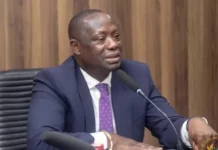
Addressing a press conference on behalf of the chiefs, opinion leaders and catchment youth, the Chief of the Bosomtwi Divisional Council, Nana Kwabena Amponsah IV, said the communities were encouraged by the employment developments recorded within the first few months of E&P’s operation.
He said the recruitment of workers from the catchment communities, alongside the involvement of Ghanaian professionals in key positions, demonstrated that Ghanaians could play meaningful roles at different levels of the mining industry.
The communities have consequently welcomed E&P’s engagement through the Social Responsibility Forum and other established structures, while calling for sustained dialogue on employment, local procurement, skills development and community development.
They also want qualified people from the catchment areas to continue receiving priority consideration without compromising the competence, safety and efficiency required to operate a modern mine.
The bigger national test
For Engineers and Planners, the Damang operation is therefore more than an individual commercial venture. It is an opportunity to demonstrate the capacity of indigenous Ghanaian enterprise in one of the country’s most strategically important sectors.
For Ghana, the stakes are even higher.
If indigenous companies can successfully operate major mines while building Ghanaian management capacity, creating quality jobs, developing local suppliers and retaining more economic value domestically, the implications for the country’s natural resources policy could be significant.
The early Damang figures do not, on their own, constitute proof of long-term success. The real measure will be whether the momentum is sustained throughout the life of the mine and whether local participation deepens from employment into management, ownership of businesses, procurement and specialised technical expertise.
But barely four months into the transition, the signs are encouraging.
The Damang experience is beginning to show that indigenous ownership can mean more than a Ghanaian name attached to a mining concession. It can mean Ghanaian people managing the operation, Ghanaian professionals building expertise, Ghanaian businesses participating in the supply chain and mining communities gaining a larger stake in the economic value generated from their natural resources.
And in Engineers and Planners, Ghana may have a practical example of what a genuinely indigenous future for the extractive sector could look like.
By Eric Yaw Adjei