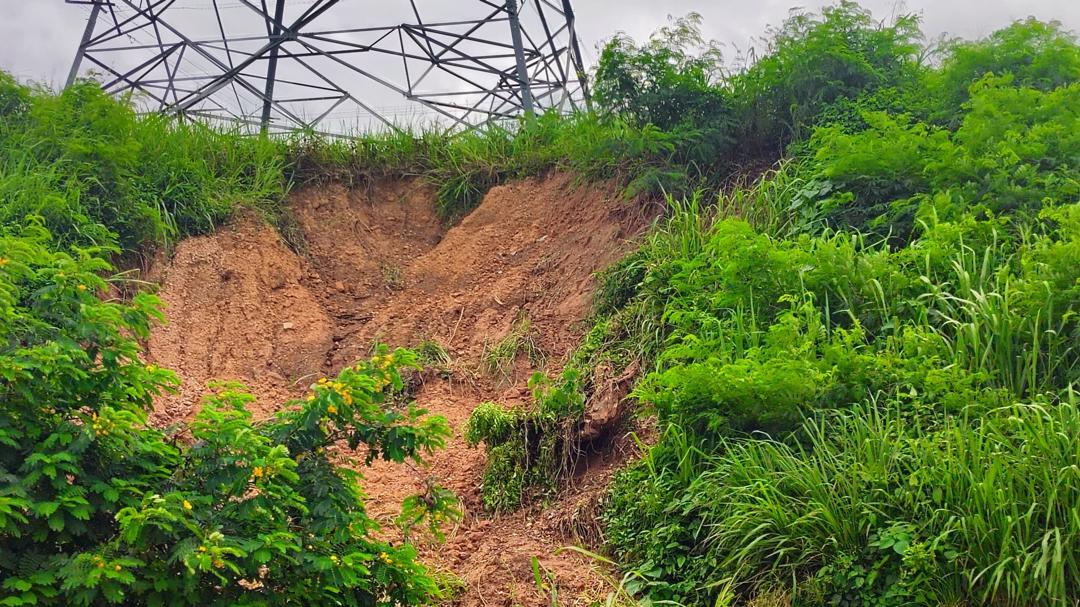

A potential infrastructure failure is unfolding at Sekondi’s Albert Bosomtwi-Sam Fishing Harbour in the Western Region, where one of the high-voltage transmission pylons that transmits power from the Karpowership to the national grid is facing imminent collapse following severe erosion and repeated mudslides.
The alarming development comes just days after a fire outbreak at a premix fuel dump within the harbour enclave, raising fresh concerns about the vulnerability of critical national infrastructure concentrated within the area.
Investigations by our news team reveal that continuous heavy rains in Sekondi have triggered extensive slope failures along the stretch from the main entrance of the Albert Bosomtwi-Sam Fishing Harbour toward the operational zone of the Karpowership and GRIDCo installations.
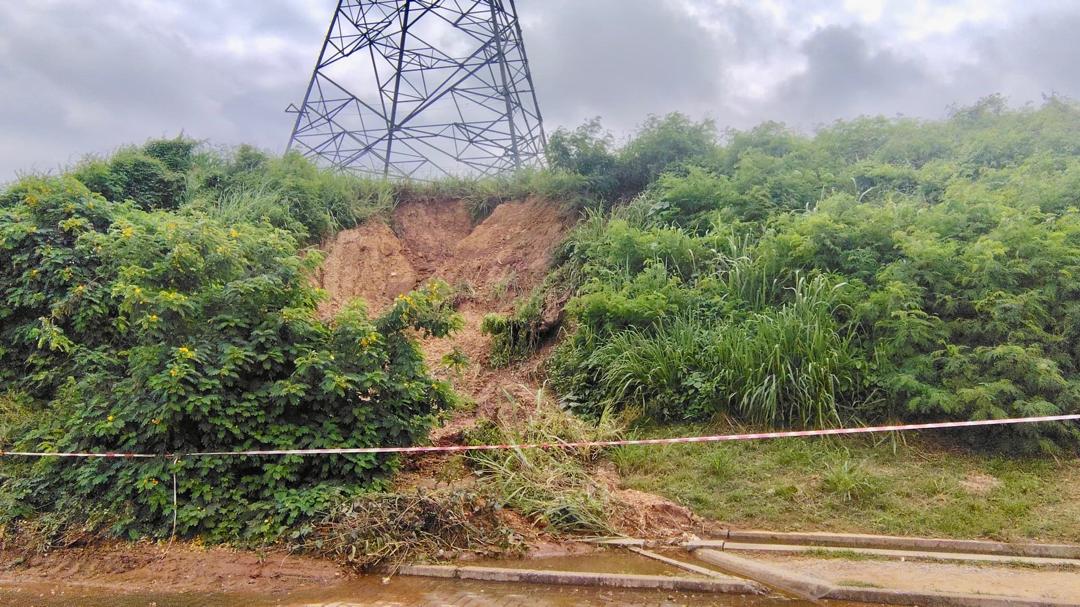
Large sections of earth supporting one of the steel lattice transmission towers have been washed away, leaving portions of the tower’s foundation dangerously exposed. The situation has become so precarious that sections around the structure have already been cordoned off following an earlier mudslide.
A close inspection of the site shows significant scouring around the tower base, with the natural embankment that previously provided lateral support to the foundation gradually disappearing under the force of runoff and erosion.
This progressive scour around the tower foundations will significantly increases the risk of differential settlement and structural tilt, conditions that can precipitate sudden collapse under sustained wind or conductor tension loads.
Residents, fisherfolk and workers within the harbour enclave fear that another intense rainfall event similar to that experienced last week could trigger a major slope failure, undermining the remaining support structure and causing the transmission tower to buckle under its own weight.
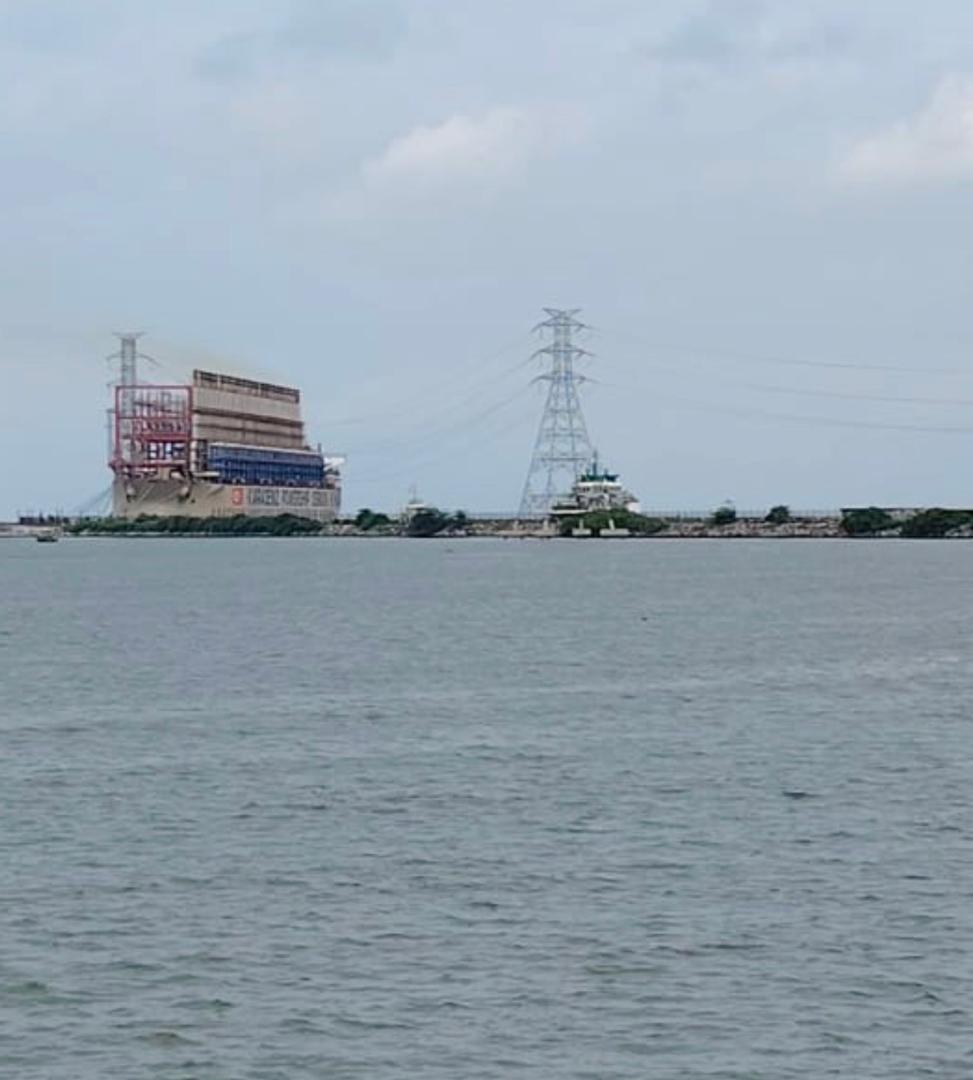
The threat is particularly alarming given the pylon’s proximity to a busy fishing harbour, commercial facilities, fuel-related installations, market activities and densely populated areas frequented daily by fisherfolk, traders, workers and motorists.
A collapse could trigger secondary disasters, including electrical fires, explosions, destruction of businesses and extensive property damage. If live conductors come into contact with nearby fuel facilities or combustible materials, the consequences could be catastrophic.
The threatened tower forms part of the high-voltage transmission infrastructure through which power generated by the Karpowership is evacuated into the national grid.
The Karpowership facility, located at the Sekondi Naval Base, supplies approximately 450 megawatts of electricity to the national grid, making it one of the country’s most strategically important power generation assets. The plant was connected to GRIDCo’s 330kV transmission network following its relocation from Tema to Sekondi and remains a critical contributor to national power supply.
An unnamed source at the Albert Bosomtwi-Sam Fishing Harbour told our reporters that repeated warnings and emergency alerts had allegedly been issued to both GRIDCo and Karpowership over the deteriorating slope conditions long before the peak of the rainy season.
According to the source, concerns were raised about the progressive erosion, and the absence of stabilisation works around the tower base, with calls for urgent engineering intervention reportedly going unheeded until after a recent fire outbreak prompted site inspections by personnel believed to be from the relevant agencies.
By Eric Yaw Adjei