
Ghana is bleeding gold, but the real cost is poisoned rivers, ruined farmland, and sick communities.
Illegal mining, or galamsey, has spread like a cancer. Ordinary citizens pay the price while many believe politicians are feeding off the chaos. From one government to the next, promises have been made to stop the destruction. But on the ground, the story is clear: leaders appear complicit, enforcement is weak, and the country’s environment is sinking deeper into ruin.
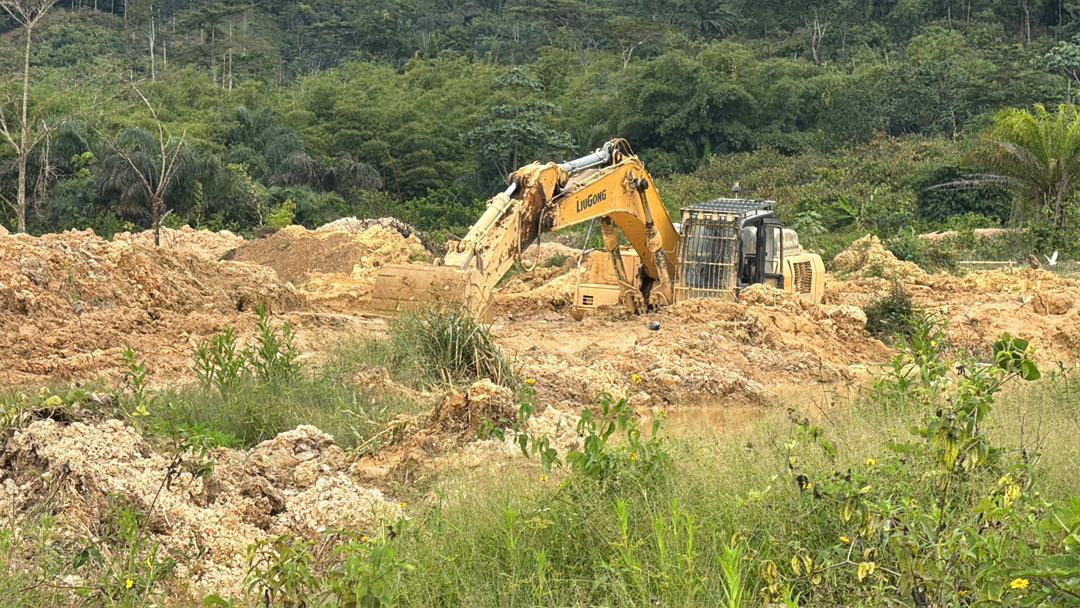
The devastation is undeniable. Rivers like the Pra, Offin, and Ankobra are clogged with mud and heavy metals, their waters unsafe for drinking or farming. Treatment plants are breaking down under the pollution load. Farmers say their cocoa trees are dying, crops refuse to grow, and fish have disappeared. Families who once drank from rivers now depend on sachet water – expensive and unreliable.
The human toll is alarming. Doctors warn of a rise in kidney failure, neurological damage, and respiratory disease linked to mercury and cyanide. Children are most at risk, exposed through water, food, and even the soil. “Our water is dead, our farms are dead, and our leaders are silent,” said a frustrated farmer in the Ashanti Region. “It feels like we are being sacrificed.”
Sacrifice is exactly what it feels like. Many Ghanaians now believe politicians are not failing to stop galamsey. They are choosing not to. Crackdowns come with noise and cameras but soon fade. Small miners are paraded as scapegoats, while the real players, often with political ties, continue untouched. The suspicion is growing that galamsey funds campaigns and lines pockets. It is not incompetence; it is profiteering.
The anger is boiling. Residents in mining regions speak openly about betrayal. Activists accuse leaders of hypocrisy. “They talk against it in public,” one campaigner said, “but in private, they are part of it.” Social media hashtags like #StopGalamseyNow show a nation losing patience. Analysts warn that without decisive action public fury could spill into unrest. Communities living with poisoned water and collapsing farms cannot endure endless lies.
The scale of destruction is staggering. Officials say more than 5,252 hectares of forest reserves, 44 out of Ghana’s 288 reserves have been devastated by galamsey. Rivers now record turbidity levels over 10 times the safe limit. Some readings exceed 5,000 NTU when they should be below 500. The earth appears stripped bare, trees gone, waterways choked.
Cocoa, Ghana’s pride, also seems to be under attack. COCOBOD reports over 19,000 hectares of cocoa farms destroyed or badly damaged in the Eastern, Western, and Ashanti regions – areas that supply more than 90% of Ghana’s cocoa. Farmers face collapsing incomes, while international buyers begin testing beans for heavy metals. If contamination is confirmed, Ghana’s export market could shrink overnight.
The financial cost of repair is overwhelming. Experts estimate that restoring just 3,000 hectares of ruined land would cost US$120 million – about $40,000 per hectare. Reclaiming thousands more hectares of degraded farmland and rivers could run into billions. Yet the destruction continues. Leaders stay silent, and in that silence, suspicion thrives.
This is not a crisis caused by ignorance or lack of law. Ghana has mining regulations, task forces, and policies. What it lacks is honesty and courage. Enforcement is selective. The powerless are punished; the powerful remain shielded. Leaders condemn galamsey at rallies while allegedly profiting in private. This duplicity has become a national scandal — and the public knows it.
Solutions are not a mystery. Ghana needs independent enforcement, immune from political pressure, empowered to arrest and prosecute anyone, regardless of status. Mining concessions must be transparent, with ownership records open to all. Gold revenues must directly fund river and land reclamation projects, overseen by civil society. Most urgently, communities need alternatives: jobs in legal mining, sustainable farming, and eco-tourism. Poverty drives galamsey, but greed sustains it.
The choice is stark. Leaders can keep pocketing profits while rivers die and farms collapse. Or they can act decisively, honestly, and without fear or favour. What is at stake is not only the environment but the health of millions, the credibility of the state, and Ghana’s future stability.
Ghanaians are no longer fooled by speeches and empty pledges. They see the poisoned water. They feel the sickness. They count the ruins. Their patience is running out. The time for soft words has passed. What the nation needs now is truth, courage, and action – or the anger rising in the streets will soon be impossible to contain.