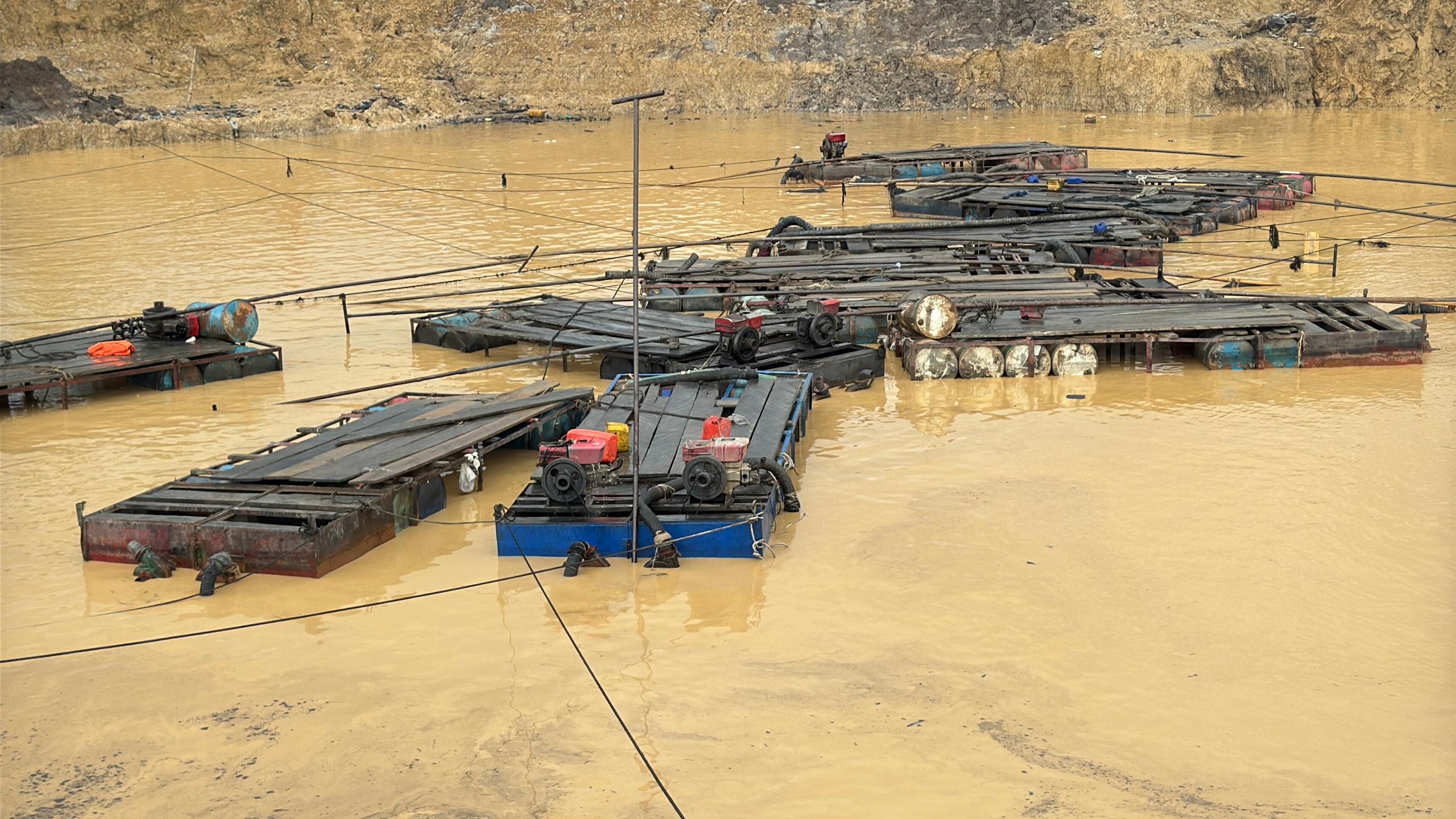

Co-Chair of the Citizens Movement Against Corruption, Edem Senanu, has called for stronger and more coordinated action against illegal mining, urging the government to treat the fight against galamsey as a national emergency.
Speaking on the ongoing illegal mining crisis, Mr. Senanu said Ghana’s approach to the problem has been far too passive, despite clear evidence that the situation threatens the nation’s very survival.
“There’s a frightening disconnect, some people are in denial that we have a crisis, while others admit there’s a problem but underestimate its magnitude. Either way, a crisis requires radical action,” he said on the KeyPoints on November 8.
Mr. Senanu expressed concern that the President did not declare a state of emergency when acknowledging the scale of the illegal mining menace, saying it raised questions about whether the country’s security leadership fully appreciates the gravity of the situation.
“When the President said he could not call a state of emergency, I was concerned. I wondered if those advising him truly understand where we are. Are we going to regret this later?” he asked.
He recounted his personal experience from three years ago when he reported illegal mining activities in a forest reserve. Despite confirmation from both the sector minister and the Minerals Commission that the operations were illegal, no action was taken for months.
“We have a dysfunctional system where people engage in wrongdoing with impunity, and no one acts. I had to personally go to the police to report it before investigations even began,” he said.
Drawing a comparison with Nigeria, Mr. Senanu explained how the lack of accountability and failure to reinvest resource revenues into affected communities once led to youth unrest and criminal activities there, a situation Ghana risks repeating if illegal mining persists.
He stressed that government alone cannot win the fight against galamsey and called for a broader, more inclusive approach that involves key stakeholders such as civil society, communities, and the private sector.
“Government cannot lead this fight alone. We need greater consultation, collaboration, and innovation. If we don’t expand the level of cooperation, we won’t get the results we need,” he emphasized.
Mr. Senanu added that the current strategy may not be effective enough to address the scale of the crisis, warning that without deeper collaboration, Ghana could face severe environmental and social consequences in the near future.