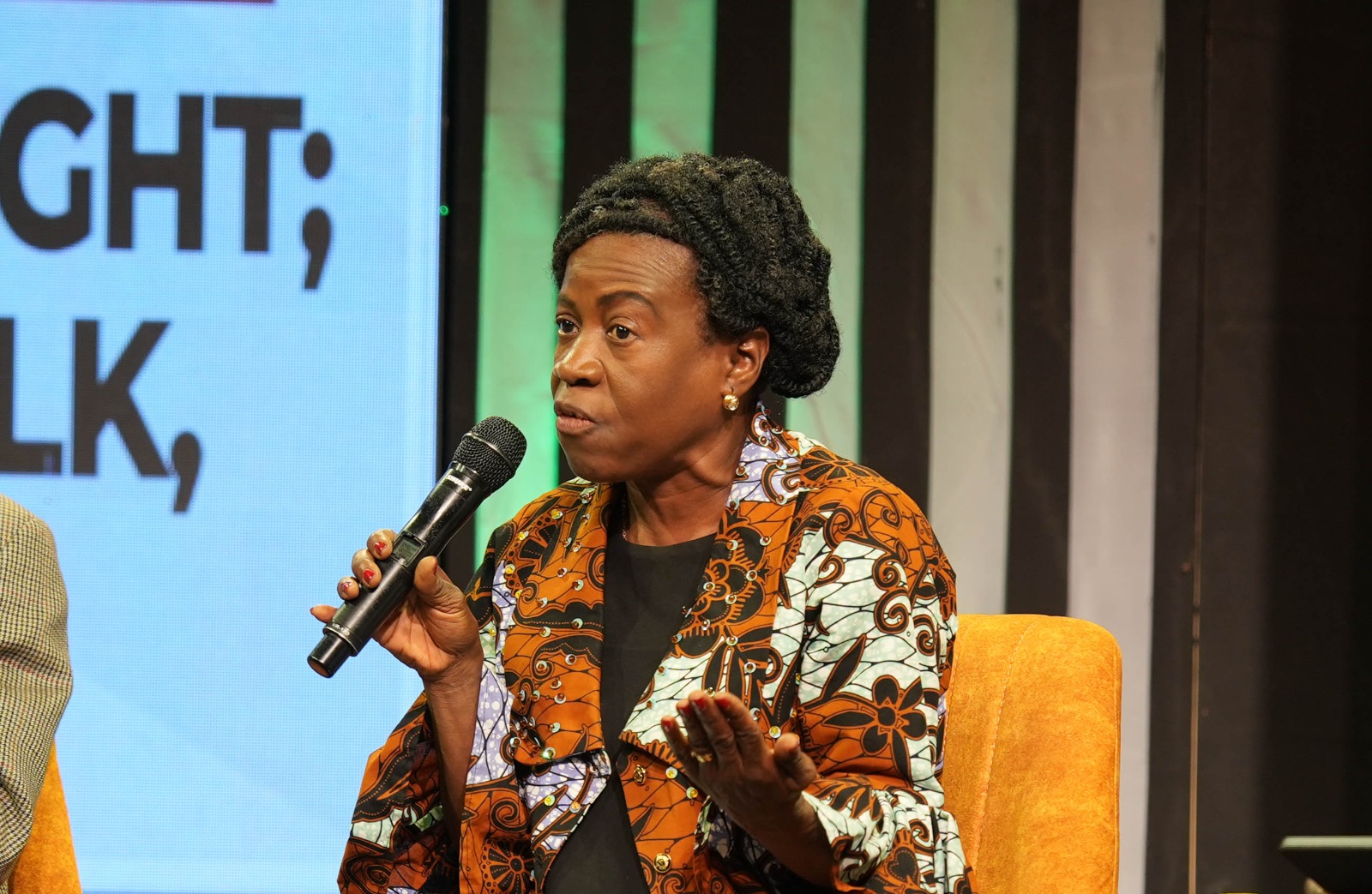

Coordinator of Eco Conscious Citizens, Awula Serwah, has made the point that there is no political will in the fight against illegal small-scale mining (Galamsey).
To that end, she has called for more support for activists to ensure the illicit mining practices are stopped.
“Support the activist, the political will is not there; otherwise, we would have resolved it,” she said when speaking during a virtual environmental conference organised by the Institute of Governance Ethics and Religion, IGER-AFRICA Friday, December 5. The conference was held under the theme: ‘Navigating the Challenges of Illegal Mining in Ghana: Impact on Individuals, Communities, Health and Policy.’
IGER-AFRICA promotes ethical leadership, good governance, and interfaith dialogue to foster peace, prosperity, and social justice across Africa.
Also speaking during the same event, Pan Africanist, Legal Practitioner and Governance Expert, Prof Patrick Loch Otieno (PLO) Lumumba, said that laws, programmes and policies in relation to the illegal small-scale mining (Galamsey) must be assessed based on their implementation and results, not mere intentions.
Prof Lumumba said that one of the greatest mistakes is to judge policies and laws, and programmes by their intentions.
He said, “People are abandoning employment to go into a place where they will make money, It reminded me of a saying which I heard as a young boy that the fly that follows the corpse to the grave is buried with the corpse and the extent to which we are that very fly, if we are not very careful in our quest to make quick money we destroy our soil, we destroy the food chain; ultimately, everybody suffers. The time, therefore, is now for us to do the right thing.”
He added I do not want to belabour the issue. I think one of the speakers made the statement that summarizes the way forward, from crisis to renewal. We know what is wrong, we must move from crisis to renewal, and the government, which campaigned on the platform of addressing this problem, must be reminded that this is a problem that really requires to be dealt with as an emergency case.
“We must also remember that one of the greatest mistakes is to judge policies and laws, and programmes by their intentions. We must judge laws, policies and programmes on implementation and results. If we do so, then we will be talking about things that are measurable, things that change people’s lives and shape the continent of Africa in a manner that is necessary and sustainable.”
Also speaking during the event, Rev Prof. Paul Frimpong-Manso, former President of the Ghana Pentecostal and Charismatic Council (GPCC), said the fight against galamsey must begin from the pulpit, the classroom and the home, describing the menace as a moral and spiritual crisis driven by greed, weak enforcement and societal decline.
According to him, the destruction of rivers and forests for selfish gain amounts to sin and violates God’s command to humanity to “till and keep” the earth.
“Ghana must embrace ethical leadership, community responsibility and spiritual renewal,” the Founder of the Frimpong-Manso.
Quoting scripture, Rev Prof. Frimpong-Manso said, “The earth is the Lord’s, and we will give an account of how we treated the land.”
He lamented what he described as a growing obsession with quick wealth, saying it had taken deep root in society.
“The desire to get rich quickly with minimal effort has taken deep root in the hearts of many. Young people see images of overnight wealth and are tempted to risk their lives in abandoned pits and polluted rivers,” he said.
He further accused some businesspeople, traditional authorities, and public officials — who ought to be custodians of societal values — of benefiting from the menace through bribes, illegal concessions, or deliberate inaction.
“In many rural communities, opportunities for decent work are limited. When young people are confronted with a choice between slow, uncertain income from farming and quick cash from galamsey, the temptation is strong. Poverty does not excuse wrongdoing, but it does make people more vulnerable,” he added.
Rev Prof. Frimpong-Manso also criticised political interference and selective enforcement of the law, warning that such practices erode public trust.
“When political actors protect illegal miners and enforcement agencies become complicit, the message is clear: wrongdoing is acceptable if it benefits the powerful,” he said.
He emphasised that the fight against galamsey cannot be led by government alone, calling for collective responsibility by communities, parents and guardians.
“Government alone cannot solve the galamsey crisis. Communities must rise as responsible and ethical stewards of the environment. Parents must reflect on the values they are imparting to their children. Are we teaching them that success is measured only by money, or by integrity and respect for God’s creation?” he questioned.