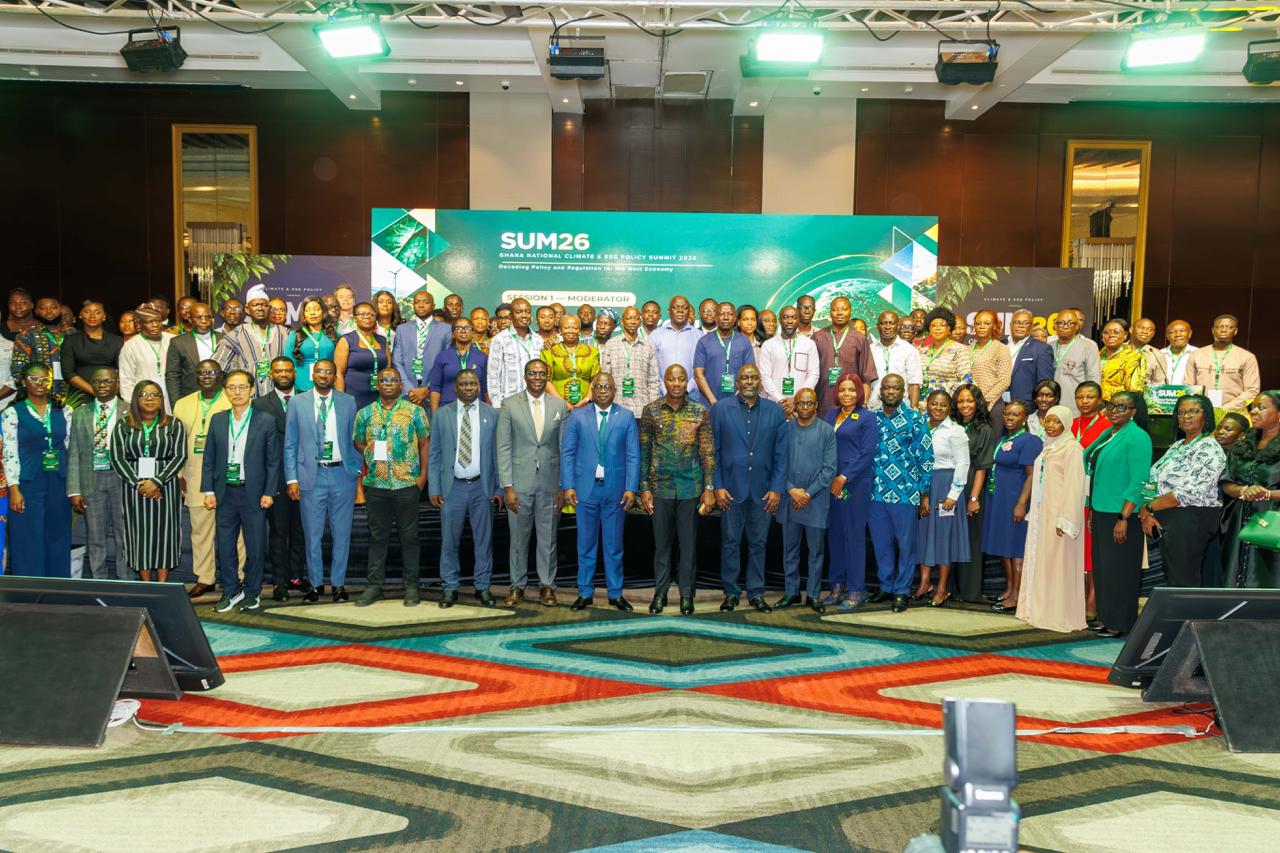

The Minister of State for Climate Change and Sustainability, Seidu Issifu, has called on government and the private sector to translate Ghana’s climate policies into jobs, investment and practical economic opportunities.
Speaking at the Ghana National Climate and ESG Policy Summit 2026 at the Mövenpick Ambassador Hotel in Accra on October 27, he said businesses must prioritise climate resilience, innovation, energy efficiency and credible Environmental, Social and Governance (ESG) practices to remain competitive.
Under the theme “Decoding Policy and Regulation for the Next Economy,” the Minister outlined key priorities, including mobilising climate finance, strengthening carbon market integrity, improving ESG reporting and preparing Ghanaian businesses for emerging international climate regulations.
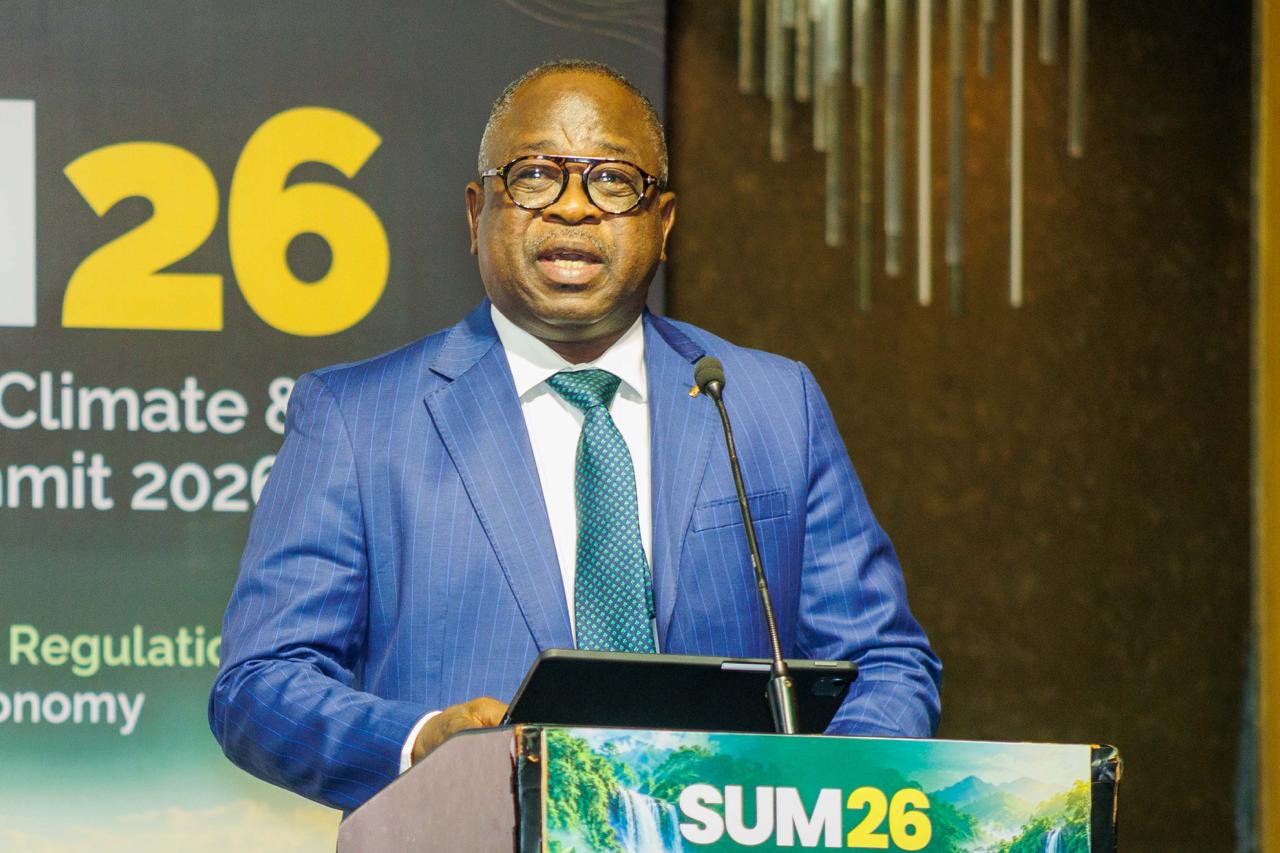
The Minister for Local Government, Chieftaincy and Religious Affairs also called for Ghana’s green transition to move beyond policy discussions in Accra to practical action at the district level.
He said Metropolitan, Municipal and District Assemblies (MMDAs) must integrate climate considerations into their development plans and budgets while strengthening their capacity to finance and implement local climate interventions.
He stressed that climate action must protect farmers, women, young people and vulnerable communities, particularly as flooding, drought and environmental degradation threaten livelihoods and food security.
The summit also highlighted the need for Ghana to prepare for the European Union’s Carbon Border Adjustment Mechanism (CBAM) and strengthen its position ahead of COP31, scheduled for November 9–20, 2026, in Antalya, Türkiye.
Organised by the Office of the Minister of State for Climate Change and Sustainability, the summit is expected to conclude with a National Communiqué to guide government institutions, regulators and businesses on climate action, sustainable investment and ESG implementation.
By Joseph Armstrong Gold-Alorgbey