
The Government of Ghana, through the Ministry of Food and Agriculture, has secured €154 million financing agreement from the Italian government to launch a transformative initiative titled “Strengthening Agri-Food Ecosystems in Ghana.”
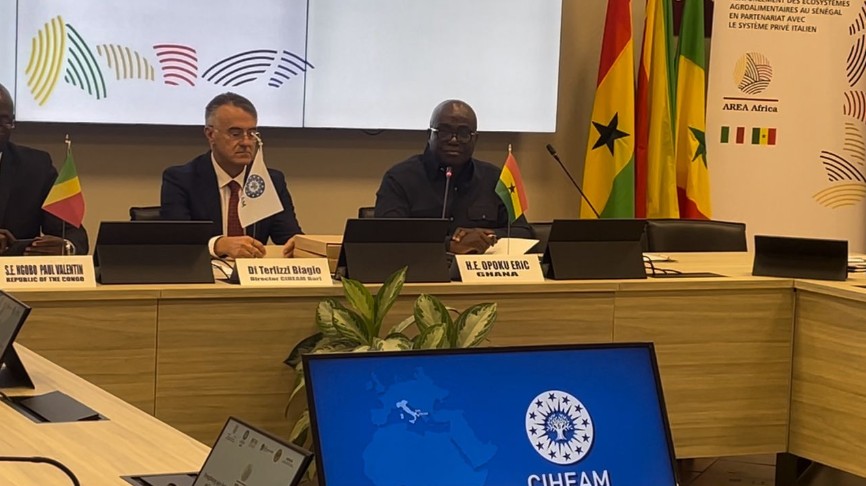
The agreement was finalized by Minister for Food and Agriculture, Eric Opoku during his participation at the Eighth Agrilevante Fair in Bari, Italy (October 7–11, 2025).
This three-year project titled AID 013210 which runs from 2025 to 2027, is designed to modernize Ghana’s agricultural value chain, enhance food security, and build climate-resilient local food systems.
The project represents a strategic collaboration between Ghanaian and Italian agricultural institutions and private sector actors.

Key Highlights of the Project
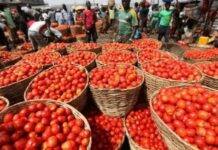
The project will see the development of 10,000 hectares of irrigated farmland for maize, rice, tomato, and soya production, aimed at supplying the domestic market year-round. The farm will operate under an all-year irrigation system to ensure continuous production and a stable food supply for the domestic market.
This project involves a partnership with the International Centre for Advanced Mediterranean Agronomic Studies (CIHEAM) and Council for Scientific and Industrial Research (CSIR) to produce a national soil testing and crop suitability chart for efficient land use.
CIHEAM will further work with the West Africa Centre for Crop Improvement (WACCI) at the University of Ghana to establish a national seed bank to support research and ensure seed security.
Aside crop production, the construction of social infrastructure including schools, toilet facilities, social centers, and ICT hubs to uplift rural communities is expected to be undertaken as part of the project.
Expected Outcomes: A sustainable cultivation and management of 10,000 hectares of farmland, improved rural livelihoods through enhanced community facilities and strengthened institutional and technical capacity in modern farming and governance.

The initiative aligns with the Sustainable Development Goals (SDGs) and is expected to benefit agricultural workers, soil analysts, seed bank agents, farmers’ associations, Ministry officials, and young agri-entrepreneurs.
Also, over 23,000 residents of the Aveyime-Battor area and 1.6 million people across the Volta Region are expected to benefit from this project.
This milestone marks a significant step toward transforming Ghana’s agri-food system into a more productive, inclusive, and sustainable sector.