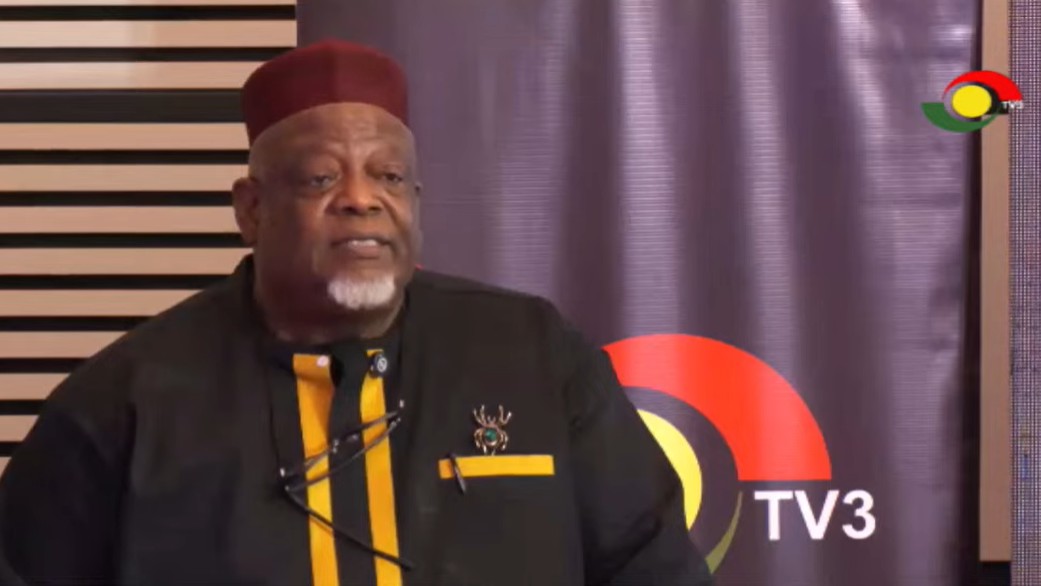

The Chief Executive Officer of Dalex Finance, Joe Jackson, has raised concerns about structural inefficiencies and local underperformance in Ghana’s economy, arguing that these factors have paved the way for foreign dominance across key sectors.
Speaking at the Economic Dialogue organized by Media General on March 26, 2026, Jackson addressed the theme “Who Owns the Ghanaian Economy?” and delivered a critical assessment of the country’s economic structure.
He asserted that “Ghana’s challenges are largely self-inflicted, and our own underperformance has built a condition for foreign dominance.”
According to the Chief Executive, “external control of the economy is not imposed but rather enabled by internal inefficiencies”.
Joe Jackson urged that, stakeholders must interrogate fundamental issues within the system, posing what he described as a “deeper question”, why it is cheaper to transport rice internationally than within Ghana.
He also suggested that such disparities point to systemic problems in infrastructure, logistics, and policy implementation.
Touching on key sectors, The CEO of Dalex Finance highlighted concerns in the oil industry, referencing production levels and arguing that control of the sector remains a central issue.
Joe Jackson pointed out anomalies such as mining companies sourcing basic resources like water from neighboring Côte d’Ivoire, describing it as a sign of deeper inefficiencies.
“Despite Ghana’s position as a global leader in gold extraction, the country is unable to translate resource wealth into broad-based economic prosperity. We’ve become a global leader in extraction but not in wealth creation,” he stated.
He emphasized that “No one enforces foreign dominance, it was invited by local weakness,”
To address these challenges, Joe Jackson proposed a set of measures, including mobilizing domestic capital, building international champions, and moving up value chains to retain more value within the country.
The Economic Dialogue brought together policymakers, business leaders, and analysts to discuss pressing issues affecting Ghana’s economic future.