
The Ghana Statistical Service (GSS) has revealed that Informal Cross-Border Trade (ICBT) between Ghana and its three land neighbours, Togo, Burkina Faso, and Côte d’Ivoire, was valued at 7.4 billion cedis in the fourth quarter of 2024.
This figure represents 4.3 percent of Ghana’s total trade for the period.
The data comes from the GSS’s first-ever national ICBT survey, which covered the period from October to December 2024, gathering information from 321 active border points.
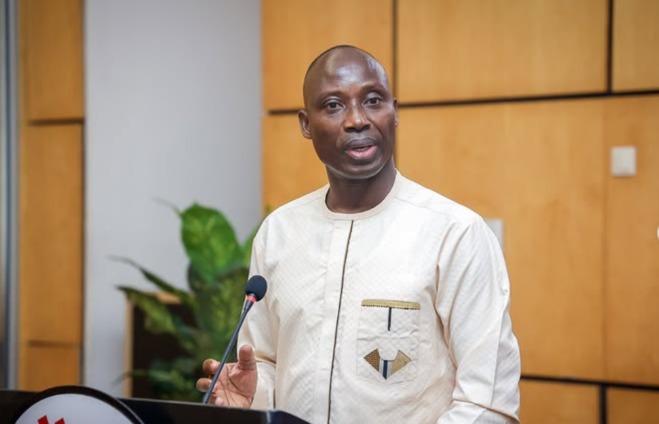
Government Statistician Dr. Alhassan Iddrisu, who disclosed this, emphasised the critical nature of the findings, stating that systematically measuring informal trade “strengthens the foundation for better economic planning” and ensures that national policies capture the full scope of economic activity and its real value to livelihoods.
Key Trade Findings
The survey highlighted the crucial role of ICBT in regional commerce and food supply:
- Trade Balance: Ghana recorded a trade surplus with Burkina Faso (GHC576m) and Côte d’Ivoire (GHC378m), but a deficit with Togo (GHC539m).
- Share of Trade: Informal trade accounted for 61.2 percent of all trade with Togo, 55.7 percent with Côte d’Ivoire, and 37.1 percent with Burkina Faso.
- Main Products:
- Informal Exports: Alcoholic drinks (GHC187m), soft drinks (GHC170m), petrol, and second-hand clothes.
- Informal Imports: Cooking oil (GHC270m), mattresses (GHC171m), rice (GHC143m), and livestock (GHC159m).
- Food’s Role: Food products constituted nearly half of informal imports (49.6%) and 41% of informal exports, underscoring their central role in regional food security.
The Upper East Region emerged as Ghana’s main trade corridor, recording GHC1.27 billion in informal exports, fifteen times higher than the Savannah Region. Paga was identified as the most used border for informal imports. The survey also noted that tricycles and motorbikes were the most common means of transport, reflecting small-scale, frequent movements.
Policy Recommendations
Recognising that informal trade is vital for household income but presents challenges like reduced tax collection and limited regulation, the GSS offered key recommendations:
- Formalisation: Support informal traders through simplified registration, microcredit access, and training in record-keeping.
- Infrastructure: Improve border infrastructure, roads, and inspection systems.
- Regional Cooperation: Enhance cooperation to harmonise customs procedures and share trade data.
- Domestic Production: Promote domestic production of key imports like cooking oil, rice, and mattresses to reduce import dependence.
The GSS concluded that integrating the ICBT data into national planning will help bridge the gap between formal and informal trade, improve statistics accuracy, and strengthen Ghana’s participation in regional trade under the African Continental Free Trade Area (AfCFTA).
By Eben Agyekum-Boateng, 3Business