



The Ghana Leather and Footwear Manufacturers Association (GLFMA) has accused some foreign retailers of engaging in illegal retail activities and customs duty under-declaration, which it says are threatening the survival of local footwear manufacturers.
The association says the alleged practices, coupled with the influx of cheap and substandard imported footwear, are undermining local businesses, costing the state revenue and pushing thousands of artisans and young people out of employment.
Addressing the media in Accra, President of the Ghana Leather and Footwear Manufacturers Association, Gilbert Akosinti, said the association had documented evidence of customs valuation discrepancies and alleged illegal foreign participation in Ghana’s retail sect or.
He said the association was relying on provisions of the Ghana Investment Promotion Act, 2026, which prohibit non-citizens from engaging in certain reserved retail and petty trading activities.
Mr Akosinti further alleged that some foreign operators were using local businesses to conceal foreign ownership or control of retail outlets, a practice he described as fronting and prohibited under the law.
He called on authorities to investigate the alleged activities and enforce the relevant laws to protect Ghanaian businesses.
The association also raised concerns about the alleged under-declaration of imported footwear at the country’s ports, claiming some finished products were cleared at low values, resulting in reduced import duties paid to the state.
According to Mr Akosinti, the situation allows imported footwear to be sold at prices local manufacturers struggle to compete with, despite the high cost of production.
He urged the Ghana Revenue Authority’s Customs Division to strengthen import valuation, enforcement and monitoring to prevent revenue losses and ensure fairness in the trading environment.
The manufacturers also accused importers of flooding the Ghanaian market with cheap footwear, which they believe constitutes unfair trade practices and threatens domestic production.
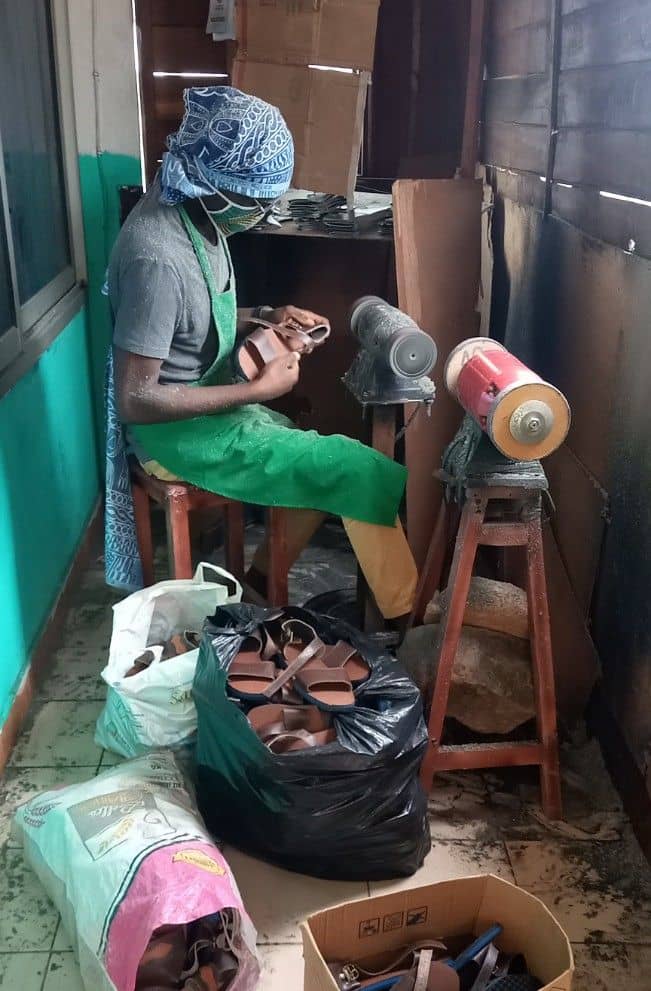
They called on the Ghana International Trade Commission to investigate possible dumping and consider appropriate trade protection measures where violations are established.
The association further expressed concern over the importation of substandard and non-conforming footwear, urging the Ghana Standards Authority to intensify inspections and ensure imported products meet required quality standards.
Mr Akosinti said local manufacturers were already burdened with high import duties and port charges on essential raw materials, including leather, adhesives and other footwear components that are not readily produced locally.
He said the situation creates an unfair competitive environment for domestic manufacturers, who must contend with rising production costs while imported finished products allegedly enter the market at undervalued prices.
The association is therefore calling for stronger enforcement of investment, customs, trade and product-quality regulations to protect local industries, safeguard jobs and promote Ghanaian manufacturing.
The association was joined at the press briefing by representatives of the Association of Ghana Industries, trade advocacy groups, automobile artisans, carpenters, bag makers and belt manufacturers, who expressed solidarity with the call for measures to protect local businesses.