
As Ghana continues to confront the twin challenges of youth unemployment and climate change, Ghana’s Most Beautiful 2024 Winner, Queen Nihad Titiaka Oases Ibrahim, is leading efforts to demonstrate that environmental sustainability and economic empowerment can go hand in hand.
Through her non-profit organisation, EcoGreen Oases Legacy, Queen Titiaka has empowered 109 youth, women, returnees, and persons with disabilities in the Bono East Region with practical green entrepreneurship skills designed to transform waste into viable business opportunities.
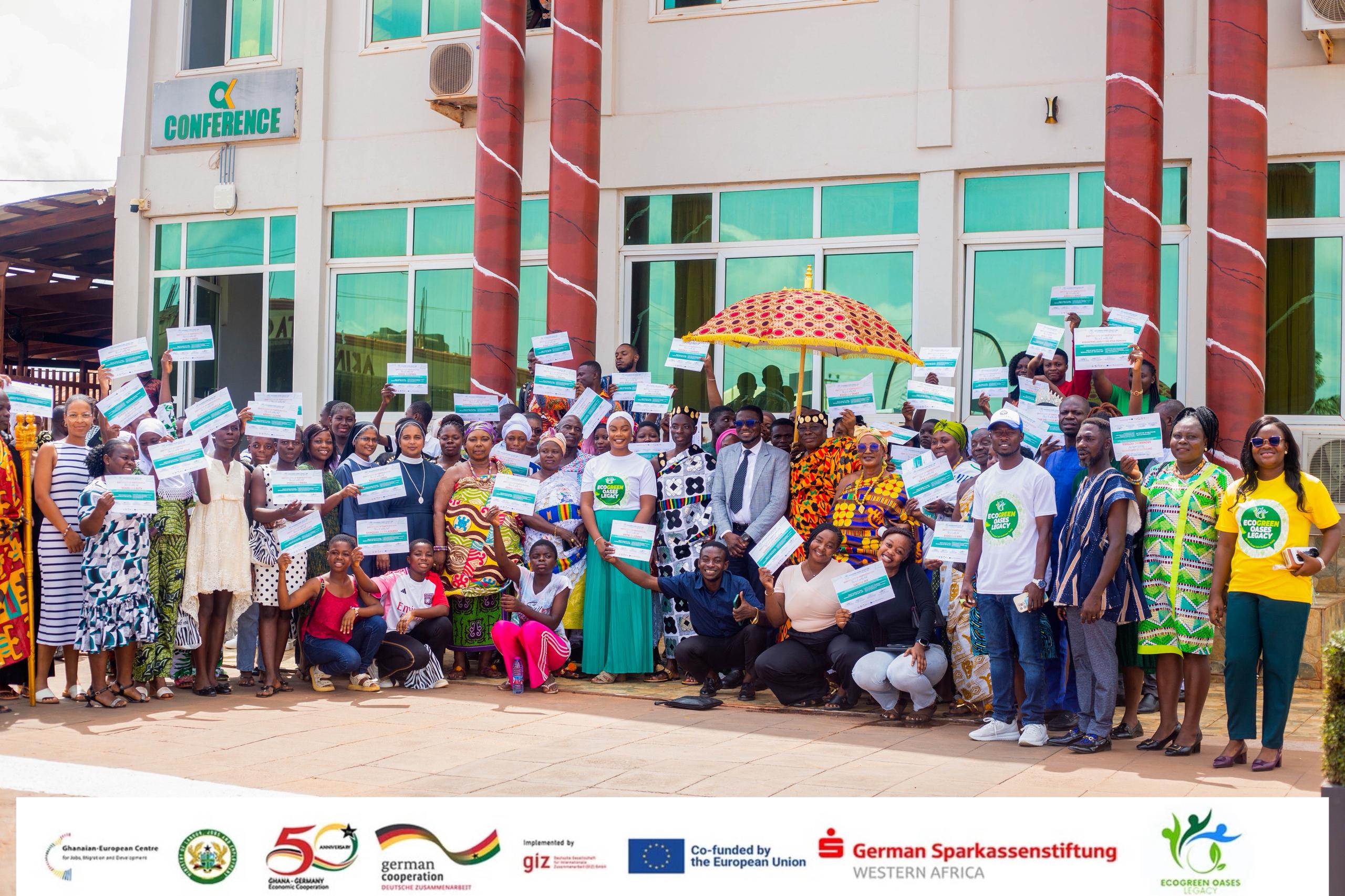
The beneficiaries participated in a three-day Green Skills Training Programme held from June 1 to 3, 2026, at the Akina City Hotel in Techiman, where they received intensive training in recycling, upcycling, entrepreneurship, digital business development, financial literacy, and enterprise management.
The initiative is being implemented with support from development partners including the German Sparkassenstiftung Western Africa (DSIK), the Ghanaian-European Centre for Jobs, Migration and Development (GEC), and GIZ. The programme forms part of a broader intervention supported by GEC, the European Union (EU), and GIZ aimed at empowering returnees, youth, women, and vulnerable groups with practical, market-relevant skills that promote economic reintegration, entrepreneurship, and long-term resilience.
For Queen Titiaka, the programme is about much more than skills acquisition.
“The climate crisis and unemployment crisis are deeply connected. If we are serious about addressing both, we must equip people with the skills to create value from environmental challenges. Every waste material represents a hidden economic opportunity. Through green entrepreneurship, we can create jobs, reduce pollution, promote innovation, and empower communities at the same time,” she said.
The programme introduced participants to practical methods of converting discarded materials into useful and marketable products while helping them develop business plans and entrepreneurial strategies to generate income from their newly acquired skills.
According to Queen Titiaka, EcoGreen Oases Legacy believes that environmental responsibility should not be viewed as a burden but as a pathway to economic transformation.
“Our vision is to raise a generation of climate-conscious entrepreneurs who see opportunities where others see problems. We want young people to understand that sustainability can be profitable and that protecting the environment can also create jobs and improve livelihoods,” she added.
The initiative received strong endorsement from traditional authorities and community leaders within the Techiman Traditional Area.
Representing the Omanhene of Techiman, Oseadeeyo Akumfi Ameyaw IV, the Special Guest of Honour, Nana Kwame Brafi, praised the initiative for providing practical solutions to unemployment while promoting environmental stewardship.
He urged participants to take advantage of the skills acquired and apply them to create businesses capable of supporting themselves and contributing to local economic growth.
Similarly, Nana Ati Adjei, Chief of Mateso and Head of Endoscopy at Holy Family Hospital, commended the organisers for implementing an intervention that simultaneously addresses environmental degradation and youth unemployment.
The programme attracted a broad range of stakeholders, including Nana Afia Kunadu Yeboah, the 3rd Runner of GMB 2025, traditional leaders, healthcare professionals, financial institutions, religious leaders, development practitioners, and community representatives, reflecting growing recognition of the role green entrepreneurship can play in advancing sustainable development.
One of the major highlights of the programme was the participation of Zenith Bank, whose Techiman Branch Manager, Mr. John Banyuuro, assured beneficiaries of the bank’s willingness to support viable business ventures emerging from the training through appropriate financial products and advisory support.
Organisers believe access to finance remains one of the critical ingredients needed to convert newly acquired skills into successful enterprises.
The training was delivered by a multidisciplinary team of facilitators with expertise in entrepreneurship, communications, digital skills, climate action, and product development.
The team included Mr. Arnold Andrew Asafu-Adjeye, international media and communications consultant and mentorship coach; Mr. Mohammed Alhassan; Mrs. Anthoinet Ohene-Amoah; Mr. Emmanuel Kwame Agyemang (Daakyehene); Mr. Emmanuel Nyame Asare; Mr. Lisbon Odame; Prince A. A. Sadat, Project Coordinator; and Queen Nihad Titiaka Oases Ibrahim herself.
Through hands-on demonstrations and practical exercises, participants were guided to create products from recycled materials while learning how to market, package, and commercialise their innovations.
Outstanding participants and teams were recognised at the closing ceremony with awards, certificates, and start-up support aimed at helping them transition from training to enterprise creation.
Presenting the awards, Prince A. A. Sadat, Project Coordinator for EcoGreen Oases Legacy, described the intervention as a catalyst for long-term transformation.
“This programme is not an end in itself. It is the beginning of a journey towards self-reliance, innovation, and sustainable livelihoods. We want participants to leave here not only with skills but also with the confidence to create opportunities for themselves and others,” he said.
The Techiman programme builds on the success of previous EcoGreen interventions, including a similar initiative in the Savannah, Northern, Greater Accra, and Eastern regions. To date, the organisation has trained approximately 500 beneficiaries in green entrepreneurship and climate-related livelihood skills.
With plans underway to expand the initiative to additional regions across Ghana, EcoGreen Oases Legacy hopes to contribute to the emergence of a new generation of entrepreneurs who are tackling climate change not only as an environmental challenge but also as an economic opportunity.
As discussions around job creation, climate resilience, and sustainable development continue to gain prominence, Queen Titiaka’s initiative is providing a practical example of how communities can be empowered to turn waste into wealth and transform environmental challenges into pathways for prosperity.