


For motorists navigating the Budo City–Bogoso Junction corridor in Tarkwa, a journey that should ordinarily take minutes had become an ordeal, with poor road conditions adding between 30 minutes and an hour to travel time.
Vehicle breakdowns were frequent, commercial drivers were reluctant to enter the community, and residents faced additional difficulties accessing healthcare, markets and other essential services.
The situation was particularly telling in a preliminary survey conducted by the Gold Fields Ghana Foundation. Of the 142 residents and 104 motorists interviewed, more than 92 per cent described the road as poor or very poor.
Two in every three motorists reported frequent vehicle breakdowns, while 97 per cent said the condition of the road added between 30 minutes and an hour to their journeys. Nearly six in ten residents also reported difficulties accessing healthcare because of the deplorable road network.
It was a daily inconvenience with wider implications for livelihoods, mobility, safety and access to essential services.
Today, that reality is changing.
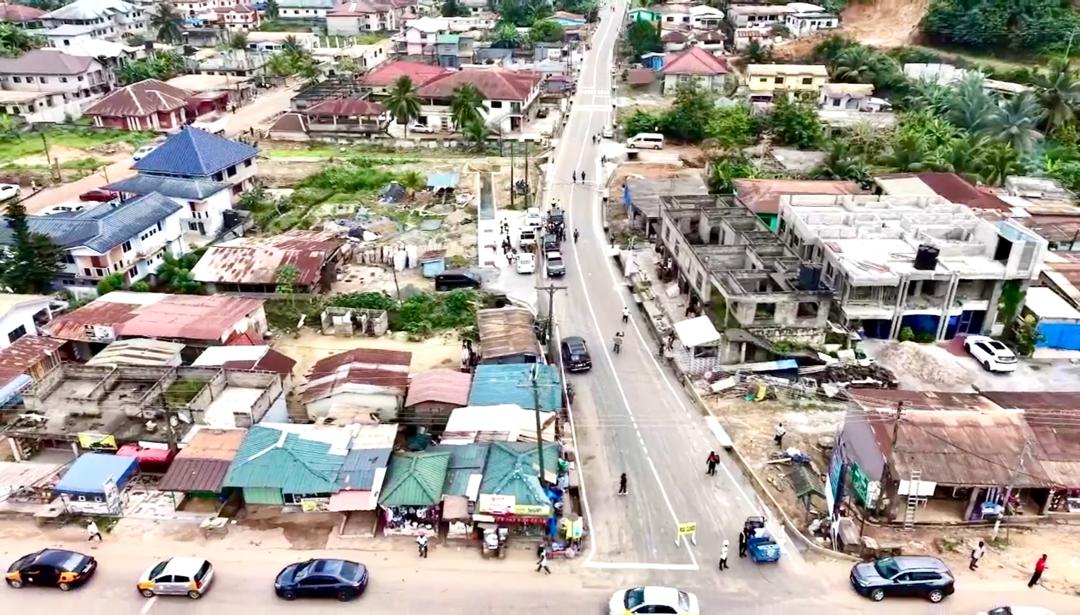
The Gold Fields Ghana Foundation has handed over a completed 2.26-kilometre, double-sealed bitumen road linking Budo City in New Atuabo to Bogoso Junction in the Tarkwa-Nsuaem Municipality, following an investment of approximately GH¢15.4 million.
The road is expected to provide motorists with an alternative to the increasingly congested Tarkwa highway, reducing travel time along the corridor from as much as an hour to approximately 10 minutes.
For residents, the intervention represents considerably more than a new stretch of asphalt. It promises easier access to healthcare facilities, schools and markets, reduced vehicle maintenance costs and renewed opportunities for commercial activity.
Manager of Gold Fields Tarkwa Mine, Dr. Catherine Kupal, said the project was conceived in response to the everyday challenges identified by the people who depended on the road.
“Not long ago, this Budo City road was one that many motorists simply avoided,” she said, explaining that the Foundation’s preliminary assessment helped establish the scale of the difficulties confronting residents and road users.
She noted that the project was deliberately designed to address these challenges comprehensively, incorporating prime coating, double bitumen surface dressing and concrete paving in selected sections.
According to Dr. Kupal, the project was executed by local contractor Woodbine Ventures under the technical supervision of the Foundation and the Tarkwa Municipal Assembly. Although initially planned as a two-year intervention, it was completed within 18 months without compromising construction standards.
“A journey that took 30 minutes to one hour in heavy traffic is expected to take about 10 minutes. We expect commercial drivers to return to this community, lower repair bills for vehicle owners and easier journeys to school, the market and the hospital, especially in emergencies,” she said.
The project also generated employment for 33 people from the beneficiary communities, including artisans, machine operators and labourers, while creating business opportunities for local suppliers.
But beyond the immediate infrastructure delivered, the project offers a window into a broader philosophy guiding the Gold Fields Ghana Foundation’s community investments that “corporate social responsibility must go beyond gestures of appreciation or token interventions. It must respond to the real needs of host communities, address challenges that directly affect their quality of life and create value that endures long after the commissioning ceremony.”
“This approach is reflected in the Foundation’s growing investment in essential community infrastructure, including roads, water supply systems and sports facilities. Its cumulative infrastructure investment in host communities now exceeds US$76.8 million,” Dr. Kupal said.
“The Budo City–Bogoso Junction road is particularly instructive in this regard. Rather than treating community development as a collection of isolated charitable activities, the intervention addresses a critical infrastructure deficit with direct implications for public safety, economic activity, healthcare access and social mobility.”
At the commissioning ceremony, the Executive Secretary of the Gold Fields Ghana Foundation, Abdel Razak Yakubu, underscored the attention paid to quality and safety in delivering the project.
“It is not just about the surface. You can also see the drains. We constructed several metres of drains to improve drainage in the area. We also installed speed humps and road signage to ensure safety,” he said.
He explained that the Foundation had adopted safety standards comparable to those applied at the company’s mine, with the intention of extending its safety culture beyond the mining operation and into surrounding communities.
The Western Regional Minister, Hon. Joseph Nelson, commended Gold Fields Ghana Limited and its Foundation for what he described as a practical demonstration of the development potential of effective private-sector partnerships.
He urged companies operating in the region to pursue corporate social responsibility initiatives that are transformative, sustainable and responsive to the development priorities of their host communities.
“The Budo City-Bogoso Junction project is a practical example of this approach. By providing an alternative route to the main New Atuabo Junction-Bogoso Junction corridor, the road will help ease traffic congestion, particularly during peak periods, improve connectivity between the two junctions and reduce travel time,” he said.
Mr. Nelson further called on residents and local authorities to protect the facility and its drainage infrastructure, stressing that the long-term benefits of the investment would depend on responsible use and collective maintenance.
By Eric Yaw Adjei