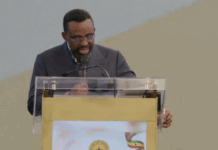




Chairman of the Monetary Policy Committee (MPC), Governor Dr Johnson Pandit Asiama, has addressed the 133rd MPC press conference in Accra on Wednesday, November 18.
In his address, Dr Asiama mentioned that the committee has aligned the Policy Rate from 14 per cent to 11 per cent.
He explained that provisional data on the government budget execution for the first ten months of 2026 showed an overall fiscal deficit, on a commitment basis, of 1.0 percent of Gross Domestic Product (GDP), against the target of 3.0 percent of GDP. The deficit was financed largely from domestic sources, he said.
On the primary balance, he sdaid that on a commitment basis, it recorded a surplus of 1.4 percent of GDP and on track to achieve the full year target of 1.5 percent of GDP due to the combined effects of fiscal prudence and effective public debt management.
Regarding the public debt, he said as of end-October 2026, the provisional public debt stock was GH¢759.3 billion, equivalent to 47.5 percent of GDP, up from GH¢641.1 billion, equivalent to 44.7 percent of GDP, at end-December 2025.
On the banking sector, he said the sector remained solvent, profitable, and liquid. As at end-October 2026, banks’ total assets rose by 21.2 percent year-on-year to GH¢512.9 billion, driven mainly by strong deposit growth.
“The financial soundness indicators also improved broadly. Capital Adequacy Ratio rose to 18.5 percent in October 2026, from 17.9 percent a year earlier. Asset quality also improved markedly, with the Non-Performing Loan (NPL) ratio declining to 13.1 percent from 19.5 percent over the same period the previous year, supported by the strong rebound in credit and a contraction in the stock of NPLs.
“The external sector was resilient during the first ten months of 2026, despite heightened global uncertainty and geopolitical tensions. The trade surplus improved substantially to US$13.0 billion between January and October, up from US$8.7 billion over the same period in 2025.
“Gold was the main driver of export growth, accounting for approximately 67.0 percent of total export earnings during the period. Higher external payment obligations, driven largely by geopolitical tensions and foreign exchange demand pressures, weighed on the central bank’s reserves,” he said.
As at 17 November 2026, he added, Gross International Reserves (GIR) stood at US$12.1 billion, approximately 4.4 months of import cover, down from US$13.8 billion, equivalent to 5.7 months of import cover at end-December 2025.
The external sector is expected to remain firm, supported by strong export receipts despite the likely volatility in global markets, he said.
“Taken together, the Committee noted significant improvements in domestic macroeconomic conditions. Domestic growth has remained firm, supported by easing credit conditions and expansion of private sector credit, and is expected to continue for the remainder of the year.
“The external sector remains sufficiently strong to provide buffers against external shocks. Fiscal consolidation was vigorously pursued in 2026, leading to better-than-target fiscal balances,” he said.
On inflation, he said, the latest forecast showed that it will gradually move back into the target range over the medium term, barring unexpected shocks from crude oil prices, El Niño risks to food production, and quarterly adjustments in utility tariffs. These risks will be carefully monitored, and an appropriate monetary policy stance maintained.