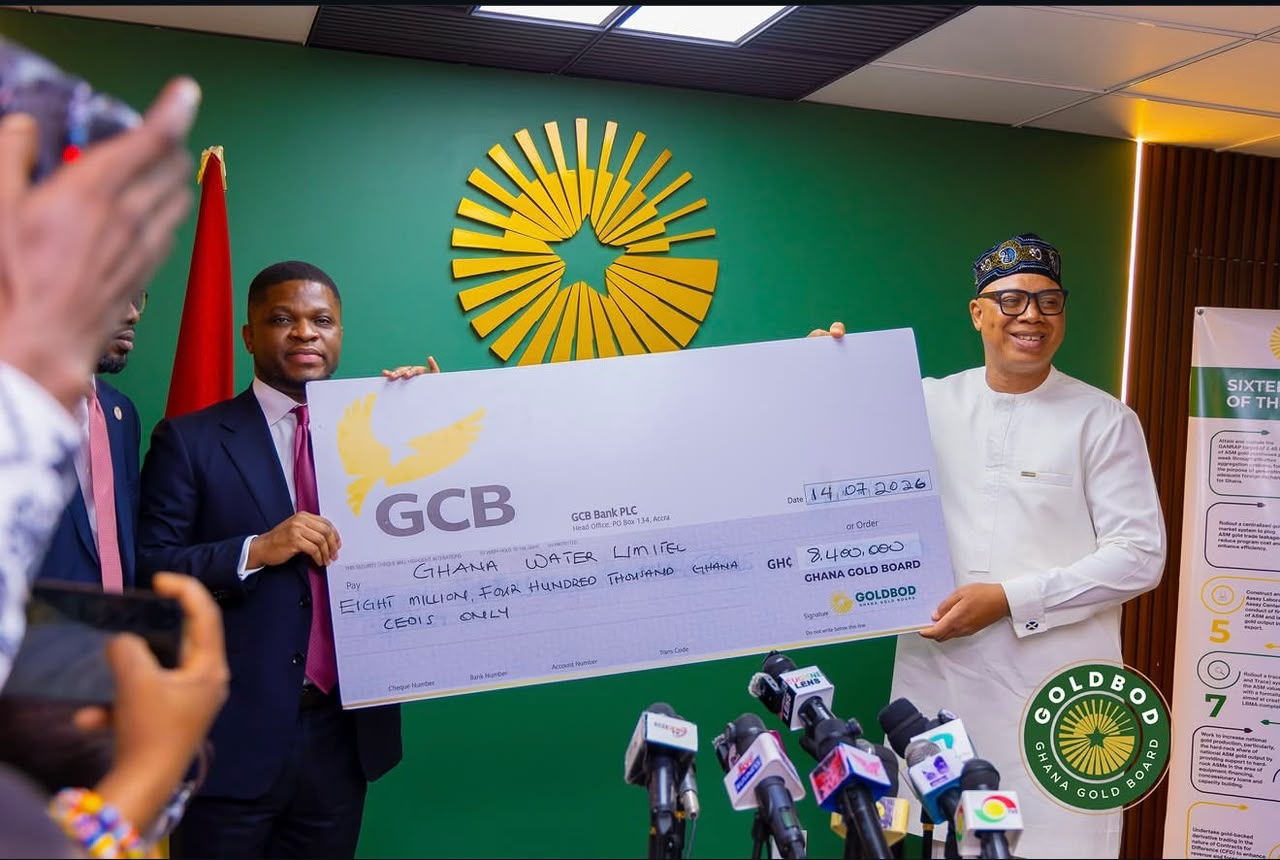

The Ghana Gold Board (GoldBod) has committed GH¢84 million towards the rehabilitation of three major water treatment systems affected by illegal mining under the first phase of a partnership with Ghana Water Limited (GWL).
The funding and implementation agreement, signed in Accra, forms part of GoldBod’s Environmental, Social and Governance (ESG) policy and its corporate social responsibility programme aimed at protecting Ghana’s water resources.
The intervention will focus on the Bunso, Daboase and Sekyere Hemang water treatment systems, where years of illegal mining have caused severe siltation, blocked water intake points and reduced the efficiency of water treatment plants.
Speaking at the signing ceremony, the Chief Executive Officer of GoldBod said the initiative reflects the institution’s commitment to supporting national efforts to restore degraded water bodies and ensure access to safe drinking water.
He explained that technical assessments conducted jointly by GoldBod and Ghana Water Limited confirmed the urgent need to rehabilitate the affected facilities.
The rehabilitation works will include desilting rivers and reservoirs, hydrographic surveys, sediment removal, reservoir capacity assessments, emergency restoration works, stabilisation of intake infrastructure and continuous water quality monitoring.
Under the agreement, Ghana Water Limited will oversee the implementation of the project, while GoldBod will provide funding and monitor the execution of the works.
Managing Director of Ghana Water Limited, Adam Mutawakilu, welcomed the intervention, saying the utility company could not tackle the challenge alone due to the scale of damage caused by illegal mining.
He expressed confidence that the support would significantly improve the operation of the affected treatment plants and enhance access to safe and reliable drinking water for communities in the affected areas.
The GH¢84 million intervention represents the first phase of the partnership, with both institutions expressing hope that additional support will be secured to rehabilitate other water treatment systems impacted by illegal mining across the country.