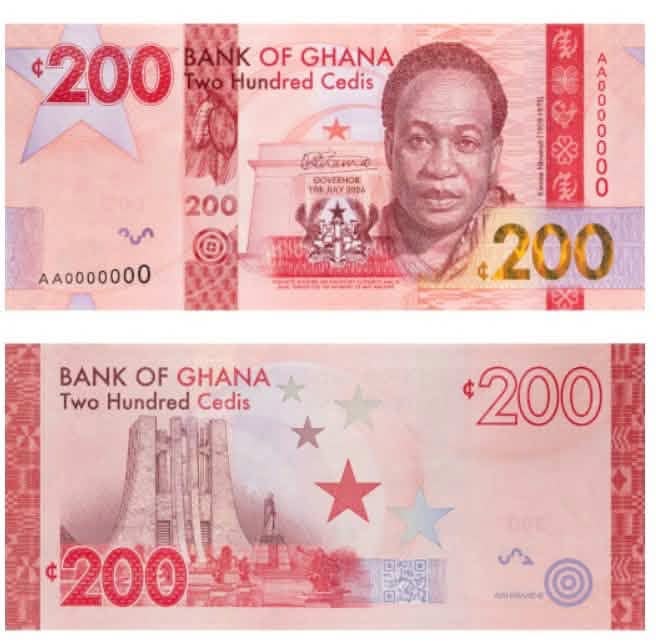

Ghana’s first President, Dr Kwame Nkrumah, is the only member of the historic Big Six featured on the Bank of Ghana’s newly unveiled Heritage Series banknotes.
The other five independence leaders have been excluded from the redesigned country’s currency.
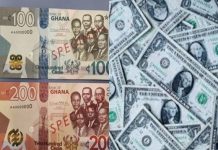
The new banknotes, unveiled on Thursday, November 12, 2026, replace the collective portrait of the Big Six, which has featured prominently on the front of the existing cedi notes, with individual images of personalities recognised for their contributions to Ghana’s development.
The Big Six comprised Dr Nkrumah, Dr Joseph Boakye Danquah, Ebenezer Ako-Adjei, Edward Akufo-Addo, Emmanuel Obetsebi-Lamptey and William Ofori Atta.
But only Dr Nkrumah has retained a place in the new series, appearing on the GH¢200 denomination as Ghana’s first President.
The other denominations feature personalities drawn from different fields, including education, religion, public service, culture and international diplomacy.
The GH¢1 note carries the image of Agnes Oforiwa Tagoe-Quarcoopome, recognised as the first Makola woman to open a bank account with the then Standard Bank of West Africa, now Standard Chartered Bank.
Cardinal Peter Poreku Dery features on the GH¢2 note, while educationist James Emmanuel Kwegyir-Aggrey appears on the GH¢5 denomination.
Justice Annie Jiagge, the first woman in Ghana and the Commonwealth to become a judge, is featured on the GH¢10 note.
The GH¢20 denomination carries the portrait of Dr Ephraim Amu, composer of the Twi version of the national anthem, “Yɛn Ara Asaase Ni, while Theodosia Salome Okoh, designer of Ghana’s national flag, appears on the GH¢50 note.
Former United Nations Secretary-General Kofi Annan completes the selection, featuring on the GH¢100 banknote.
Dr Nkrumah’s elevation to the GH¢200 denomination also marks a departure from the existing currency arrangement, where his portrait formed part of the collective image of the Big Six on the ceremonial GH¢2 note.
The Big Six played a significant role in Ghana’s independence history. They rose to national prominence following their arrest by British colonial authorities in 1948 after disturbances in Accra.
Their collective image on the existing banknotes has symbolised the nationalist struggle that culminated in Ghana’s independence in 1957.
The exclusion of other members of the Big Six has generated public debate about the propriety or otherwise of the development.
The Heritage Series adopts a different approach by celebrating individual historical figures whose contributions cut across various aspects of the country’s political, educational, religious, cultural and diplomatic development.
By Benjamin Aidoo