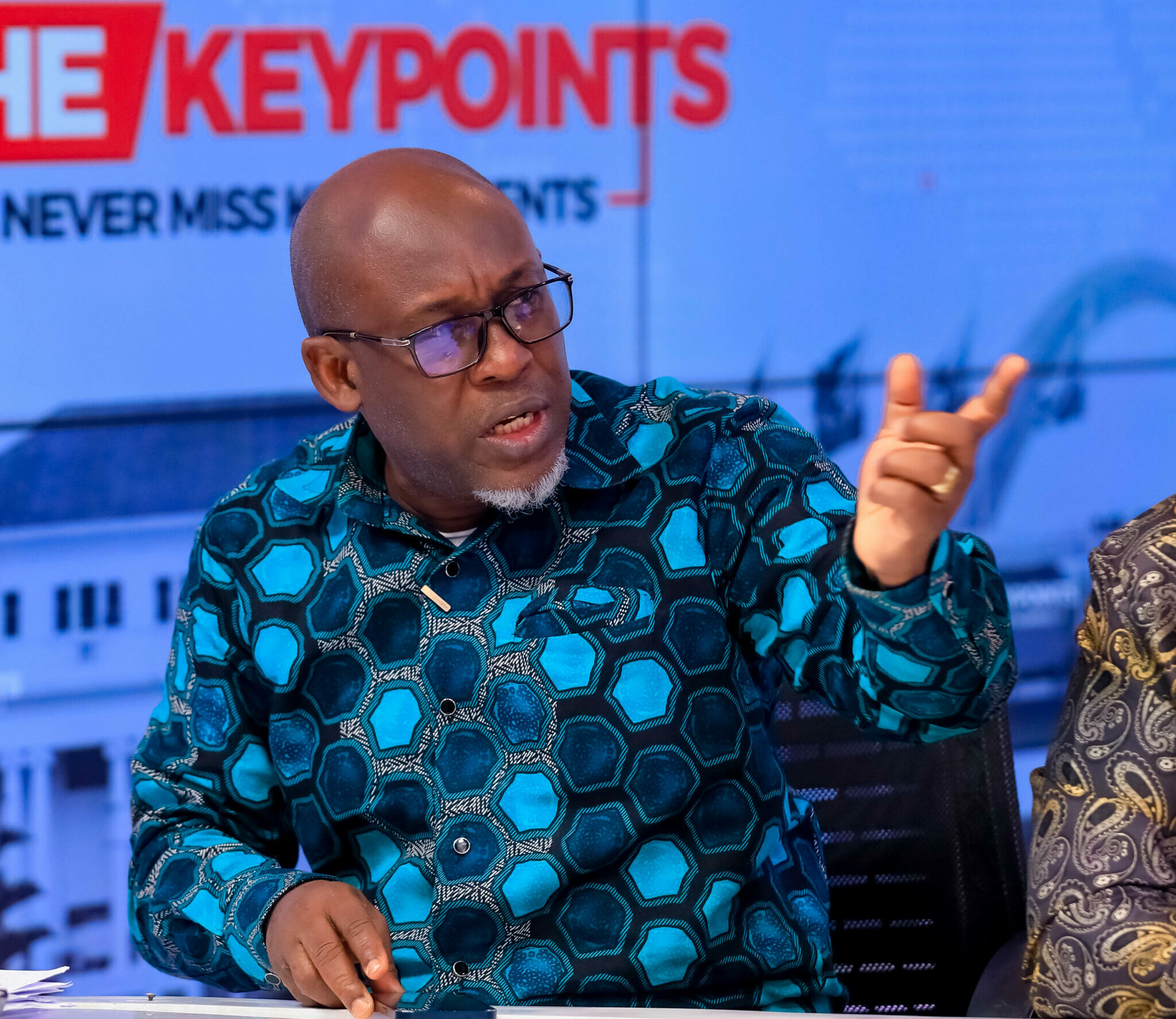

Vice President of IMANI Africa, Kofi Bentil, says Ghana’s current economic improvement is evident, but has raised concerns about the long-term sustainability of the policies driving it, particularly the domestic gold programme.
Speaking on the economy on the KeyPoints on May 9, Bentil acknowledged that conditions have improved compared to previous years, but stressed that the debate should go beyond results to the methods used to achieve them.
“I don’t run defence for the previous government. The economy was abysmal,” he said, adding that the key issue now is not whether things are better, but how the improvement was achieved.
He argued that economic policy should be judged not only by outcomes but by sustainability.
“You don’t sell your house to buy food. When the food is finished, where will you live?” he said.
Bentil raised concerns about Ghana’s domestic gold purchase strategy, warning that while it has brought in foreign exchange and supported stability, it may not be sustainable if it continues to generate losses.
He explained that selling gold to stabilise the economy may produce short-term gains, but could create future risks if reserves are depleted.
“What are you talking about? We are selling gold designed to make losses,” he said, stressing that policy decisions must consider long-term consequences.
However, he also acknowledged that the gold programme has contributed to stabilising the economy by injecting foreign currency and easing pressure on the cedi.
“The money from gold has helped reduce pressure in the economy. That is part of what has made things cooler,” he noted.
Bentil added that while the current administration’s approach has produced measurable gains, future governments will interpret and defend these policies differently depending on political perspective.
“Facts are facts, but interpretation is where politics comes in,” he said.
By Christabel Success Treve