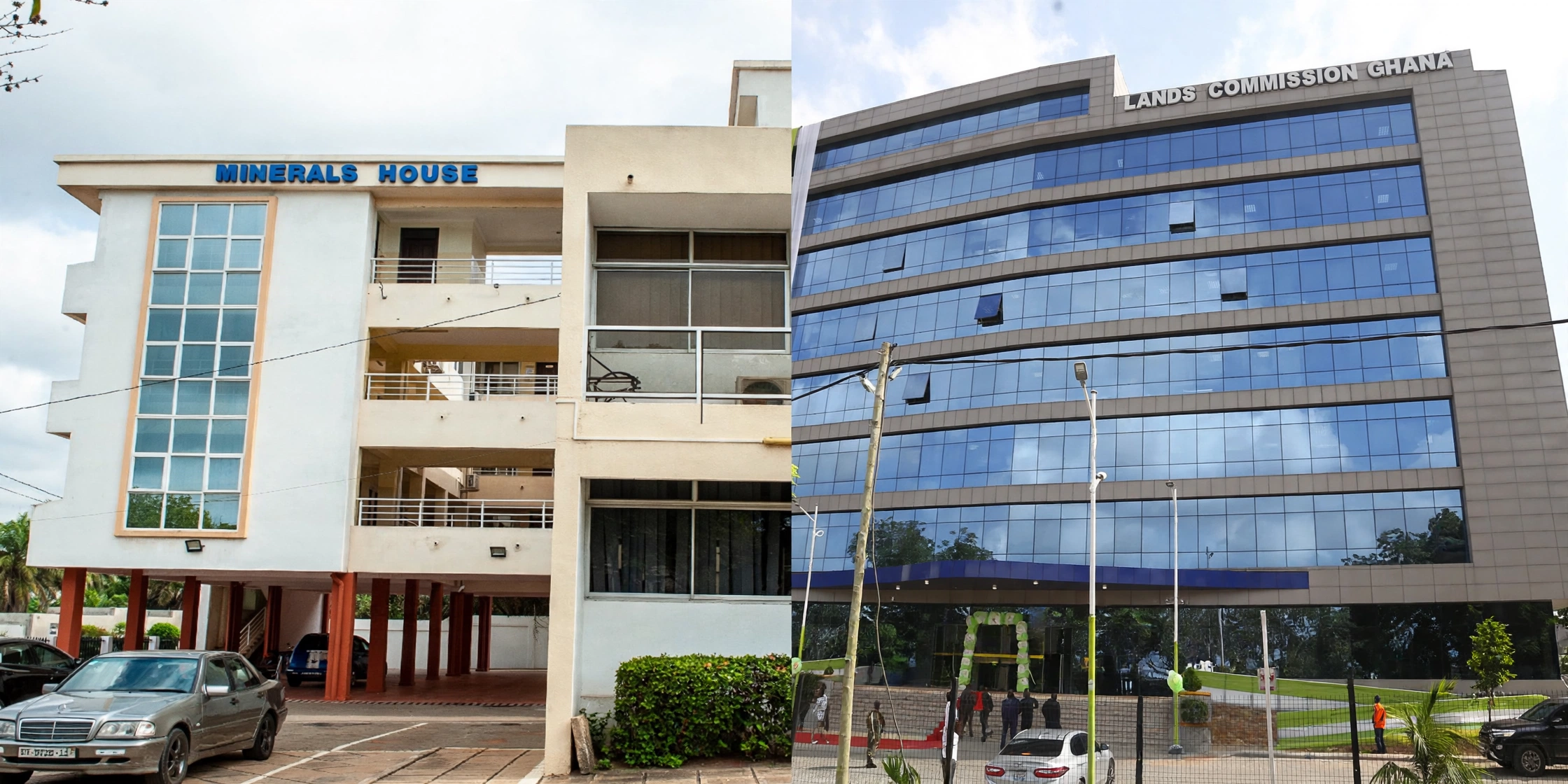

Technology Policy Expert and IMANI Africa Associate, John Sitsofe Mensah, has raised concerns over the failure of the Lands Commission and the Minerals Commission to submit their financial accounts for the 2025 financial year.
He made the observation in an analysis of the 2025 State Ownership Report titled “When the Custodians of Ghana’s Earth Go Dark”, sighted by OnuaOnline on Sunday, September 6, 2026.
The report was released by the State Interests and Governance Authority (SIGA) on Friday, September 5, 2025.
According to Mensah, the State Ownership Report exposed a governance vacuum after the two Commissions completely failed to submit their FY2025 financials.
He said both agencies had maintained a consistent record of statutory compliance in previous years, but were singled out alongside Ghana Telecommunications Company Limited (Telecel) for outright failure to provide their financials.
Mensah stated that neither Commission submitted audited statements or draft accounts, filed quarterly reports or employment data, or executed an Annual Performance Contract for FY2025.
He argued that the timing of the blackout was critical, as gold alone generated USD 20.98 billion in foreign exchange in FY2025, representing 67.43 per cent of Ghana’s total export proceeds.
The Minerals Commission, he noted, regulates concessions, lease agreements and royalties that govern the mineral wealth, while the Lands Commission controls the state’s title registry and public lands.
Mensah said when the watchtowers over physical territory and sub-soil rents operated in the dark, billions in public value were fenced off from balance-sheet accounting.
He described the development as an entrenched culture of institutional insulation, arguing that the Public Financial Management Act (Act 921) and the SIGA Act (Act 990) were binding laws and not optional suggestions.
Mensah questioned why the governing boards appointed to safeguard the assets still had their jobs, describing the blackout as a fundamental failure of fiduciary duty.
He mentioned the Minerals Commission Board chaired by Amb. William Ntow Boahene and the Lands Commission Board led by Prof. Anthony Owusu-Ansah and Surv. Dr. Wordsworth Odame Larbi.
He concluded that ongoing restructuring in the extractive sector, including the rollout of the Ghana Gold Board (GoldBod) under Act 1140, would be meaningless if foundational regulators could not be audited.
Find below the full analysis issued by the IMANI Associate:
The 2025 State Ownership Report: When the Custodians of Ghana’s Earth Go Dark- The Curious Cases of the Lands and Minerals Commissions – Sitsofe Mensah, IMANI
When the gatekeepers of a nation’s physical and mineral wealth suddenly close their books, it is not a routine administrative delay—it is a glaring red alert.
The 2025 State Ownership Report exposes a massive governance vacuum. The Minerals Commission and the Lands Commission, the twin institutional custodians of Ghana’s natural endowment, completely failed to submit their FY2025 financial accounts for public disclosure. Both agencies had maintained a consistent record of statutory compliance in previous years, yet they were singled out—alongside Ghana Telecommunications Company Limited (Telecel)—for an outright failure to provide their financials.
According to the State Interests and Governance Authority (SIGA).
Neither commission submitted audited statements or draft accounts, filed quarterly reports or employment data, or executed an Annual Performance Contract for FY2025.
WHY IT MATTERS: Timing is everything. In FY2025, gold alone generated USD 20.98 billion in foreign exchange, making up 67.43% of Ghana’s total export proceeds.
🔸 The Minerals Commission regulates the concessions, lease agreements, and royalties that govern this wealth.
🔸 The Lands Commission controls the state’s title registry and public acreage.
When the watchtowers over physical territory and sub-soil rents operate in the dark, billions in public value are fenced off from balance-sheet accounting.
The Big Picture
This blackout points to an entrenched culture of institutional insulation. As public policy reformists frequently argue, the Public Financial Management Act (Act 921) and the SIGA Act (Act 990) are binding laws, not optional suggestions. When senior administrative elites bypass these rules, it proves the dynamic often highlighted by commentators like Bright-Addo Anthony: high-value regulatory bodies claiming a de facto immunity from the accountability frameworks imposed on everyone else.
The Accountability Gap
To pierce this opacity, the state’s approach to performance tracking must shift from accepting polished public relations to demanding measurable governance realities. For entities of this magnitude, accountability requires structured, data-driven dialogue with high-impact questions: What are the actual financial impacts of land title digitization? Are mining lease reforms working, and how effective are the new regulatory frameworks like Community Development Agreements? Without an audited baseline, none of these initiatives can be properly evaluated.
The Boardroom Dilema
Why do the governing boards appointed to safeguard these assets still have their jobs? The Minerals Commission Board, chaired by Amb. William Ntow Boahene, and the Lands Commission Board, led by Prof. Anthony Owusu-Ansah and Surv. Dr. Wordsworth Odame Larbi, carry a fiduciary duty to ensure legal compliance. Presiding over a total reporting blackout is a fundamental failure of that duty.
What’s Next?
Ghana is actively restructuring its extractive sector, rolling out the Ghana Gold Board (GoldBod) under Act 1140 to formalize trading, curb smuggling, and optimize national reserves. But these resets are meaningless if foundational regulators cannot be audited.
The Ministry of Finance has the statutory leverage under the PFM Act and the Commitment Authorisation framework to suspend budget disbursements. The Presidency has the constitutional power to dismiss defaulting boards. If the custodians of the earth refuse to open their ledger, the state must ask whether it is time to change the custodians.
Sitsofe is a technology Policy Expert and IMANI Associate
Lands Minister directs Lands Commission to decentralise its operations within 2 months