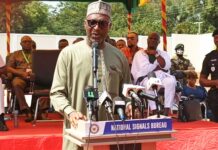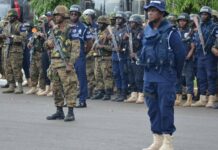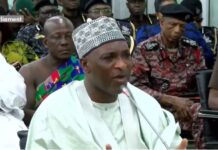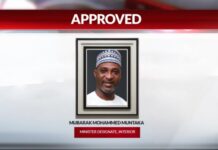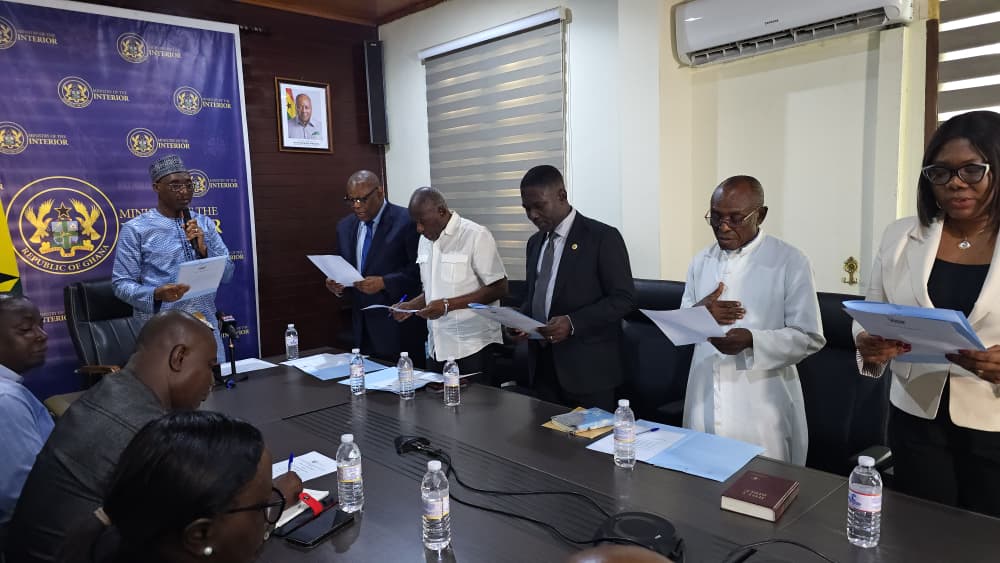

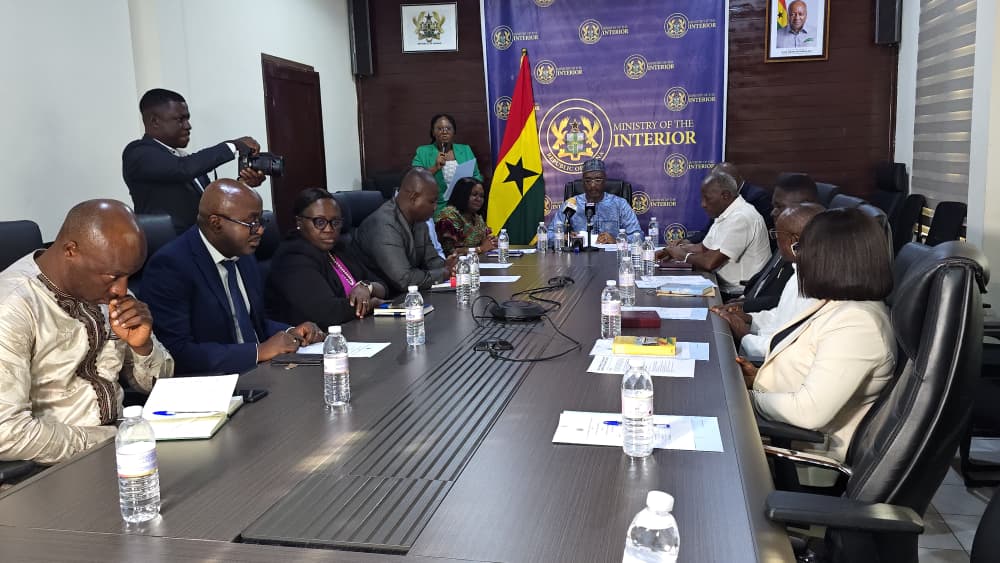
In response to the recent outbreak of violence in Gbiniyiri, a township in the Sawla-Tuna-Kalba District of the Savanna Region, the Minister for the Interior, Montaka Mubarak, acting upon the directive of the National Security Council, has established a Ministerial Mediation Committee to find a lasting resolution to the conflict.
The committee has been tasked with several urgent responsibilities, including facilitating the safe and dignified return of displaced residents, assessing the extent of losses and damages, and proposing long-term mechanisms for monitoring and sustaining peace in the area.
The committee is expected to complete its work and submit a final report within one month.
It is composed as follows:
- Mr. Emmanuel Habuka Bombande – Chairman
- Hon. Alhaji Collins Dauda (MP, Chair, Committee on Lands & Natural Resource, Parliament- Member
- Rev. Fr. Lazarus Annyereh (CHAIR Savannah Regional Peace Council) – Member
- Dr. Festus Aubyn- West Africa Network for Peacebuilding) – member
- Sylvia Horname Noagbesenu Esq.– Ag. Director, Women, Youth, Peace and Security Institute, Kofi Annan International Peacekeeping Training Centre – member
- Prof. Ramatu Alhassan (Agric Econ Lecturer) – Member
- Dr. George Amoh (Ex Sec NPC )- member/Secretary
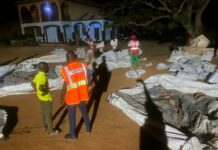
On August 23, violent clashes erupted in Gbiniyiri, escalating tensions in the area and quickly spreading to nearby villages and communities. The conflict, whose root causes are still under investigation, has led to the tragic loss of 31 lives and the displacement of more than 50,000 people, according to official figures.
Homes and properties have been destroyed, and basic infrastructure in the affected areas has been severely disrupted, worsening the humanitarian situation on the ground.
The Interior Ministry emphasized that the newly constituted committee is expected to engage with all relevant stakeholders, including traditional leaders, community members, local authorities, and security agencies.
The Chairperson of the Committee Emmanuel Habuka Bombande assured the public of the team’s commitment to conducting a thorough and inclusive process to restore peace and normalcy to the affected communities.
“We will meet with all parties involved to ensure that the root causes of this conflict are properly addressed, and a lasting peace is achieved,” the Chair said.
Government’s Call for Calm
The government is urging residents to remain calm and cooperate with the committee and security personnel on the ground. It reiterated its commitment to ensuring the safety, protection, and well-being of all citizens affected by the violence.
Efforts are also underway to coordinate humanitarian support for the displaced, including access to shelter, food, water, and medical care.
TERMS OF REFERENCE OF THE MEDIATION COMMITTEE FOR THE GBINIYIRI CONFLICT
- INTRODUCTION
On 23rd August, 2025, violent conflict erupted in Gbiniyiri, a township in the Sawla-Tuna-Kalba District of the Savannah Region. The disturbances spread to adjoining villages and communities, resulting in tragic loss of lives, widespread destruction of property, and the displacement of large numbers of inhabitants.
In response, the Hon. Minister for the Interior, acting upon the directives of the National Security Council, has established a Ministerial Mediation Committee to work with relevant stakeholders towards peacebuilding, reconciliation, and the sustainable resettlement of affected populations.
This Mediation Committee reflects Government’s commitment to peace, security, social cohesion, and rehabilitation, with the aim of addressing immediate humanitarian needs, supporting reconstruction, and promoting long-term stability in Gbiniyiri and surrounding communities.
- OBJECTIVES OF THE COMMITTEE
The objectives of the Committee are to:
- Facilitate the safe and dignified return of displaced residents
- Understand the scope and dynamics of the factors related to the escalation of the Conflict;
- Evaluation of Losses and Damages
- Create safe spaces to support initiatives that foster social cohesion, dialogue, and peaceful coexistence;
- Make recommendations for the strengthening of local institutions to prevent recurrence of violence;
- Propose mechanisms for continuous monitoring and sustainability of peace; and
- Make any other recommendation relevant to the objectives of the committee.
- SCOPE OF WORK / TASKS
The Mediation Committee shall:
- Safe Return of Displaced Residents
Work with traditional authorities, district assemblies, security agencies, and civil society organisations to facilitate the safe and dignified return of all displaced residents to Gbiniyiri and surrounding communities.
- Understand the Scope and Dynamics of the Escalation
Understand the scope and dyanmics of the factors that led to the escalation of the conflict beyond Gbiniyiri to other affected communities.
- Evaluation of Losses and Damages
To establish the ownership of properties destroyed or damaged during the course of the conflict, and to assess and quantify the extent of losses sustained. This is to provide a factual basis for possible compensation, rehabilitation, and resettlement of affected victims.
- Social Cohesion and Peacebuilding Interventions
Support outcomes of community-based dialogues and initiatives that foster peaceful coexistence and mutual trust among all ethnic and social groups. This may include mediation programmes, inter-communal dialogues, youth and women’s empowerment projects, and cultural exchange activities.
- Livelihood Restoration
Explore and recommend economic support measures for households whose farms, businesses, or livelihoods have been destroyed.
- Monitoring and Sustainability
Propose mechanisms for continuous monitoring, evaluation, and reporting on the resettlement, reconstruction, and reconciliation process, ensuring the sustainability of peace and development in Gbiniyiri.
4. MANDATE OF THE COMMITTEE
The Committee shall have the mandate to:
- Engage with traditional rulers, opinion leaders, security agencies, and civil society actors.
- Request reports, records, and relevant data from public institutions and organisations.
- Visit affected communities and inspect damage to property and infrastructure.
- Recommend the co-option of experts and consultants to provide technical advice where necessary.
- COMPOSITION AND MEMBERSHIP
The Committee shall be composed of:
- Mr. Emmanuel Habuka Bombande – Chairman
- Hon. Alhaji Collins Dauda (MP, Chair, Committee on Lands & Natural Resource, Parliament- Member
- Rev. Fr. Lazarus Annyereh (CHAIR Savannah Regional Peace Council) – Member
- Dr. Festus Aubyn- West Africa Network for Peacebuilding) – member
- Sylvia Horname Noagbesenu Esq.– Ag. Director, Women, Youth, Peace and Security Institute, Kofi Annan International Peacekeeping Training Centre – member
- Prof. Ramatu Alhassan (Agric Econ Lecturer) – Member
- Dr. George Amoh (Ex Sec NPC )- member/Secretary
- MODE OF OPERATION
- The Committee shall carry out its work with impartiality, transparency, and inclusiveness.
- Consultations and dialogues may be held publicly or in-comera, as appropriate.
- The Committee may collaborate with NGOs, development partners, and religious organisations for technical or logistical support.
- 7. SECRETARIAT AND LOGISTICAL SUPPORT
The Ministry of the Interior shall provide secretarial and basic logistical support to the Committee to enable it to effectively discharge its duties.
- REPORTING
- The Committee shall submit periodic progress updates to the Hon. Minister for the Interior.
- A final comprehensive report with recommendations shall be presented within One (1) month of the Committee’s inauguration.
The report will guide Government and partners in providing relief, reconstruction, reconciliation, and long-term peacebuilding interventions.