
Ghana’s decision to pursue closer ties with BRICS has sparked discussions about potential gains in trade, investment and alternative development financing.
But International Relations Analyst and Development Consultant, Dr Elvis Botah, has cautioned that membership alone will do little to transform Ghana’s economy without a clear industrial strategy.
“Joining BRICS at this time adds nothing much to Ghana, in my considered opinion. From all that we know, the problem of Ghana is simply an economic problem,” he stated.
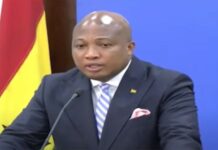
His comments follow Foreign Affairs Minister Samuel Okudzeto Ablakwa’s clarification that Ghana intends to pursue BRICS partner-country status rather than immediate full membership.
While government expects the partnership to open new economic opportunities, Dr Botah argues that Ghana risks pursuing another diplomatic ambition without addressing the structural weaknesses holding back its economy.
“One thing government must be mindful of is that if we must proceed, we should enter BRICS with an industrial strategy, not just as another diplomatic ambition,” he cautioned.
He warned that Ghana’s continued dependence on raw material exports could leave it disadvantaged in its dealings with industrial powers such as China, India, Brazil and Russia.
“Now, Ghana automatically becomes an underdog in this kind of relationship. So, what do you go to the table with? What is our negotiation strategy? And what are our major points of negotiation?” he questioned.
Dr Botah stressed that Ghana must prioritise local processing of cocoa, gold and other mineral resources, supported by technology transfer and industrial investment.
Without these measures, he warned, the country could become just another market for goods produced by stronger BRICS economies.
He urged government to establish measurable economic targets for the next five to ten years, insisting that Ghana’s ability to benefit from BRICS will depend on its domestic economic strategy rather than membership alone.
By Noble Croby Annan