
Retired Supreme Court Judge, Justice William Atuguba has weighed in on the ongoing debate over the prosecutorial powers of the Office of the Special Prosecutor (OSP), stating that a recent High Court decision on the matter is not final and is subject to review by the Supreme Court.
According to Justice Atuguba, while the Supreme Court is traditionally responsible for determining constitutional issues, the situation is not always so, as lower courts may, in certain instances, apply constitutional provisions while adjudicating cases.
He explained that there is a technical distinction between “applying the Constitution” and “enforcing” it, noting that the latter expressly lies within the jurisdiction of the Supreme Court.
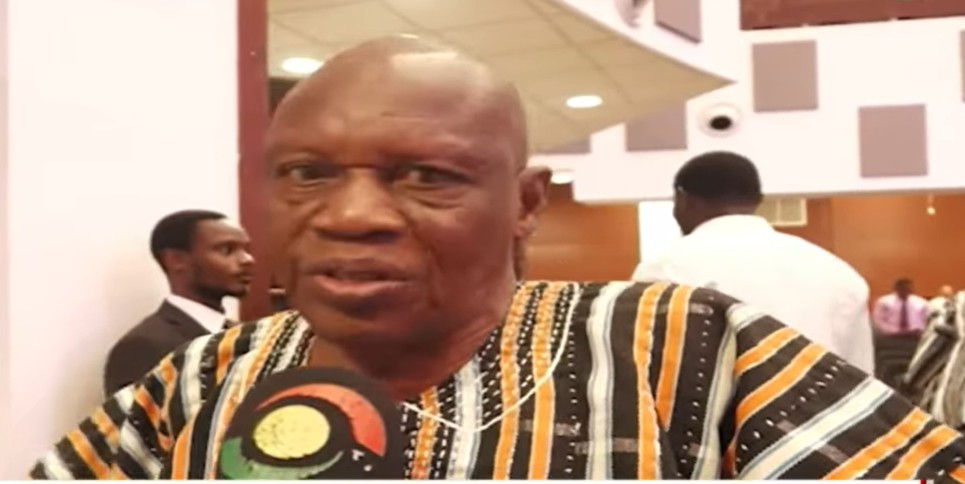
Speaking in an exclusive interview with TV3’s Beatrice Adu on Wednesday, April 15 on the sidelines of an event to honour lawyer Tsatu Tsikata, Justice Atuguba indicated that without access to the full court proceedings, he will be unable to determine whether the High Court’s decision falls within permissible constitutional application or enforcement of the constitution which solely falls within the jurisdiction of the Supreme Court.
Supreme Court’s determination of constitutionality not so straightforward, courts may apply constitution
“Normally, I would have thought that the Supreme Court that determines constitutionality but it is not so straight forward because where the matter is straightforward the court might apply the constitution.
“There is a difference between applying the constitution and enforcing the constitution. It is a technical difference and unless I see the proceedings, I can’t determine whether what the Judge did fitted into the application of the constitution or enforcement which belongs to the Supreme Court,” he explained.
He remarked that the High Court ruling appears to have effectively removed the prosecutorial powers of the OSP, while leaving its investigative authority intact.
He noted that as long as the investigative mandate of the OSP has not been invalidated, the Office may still continue aspects of its work.
“What the court has done and what I have read in the papers is to take away the prosecution powers from the OSP. So long as the investigative powers have not been struck down, maybe those can continue,” Justice Atuguba noted.
He stressed that the High Court’s decision does not bring finality to the matter, as it can be challenged at the Supreme Court.
Background
An Accra High Court has directed the Attorney-General and Ministry of Justice to take over the prosecution of the case titled ‘Republic v. Issah Seidu & 3 Others (Rice Scandal Case).’
This is contained in a press release issued by the Office of the Special Prosecutor (OSP) on April 15.
“In a parallel development, the accused persons initiated a separate action at the High Court (General Jurisdiction 10). In contrast to the Criminal Court, the General Jurisdiction judge declined an application by the OSP to adjourn proceedings pending the outcome of the matter before the Supreme Court. The judge decided that the OSP lacks independent prosecutorial mandate. The judge directed that the case be referred to the Attorney-General for prosecution,” the statement said.
According to the OSP, “These developments have resulted in two distinct judicial positions regarding the prosecutorial authority of the OSP in the same matter.
The OSP states that it is taking steps to quickly overturn the decision of the General Jurisdiction Court since the High Court does not have jurisdiction to, in effect, strike down parts of an Act of Parliament as unconstitutional. It is only the Supreme Court which can strike down parts of an Act of Parliament as unconstitutional.”
“The OSP firmly assures the public that all the criminal prosecutions it has commenced before the courts and all the criminal prosecutions it is about to commence before the courts remain valid and would proceed based on its mandate under the Office of the Special Prosecutor Act, 2017 (Act 959), which remains valid and in force as the matter has not been decided by the Supreme Court,” the OSP stated.