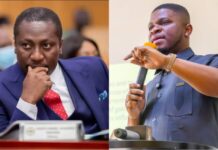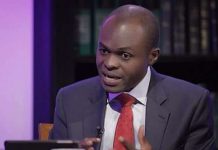

Martin Luther Kpebu, a renowned lawyer and one of the petitioners seeking the removal of William Kissi Agyebeng as Special Prosecutor, has said the suit challenging the constitutionality and powers of the OSP is underemphasising the main issue.
His comment follows the joining of the suit by some 14 Civil Society Organisations (CSOs).
The CSOs motion for leave to join the suit against the OSP as amicus curie was granted by a seven-member panel of the Supreme Court on Tuesday, May 19, 2026, following a demonstration by their lawyer, Kizito Beyuo, that the CSOs were instrumental in the creation of the OSP.
They had argued that the foreknowledge of the CSOs is going to be vital in the determination of the matter by the apex court.
Reacting to the development, Mr. Kpebu says the main issue bedeviling the Office of the Special Prosecutor (OSP) is not the establishment’s constitutionality and prosecutorial powers, but rather the person occupying the office.
The lawyer, speaking on TV3’s Ghana Tonight on Tuesday, May 19, 2026, indicated that the conversations around the Office on a whole is good for the country’s democracy.
“It’s a democracy. Let as many people be heard as possible. The conversation is good,” he stated.
He, however, explained that the crux of the matter has not been given much articulation, which is the current occupant of the Office in the person of William Kissi Agyebeng, and not the law that establishes the Office and the powers it possesses to prosecute.
“The only part of the conversation I don’t see us giving much attention to is that, the genesis of this crisis we have is because we didn’t create a strong system of ‘who watches the watchman’.”
According to him, the personality of the first occupant of the Office after its creation, Martin Alamisi Burns Kaiser Amidu, made Ghanaians assume that every subsequent occupant of the OSP would equally be “an angel on earth.”
However, Mr. Agyebeng, per Martin Kpebu’s assertion, has defeated that notion by abusing the Office, the reason he has personally petitioned the President to remove him as the OSP.
“We all just assumed that subsequent Special Prosecutors would be in the mood of Martin Amidu but we’ve quickly learnt that the OSP has catalogued a lot of ills at the Kissi Agyebeng administration as the OSP.
“So, that’s where the real fight is. It’s not about whether the Office is independent or not. It’s about the abuses of the Office. That’s where the problem is coming from,” he noted, adding that those abuses is what has resulted in many petitions seeking Mr. Agyebeng’s removal as OSP.
Background
On December 12, 2025, one Noah Ephraim Tetteh Adamtey invoked the exclusive original jurisdiction of the Supreme Court to interpret the constitution by filing a suit for the court to declare the exercise of prosecutorial powers by the OSP as unconstitutional.
He is seeking, among other reliefs, a declaration that the OSP Act, 2017 (Act 959) is unconstitutional to the extent that it confers “original or insulated prosecutorial authority on the Office of the Special Prosecutor, is inconsistent and in contravention of Articles 1(2), 88(3), (4), 93 (2) and 296 of the Constitution and is, therefore, null, void and of no effect”.
Again, he is seeking a declaration that “sections 3(3) and 4 of Act 959, in purporting to make the Office of the Special Prosecutor independent of the Attorney-General in the initiation, conduct and termination of prosecutions, violate the Constitution.”
A-G’s position
In his draft statement of case, the A-G argues that Article 88 (3) of the 1992 Constitution solely vests prosecutorial powers in the A-G alone, and therefore Parliament acted unconstitutionally by passing the OSP Act, 2017 (Act 959), which made it compulsory for the A-G to delegate part of its prosecutorial powers to the OSP.
Article 88 (3) of the 1992 Constitution stipulates that “The Attorney-General shall be responsible for the initiation and conduct of all prosecutions of criminal cases”, while Article 88 (4) provides that: “All offences prosecuted in the name of the Republic of Ghana shall be at the suit of the Attorney-General or any person authorised by him in accordance with law”.
Again, the A-G contends that Act 959 has unconstitutionally varied the prosecutorial powers of the OSP in many ways.
“First, it compels the Attorney-General to abandon its constitutional duty to be responsible for the prosecution of all criminal offences—he is, by the terms of the Act, now only responsible for the prosecution of offences which the OSP is not prosecuting.