
The Kumasi Metropolitan Assembly has disclosed that it has exceeded its 2025 internally generated revenue target, achieving more than 102 million Ghana cedis against a projection of about 127 million cedis, driven largely by improved collection systems and stronger enforcement across key revenue streams.
The Assembly reports significant growth in areas such as business operating permits, land-related fees, and market levies, supported by the rollout of a digital billing system and tighter supervision of revenue operations.
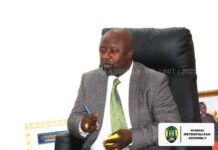
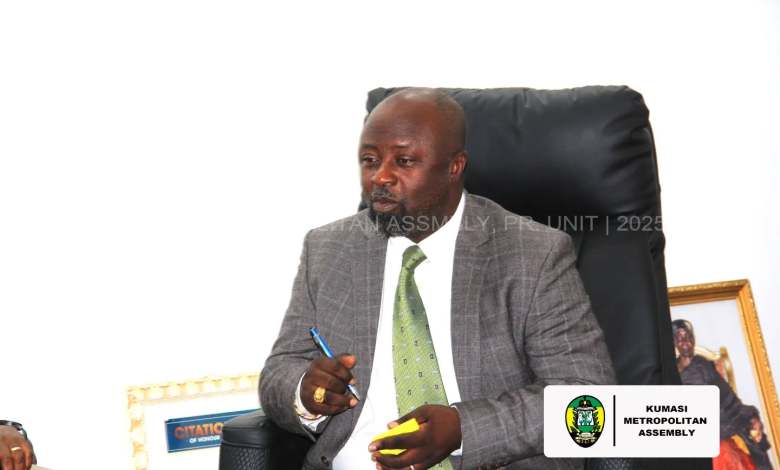
Addressing the 1st Ordinary Meeting of the 3rd Session of the 9th Kumasi Metropolitan Assembly, on Monday, May 25,2026, the Kumasi Metropolitan Chief Executive, Richard Ofori Agyemang Boadi said internally generated funds also performed above expectations, reflecting increased compliance and reduced leakages within the local revenue system.
Mr Ofori Agyemang-Boadi however warned that rising sanitation costs have heavily distorted spending patterns, with most expenditure now going into compensation and goods and services, leaving capital investment at just 3 percent, far below planned levels.
He announced significant progress in governance, revenue mobilisation, sanitation, security, and urban development within the Kumasi Metropolis, describing the past year as one of “transformative growth and deliberate reforms “.
He expressed gratitude to President Mahama for the confidence reposed in him and also commended Otumfuo Osei Tutu II and traditional authorities for their continuous support toward the development of Kumasi.
He stated that the Assembly had strengthened local governance structures through the successful reconstitution of Town and Sub-Metropolitan District Councils and the election of their chairpersons in accordance with the relevant local governance laws.
According to him, capacity-building workshops were also organised for Assembly Members to improve their legislative and oversight responsibilities.
He noted that the Assembly intensified public engagement and accountability by organising Town hall meetings and others.
He pledged to extend such engagements to all sub-metros to ensure inclusive participation in the city’s development agenda.
Addressing the security concerns, he acknowledged rising incidents of street robbery and theft in parts of the metropolis but assured residents that police patrols had been intensified in identified hotspots.
He further revealed that the Assembly was collaborating with stakeholders to rehabilitate dilapidated police posts and improve security visibility across the city.
By Benjamin Aidoo