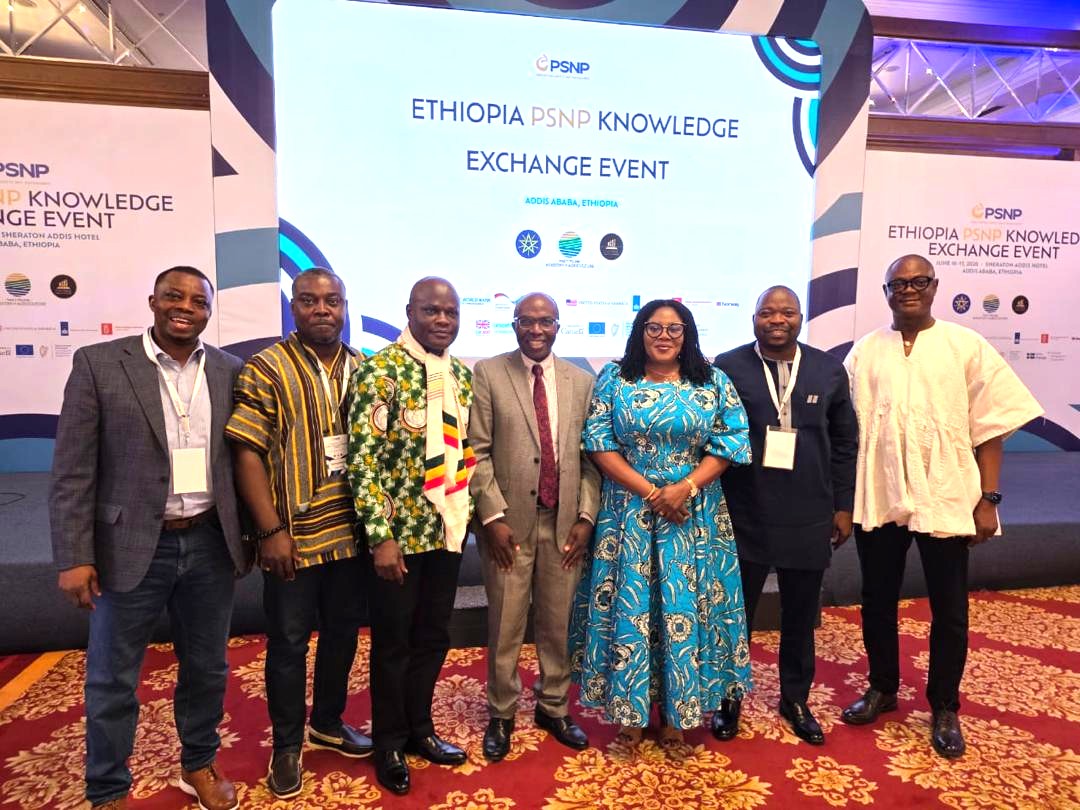

A high-level Ghanaian delegation led by the Minister for Local Government, Chieftaincy and Religious Affairs, Ahmed Ibrahim, has concluded a strategic knowledge-sharing visit to Ethiopia to understudy the country’s globally recognised Productive Safety Net Programme (PSNP).
The visit formed part of efforts to strengthen Ghana’s social protection interventions and improve livelihoods through sustainable job creation and community development.
The Ghanaian delegation included the Minister for Gender, Children and Social Protection, Dr. Agnes Naa Momo Lartey, alongside senior government officials and policy experts involved in the implementation of Ghana’s Productive Safety Net Programme.
The visit brought together ministers and senior officials from several African countries including Nigeria, The Gambia, Cameroon and Ethiopia, as well as representatives from the World Bank and development partners supporting social protection programmes across the continent.
The delegation engaged with Ethiopian counterparts to better understand how social protection programmes can go beyond poverty reduction to create sustainable livelihoods and resilient communities.
A major highlight of the visit was a field trip to Dire Dawa, where the Ghanaian delegation observed the impact of Ethiopia’s public works programme on rural livelihoods and environmental restoration.
The team witnessed how degraded lands had been transformed into productive agricultural assets through interventions such as soil and water conservation structures, watershed rehabilitation, erosion control systems, water harvesting and agricultural development projects.
The delegation noted that Ethiopia’s model demonstrates how public works programmes can move beyond temporary employment to create long-term economic opportunities and improve household livelihoods.
The Ghanaian team also observed how farmers are utilising rehabilitated land for agricultural production, reinforcing the importance of linking public works investments directly to sustainable income generation.
Speaking during the visit, Ahmed Ibrahim said Ethiopia’s success story highlights the importance of sustained investments in safety net programmes that create productive assets and improve livelihoods.
He noted that the visible impact of Ethiopia’s programme offers valuable lessons for Ghana as it seeks to strengthen Labour-Intensive Public Works and Productive Inclusion interventions under the Ghana Productive Safety Net Programme.
Mr. Ibrahim stressed that sustainable social protection requires strong government ownership, institutional commitment and long-term financing to ensure lasting impact.
According to him, the lessons from Ethiopia strongly align with Ghana’s efforts to expand interventions aimed at supporting vulnerable households, improving incomes and promoting self-reliance.
Under Ghana’s Productive Inclusion Programme, thousands of beneficiaries have received skills training and support to improve their livelihoods, while Labour-Intensive Public Works interventions continue to create temporary employment and community assets.
The visit is expected to strengthen collaboration between Ghana and Ethiopia as both countries work towards building resilient communities and improving social protection systems.
The delegation concluded that effective safety net programmes must not only provide immediate support but also create lasting livelihoods, productive assets and economic resilience for future generations.
By Emmanuel Nelson Ebelin