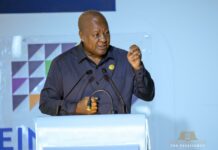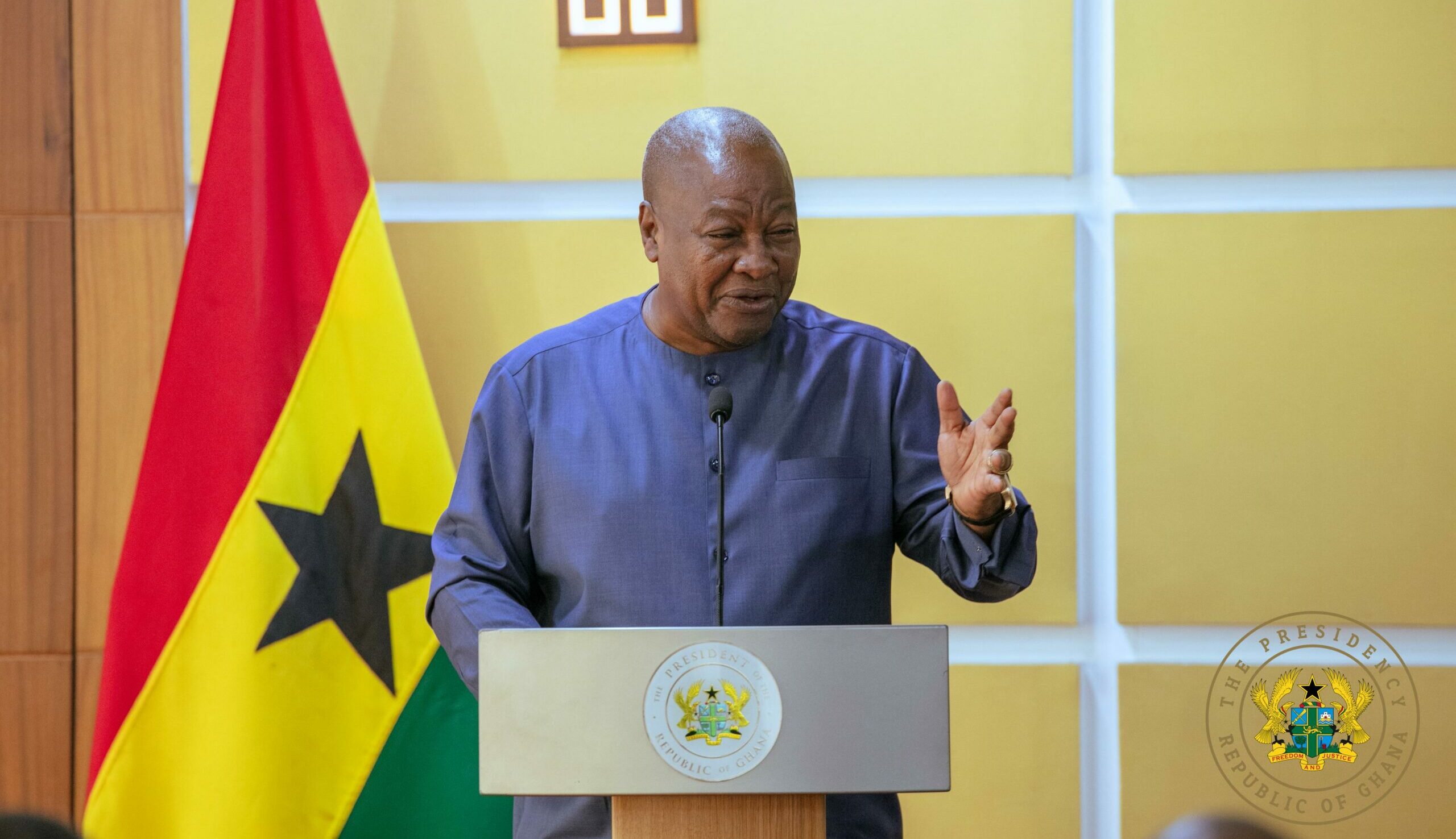

President John Dramani Mahama addressed the 8th Africa Singapore Business Forum on August 26, 2025, under the theme “Bridging Capabilities, Charting Sustainable Growth.”
He urged investors to see Ghana as Africa’s gateway, highlighting farming, renewable energy, logistics, and digital services. He praised Singapore’s rise through discipline, efficiency, and innovation.
It was a powerful pitch. Africa needs fairer trade, smarter partnerships, and opportunities for its youth. Mahama was right: Africa’s youthful population is a huge asset. But in Ghana, the real challenge is delivery at home.
Investors love bold speeches, but they stay only if systems work. Ghana’s record is worrying. The Auditor-General’s Report for 2022 found over GH¢15.1 billion in financial irregularities across public boards and agencies—ghost workers, inflated contracts, and phantom projects. These problems repeat every year (Auditor-General’s Report, 2022; Ghana Guardian, 2023).
The Ghana Integrity Initiative (GII), Transparency International’s local chapter, warns that corruption “remains a serious problem affecting all sectors,” noting that citizens still pay bribes for basic services. In February 2025, its release on the 2024 Corruption Perceptions Index called corruption “a major obstacle to governance and service delivery.” (GII Press Release, CPI 2024)
Many Ghanaians believe corruption has worsened or stayed high—and that powerful people often escape accountability. When power shields wrongdoing, justice becomes selective.
Corruption also undermines investor confidence. In its 8th Ghana Economic Update (June 2024), the World Bank warned that “weak commitment control and poor investment management continue to result in arrears and abandoned projects.” Later, at the Public Finance Review launch in February 2025, it cited “weak expenditure controls, inefficient public spending, poor revenue collection, and excessive borrowing.” (World Bank, 2024; Modernghana, 2025)
Similarly, the IMF, in July 2025 after approving Ghana’s Fourth Review under its Extended Credit Facility, noted that “governance weaknesses undermine fiscal discipline and investor confidence.” It urged stronger tax administration, tighter expenditure control, and reform of state-owned enterprises. (IMF Press Release, July 2025)
There have been modest wins. Payroll audits have removed ghost names and saved millions. Some prosecutions show progress. Yet the Office of the Special Prosecutor (OSP) admitted in its July 2025 Half-Yearly Report that its work faces “deep-seated resistance from entrenched interests,” undermining investigations and accountability. Too often, the powerful walk free.
Corruption is not only theft, it reflects misplaced priorities. Leaders buy luxury vehicles while rural schools lack desks and hospitals lack beds. Professor H. Kwasi Prempeh, Executive Director of CDD-Ghana, noted, “Our real governance crisis is not lack of laws but lack of enforcement.” At the 5th Constitution Day Lecture in March 2025, he warned that “political accountability has become selective; the powerful often escape justice.” (The Ghana Report, March 2025)
Politics also fuels waste. Governments abandon predecessor projects, leaving roads half-built, hospitals idle, and youth programmes collapsed. Professor Ransford Gyampo called this “one of the biggest forms of corruption,” saying it drains resources and weakens investor confidence. (Ghana News Agency, 2024)
Reflecting this frustration, President Mahama has also lamented the lack of accountability in cases of public fund misuse, especially at the annual Public Accounts Committee (PAC) hearings. On 8 October 2025, speaking at the 12th Annual Conference of Chairpersons of Governing Boards and Councils, Chief Directors, and Chief Executives in Ho, he said:
> “Every year, the Public Accounts Committee exposes reckless use of public funds and resources, yet nothing happens. Until deterrent action is taken, we’ll continue to see the same misappropriations and infractions.”
He added that despite PAC’s findings, there has been little follow-up or sanction, echoing public sentiment that Ghana’s corruption problem persists not from ignorance, but from impunity.
Mahama is right to demand fairer trade for Africa. But Ghana’s own record offers a warning. Revenues from cocoa, gold, and oil have often been lost to election giveaways, patronage, or outright theft, a pattern noted in studies on trade mispricing and illicit financial flows. (Policy brief: “Gold and cocoa exports—Is Ghana earning the expected revenue?” (Curbing-IFFs, 2024))
Still, the future need not be bleak. Renewable energy, agribusiness, and digital services hold promise. A 24-hour economy could boost productivity. Ghana’s stability and role in AfCFTA remain strengths. But speeches must be matched by reform.
Singapore, the model Mahama praised, did not rise on words, it rose on discipline, efficiency, and accountability. Ghana must do the same. Only by closing leakages, enforcing laws, and putting national interest above politics can Ghana earn investor trust. Then “Africa’s gateway” will cease to be a slogan and become a reality felt by citizens and trusted by the world.