
The Chief of Staff, Julius Debrah has underscored the importance of music to the economy of Ghana.
According to him, music does not only serve as means of entertainment but contributes significantly to economic development.
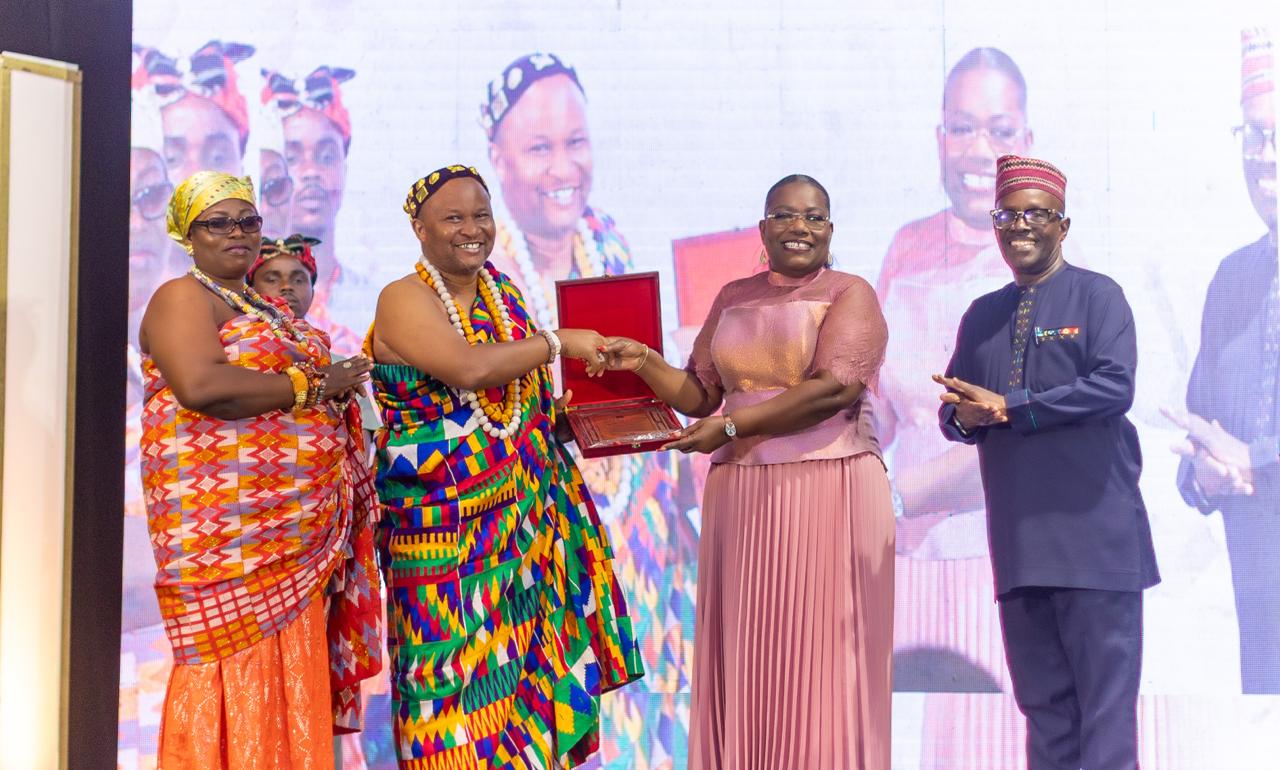
Mr Debrah made this assertion in a speech read for him by his Deputy, Nana Oye Bampoe Addo at the 50th anniversary celebration of the Musicians Union of Ghana (MUSIGA) on November 29.
“Music in Ghana is not only a cultural treasure; it powers a multi‑million‑cedi industry whose influence shows up in tourism revenues, trade, employment and national identity,” he said.

Mr Debrah added that, “According to the Ghana Statistical Service (2024), the arts and culture sector accounts for approximately 2.5% of Ghana’s GDP and supports millions of jobs across the country. Every large concert, for example, ShattaFest 2025, can generate tens of millions of cedis in economic activity in a single day, fueling traffic for transport services, hotels, vendors, media and hospitality.

He noted that “Beyond live shows, revenues from music streaming and recorded music in Ghana are projected to reach US$4.36 million in 2025, according to Statista, highlighting the growing economic value of digital distribution, export earnings, and global reach. The industry’s contributions, through royalties, taxes, event‑driven commerce, digital platforms, and international collaborations, bolster national revenue, promote tourism, and reinforce Ghana’s identity and global brand.”
The Chief of Staff said it is in recognition of the invaluable contribution of the sector to the economy that President John Dramani Mahama has placed the creative arts sector at the centre of Ghana’s transformational agenda.

“The 2026 National Budget allocated GHS 20 million as seed capital to establish the Creative Arts Fund. This fund will support music, fashion, visual arts, culinary arts, digital content, and the broader value chains that sustain them, from producers and sound engineers to costume designers, video directors, managers, and promoters,” he stated.
“Beyond financial support, it lays the foundation for a new financing architecture for Ghana’s creative future, providing grants, soft loans, technical assistance, training, and business development services. Talent alone is not enough; it must be supported by capital, strategy, and innovation,” he explained.

Mr Debrah cited measures to strengthen the intellectual property system and improve the collection and management of copyrights and royalties, ensuring that artists receive the financial rewards they deserve.
“In partnership with TikTok, the Ministry for Communication, Digital Technology, and Innovations hosted the “Ghana Creator Education Day,” an initiative focused on direct investment, skill development, and fair compensation for Ghanaian content creators. By empowering TikTok creators, who often promote Ghanaian music and artists to global audiences, this initiative reinforces Ghana’s position as a leading creative hub in Africa,” he noted.
Please read full speech below:
Distinguished Ladies and Gentlemen,
It is said you cannot be sad in Ghana. How could you be? In a country where laughter is a national language, our comedy lights up even the darkest days, our creative content brings families together, and our dances travel further than our passports. Our music, hip-hop, highlife, patriotic anthems, Afro-hip hop, gospel, reggae, or the sweet old-time classics, nourishes the soul. Ghana’s creative industry goes beyond entertainment; it educates, shapes values, preserves heritage, relieves stress and inspires national pride.
It is this power that we celebrate tonight at this golden jubilee anniversary of MUSIGA. We also gather to reflect on the future, because 50 years of impact deserves 50 more years of reinvention, ambition, and unstoppable creativity.
MUSIC — A MAJOR BOOSTER OF GHANA’S TOURISM AND ECONOMIC GROWTH
Music in Ghana is not only a cultural treasure; it powers a multi‑million‑cedi industry whose influence shows up in tourism revenues, trade, employment and national identity. According to the Ghana Statistical Service (2024), the arts and culture sector accounts for approximately 2.5% of Ghana’s GDP and supports millions of jobs across the country. Every large concert, for example, ShattaFest 2025, can generate tens of millions of cedis in economic activity in a single day, fueling traffic for transport services, hotels, vendors, media and hospitality. Beyond live shows, revenues from music streaming and recorded music in Ghana are projected to reach US$4.36 million in 2025, according to Statista, highlighting the growing economic value of digital distribution, export earnings, and global reach. The industry’s contributions, through royalties, taxes, event‑driven commerce, digital platforms, and international collaborations, bolster national revenue, promote tourism, and reinforce Ghana’s identity and global brand.
A Renewed National Commitment to the Creative Economy
Since His Excellency John Dramani Mahama assumed office in January 2025, the creative arts sector has been placed at the centre of Ghana’s transformational agenda:
- The 2026 National Budget allocated GHS 20 million as seed capital to establish the Creative Arts Fund. This fund will support music, fashion, visual arts, culinary arts, digital content, and the broader value chains that sustain them, from producers and sound engineers to costume designers, video directors, managers, and promoters. Beyond financial support, it lays the foundation for a new financing architecture for Ghana’s creative future, providing grants, soft loans, technical assistance, training, and business development services. Talent alone is not enough; it must be supported by capital, strategy, and innovation.
- The government is introducing measures to strengthen the intellectual property system and improve the collection and management of copyrights and royalties, ensuring that artists receive the financial rewards they deserve.
- In partnership with TikTok, the Ministry for Communication, Digital Technology, and Innovations hosted the “Ghana Creator Education Day,” an initiative focused on direct investment, skill development, and fair compensation for Ghanaian content creators. By empowering TikTok creators, who often promote Ghanaian music and artists to global audiences, this initiative reinforces Ghana’s position as a leading creative hub in Africa.
This administration is looking to operationalise several priority interventions outlined in the NDC 2024 “Resetting Ghana” manifesto. Among these include:
- partner with stakeholders in the Ghana music and dance industry to develop and market their craft
- support the commercialisation of cultural and artistic goods and services by facilitating financial literacy education among industry players
- facilitate partnerships with international cultural organisations to promote knowledge exchange, collaboration, and exposure to diverse artistic practices
- reviving stalled cultural and creative projects to create a vibrant nationwide network of performance spaces.
These initiatives form part of a deliberate effort to reposition the creative arts sector from the margins of the economy to the centre of Ghana’s development calculations.
The Creative Future: Tech, AI and the New Global Frontier
Ladies and gentlemen, the creative revolution we seek is not only cultural, it is technological. As we continue to encourage more creativity among our youth, we must also think of how we can commercialise our talents and, more importantly, artificial intelligence.
With the explosion of AI, new media, digital distribution, virtual concerts, VR storytelling, and global streaming, Ghana’s creative industry is standing at the doorway of unprecedented opportunity. Our musicians can reach the world without leaving Accra. Our dancers can feed global challenges from a single TikTok video. Our fashion designers can sell to London, Paris and Tokyo with one Instagram post. Our animators can build Afro-futuristic worlds that inspire the next generation.
Ladies and Gentlemen, this is the time for Ghana to take its rightful place on the global creative stage.
This is the time to build a creative economy that creates more jobs for the youth than any traditional sector ever has.
This is the time for us to turn talent into global trade and passion into prosperity.
A Call to the Creative Industry
Tonight, as we celebrate 50 years of MUSIGA, I leave you with one call:
Let us rise together.
To the musicians, producers, dancers, sound engineers, DJs, content creators, promoters, cultural custodians, managers and all who give life to this industry, join government in revolutionising Ghana’s creative future.
We have the talent.
We have the energy.
We have the global attention.
Now we have a government that is committed to building the structures, financing systems, and enabling environment for success.
If we work together, private sector, artists, government, guilds, unions and our global diaspora, the success we will chalk will be nothing short of historic.
Tonight, we honour the past.
Tomorrow, we build the future.
And forever, we let Ghana’s music lead the world.
Thank you, and may the next 50 years of MUSIGA be even brighter than the first.