
Organised Labour has called on government to translate its economic gains into real benefits for workers.
Their demand comes in response to the supplementary budget presented by the Finance Minister to Parliament on July 24.
They argue that after touting economic stability and fiscal discipline, government must now show commitment by increasing salaries and ensuring better expenditure.
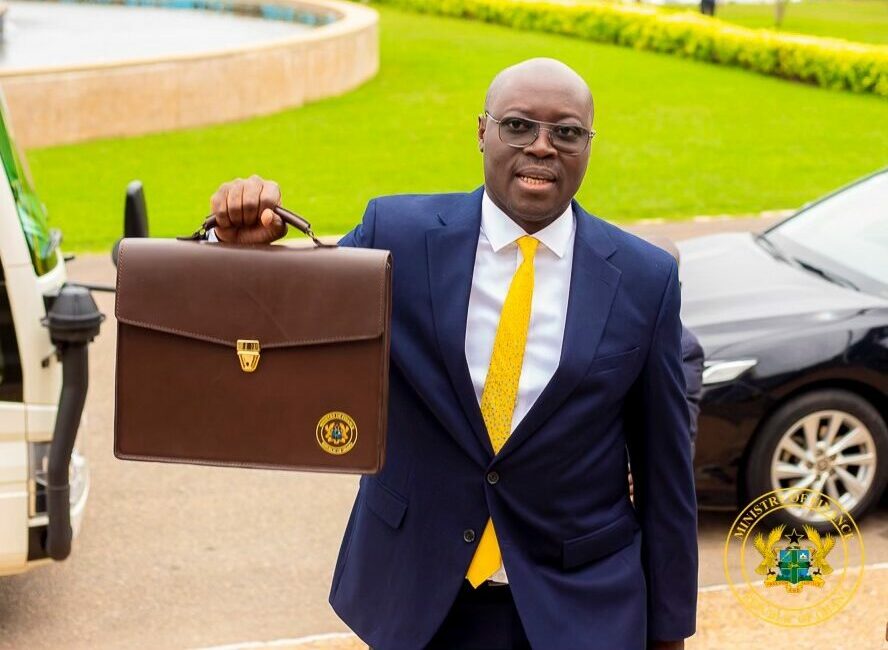
Finance Minister Dr. Cassiel Ato Forson, while presenting the supplementary budget in Accra, announced a major policy shift.
Organised labour welcomed aspects of the budget but pressed for direct compensation for workers.
President of NAGRAT, Angel Carbonu, believes the government must back its economic claims with improved wages.
“President himself made an appeal to Labour and said let us start from this note and see how we can improve the economy by the grace of God we are seeing some improvement so can labour also be compensated in the next negotiations which is coming up very soon?” he asked.
He added that, “government should compensate us for giving him a breathing space for the economy to be on its sound footing.”
He further urged the Finance Ministry to reduce what he called wasteful expenditure.
“All these years we have been pursuing payroll audit to control expenditure, have you heard people being arrested? There are a lot of people since the inception of multiparty democracy. A lot of people have been brought on government payroll, which is burdening government. For example, do you know that the government of Ghana since 2006 has taken upon itself the payment of salaries and emolument to traditional rulers which is absolutely wrong?” he quizzed.
General Secretary of the Ghana National Association of Teachers (GNAT), Thomas Tanko Musah, praised the initiative but warned that strict enforcement is needed.
“In every country the best way to develop is to use the equity principle, equity says that give to each person according to his or her needs. Are we saying that all those going to the university cannot pay their fees? So we need to find a way out of helping those who do not have and be careful with free, free things,” he suggested.
He also urged the Finance Ministry to keep a close eye on spending in order to preserve the country’s macroeconomic gains.
“I am even surprised that people are worried that the dollar is going down. These are enemies of progress. You see if you are here praying that the dollar should go to thirty, forty you are an enemy of progress. How can you be living in a country and be praying that your cedi should be useless and the dollar should be doing well it doesn’t make sense,” he said.
He suggested that, “let us put policies in place such that we can make it difficult for people to hold on to dollars and I am happy with the Goldbod, but further measures are needed to take care of the Abotsi.
“Where do they get the money from, how can somebody go and sit down there and if you want 1,000 dollars the person can give you, if you want 10,000 dollars the person can give you where do they get the money from?” Mr Musah wanted.
Meanwhile, the Construction and Building Materials Workers Union (CBMU) also shared their concerns. General Secretary Richard Asamoah pushed for an increase in funding for the Big Push infrastructure project.
“This was what we were expecting and this has come in. We can say that it is in the right direction, the 13.8 billion cedis coming for the construction sector,” Mr Asamoah said.
He also called on government to settle outstanding payments to contractors, warning that delays could stall critical infrastructure.
“I was also glad he mentioned payment to contractors within two weeks. If the arrears are to be paid to the contractors, I will say that contractors should be paid. We were assured by the President that when the big push comes through contractors will be paid and also jobs done are going to be paid within two weeks this will ensure sanity in the system,” he noted.