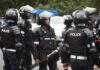

Online ride-hailing drivers in the Ashanti Region have issued a warning to service providers and authorities, threatening to withdraw their services if urgent action is not taken to address increasing security concerns and the burden of high commission paid to app owners.
The growing discontent stems from a recent spate of attacks targeted at drivers by individuals posing as passengers.
Speaking to 3news, the Deputy Regional Secretary of the drivers, Seth Oppong recounted harrowing experiences of being robbed and assaulted.
“Just two months ago, a colleague driver was attacked, robbed of his mobile phones and his car snatched by criminals posing as passengers when he picked them at Barekese. As we speak, the car has still not been retrieved. Another colleague driver was also murdered months ago around Kuntenase. There are several instances, and the situation is getting scarier,” Oppong indicated on October 17.
The drivers argue that the current safety features on the apps are insufficient. They are calling for more robust identity verification processes for riders and the implementation of an in-app emergency alert system directly linked to the police.
“As drivers, when we are signing up on the system, we use our Ghana card for easy identification. So, whenever someone requests a ride, he or she sees our pictures, but we don’t see whoever we are picking up and this is a big threat to us. All we are asking for is to ensure passengers use a valid identity like Ghana Card, to request the ride for easy tracking,” Oppong stressed.
Compounding the security fears is the long-standing grievance of what drivers describe as high commissions taken by the ride-hailing companies.
The commission, which has been increased from the initial 10% to high as 28% per trip, according to the drivers make it increasingly difficult for them to cover their operational costs and earn a better wage.
The drivers have given a one-week ultimatum for their demands to be addressed. Failure to do so, they warn, will result in an indefinite strike, which could severely disruptive transportation within Kumasi and its environs.