
Organised labour has called on President John Dramani Mahama to fast-track the review of the Single Spine Salary Structure and the pension system before the end of the year, insisting that workers can no longer wait for reforms that have been delayed for years.
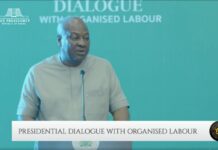
The call follows President Mahama’s recent commitment to review the Single Spine Pay Policy as part of efforts to improve remuneration and the general welfare of workers.
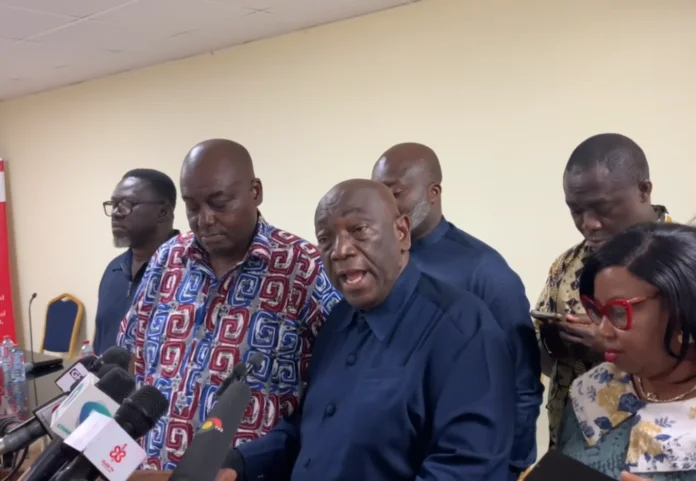
Reacting to the President’s assurance, Secretary-General of the Trades Union Congress (TUC), Joshua Ansah, stressed that the review of the policy is long overdue and requires urgent action.
“It is long overdue. As I have said, this is something we need action on to get the policy reviewed,” he said.
The Vice President of the Pre-Tertiary Teachers Association of Ghana (PRETTAG), Adokwei Awulley, also expressed concern about what he described as prolonged delays and lack of clarity surrounding the review process.
“The various speeches and talk on the Single Spine have been too much. We want action. A committee was set up to look at the policy, but up till now, we don’t know what has happened to the report,” he said. “We need to look at it so there can be a proper restructuring of the Single Spine.”
Similarly, President of the National Association of Graduate Teachers (NAGRAT), Angel Carbonu, called for a clear and time-bound roadmap to complete the review within the year, while pushing for equity across the public service.
“We need a salary structure that will cover all workers, from the President to the lowest-paid worker,” Mr. Carbonu said. “There should be the immediate removal of Article 71 office holders from the structure. There should be no class or distinction in salaries. That is how we are going to ensure equity in the public service.”
Meanwhile, the Executive Secretary of the National Labour Commission has appealed to labour stakeholders to adhere strictly to the provisions of the Labour Act to help reduce industrial unrest this year.
“It is interesting to note that last year, about 67 percent of industrial agitations, including strike notices, came from the education sector,” he said. “This is of great concern, and we have to look at ways to minimise these agitations.”
The labour unions say they expect government to translate its commitments into concrete action to restore confidence among workers and ensure industrial harmony.