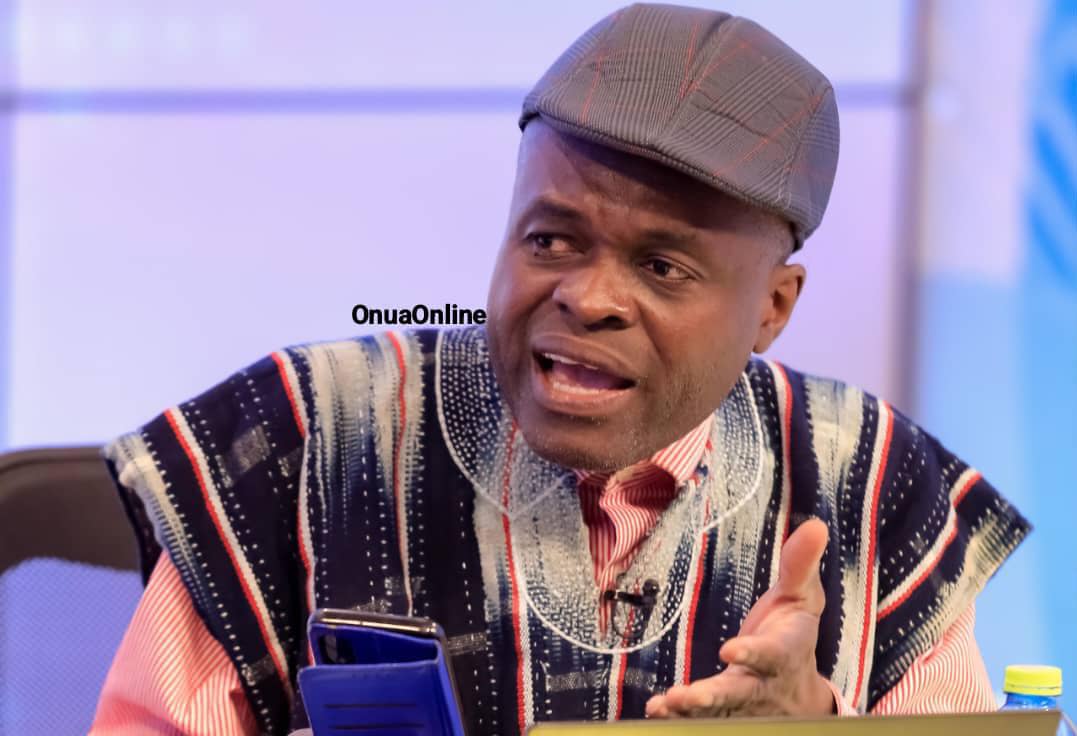

Private legal practitioner Martin Kpebu has described the prosecutorial arrangements between the Attorney-General and the Office of the Special Prosecutor (OSP) as a “political settlement” driven by urgency rather than strict constitutional process.
Speaking on the matter on the KeyPoints on April 18, Kpebu argued that the decisions at the time of forming the OSP were influenced by widespread frustration and the need to act quickly against corruption.
According to him, “corruption was killing us,” and this created pressure for a workable solution, even if it meant bypassing the more rigorous constitutional route such as a referendum.
He explained that amending the Constitution would have taken a long time, noting that “in some jurisdictions, you will need a referendum over a year, you will not get it,” adding that public patience had run out.
Kpebu said this led to a consensus approach where stakeholders agreed to move forward pragmatically.
“We just decided let’s pass the law, let’s go,” he said, stressing that it was not a “tidy” or perfect legal process.
However, he believes that decision has now exposed deeper constitutional issues, particularly around conflict of interest and the delegation of prosecutorial powers.
Citing Article 88 of the Constitution, Kpebu emphasized that the power to prosecute lies with the Attorney-General, who may delegate that authority.
He pointed out that this delegation is already in practice across several institutions, including the police and other state bodies.
But he raised concerns about how such powers are exercised, arguing that beyond statutory laws, additional instruments such as executive instruments or “fiats” are often required to legitimise prosecutions.
“The Special Prosecutor did not seek [that] from the Attorney-General,” he claimed, suggesting a potential constitutional gap.
Kpebu also dismissed suggestions that Parliament could override or bypass the Attorney-General’s authority, insisting that “the power doesn’t belong to Parliament.”
On the issue of continuity in governance, he explained that decisions taken by a previous administration do not necessarily bind a new one.
“In constitutional law, the executive acts of a previous government don’t bind a successive government,” he said, adding that a new administration has the authority to review and even revoke earlier decisions.
To illustrate his point, he referenced how former US President Donald Trump reversed several policies of his predecessor through executive instruments.
Kpebu questioned why similar reversals have not been undertaken in Ghana where necessary, particularly when inconsistencies arise between statutory instruments and constitutional provisions.
“The Constitution is the higher authority. An L.I. cannot undo a constitutional provision,” he stressed.
Despite his critique, Kpebu clarified that he supports the continued existence of the Office of the Special Prosecutor, stating, “I want the office to remain.”
He concluded that while the original arrangement may have served a purpose at the time, it was always understood to be a temporary political compromise.
“We were all happy with it, but we always knew that this day would come,” he said.
By Christabel Success Treve