


The Director-General of the National Road Safety Authority, Abraham Amaliba, has revealed that the coverage of the Traffitech-GH policy will be expanded next year.
According to him. more traffic offences will be included.
“New year, we will introduce insurance, if you don’t have insurance, you will be captured. We will include over speeding by motorbikes and wearing of helmet,” he said on TV3’s The KeyPoints on November 28.
The announcement is the latest in a phased expansion of Ghana’s automated traffic enforcement system, which went live nationwide on November 1, 2026.
What Traffitech-GH does now
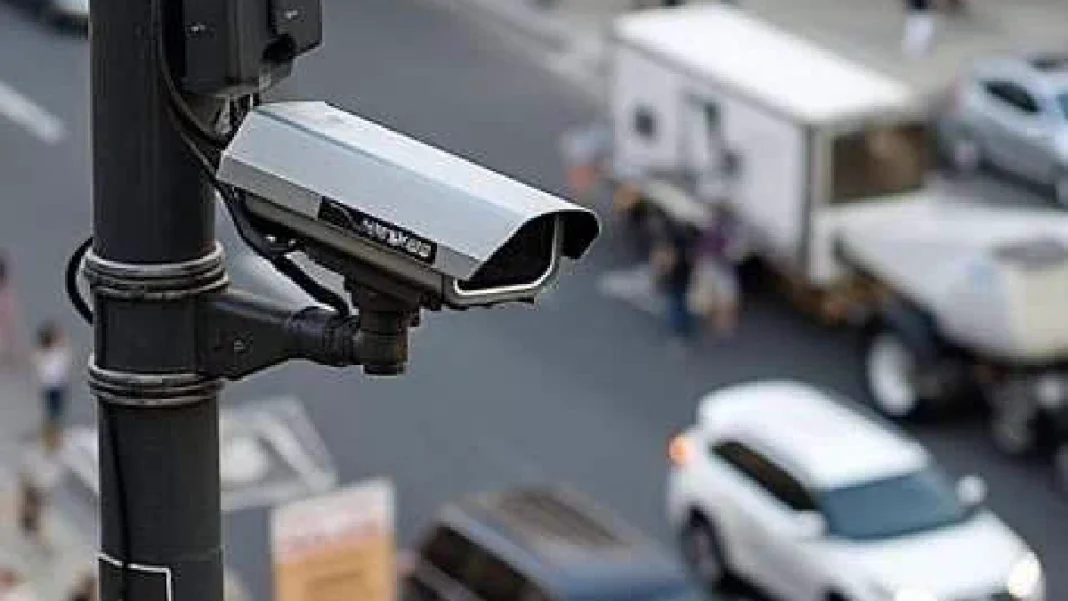
Trafftech-GH is a digital enforcement system developed by the Ghana Police Service. It uses cameras, sensors, mobile devices and laser speed-measurement equipment to detect offences and issue electronic fines without a roadside stop.
When a possible offence is detected, photographic or video evidence is sent to the Motor Traffic and Transport Department (MTTD) back office for review. If confirmed, an Electronic Notice of Violation is sent by SMS to the registered vehicle owner.
The genuine message comes from the sender ID *GPS-MTTD*, carries the heading “Speed Kills… reduce it now”, and includes the ticket reference, registration number, location, date and time, offence, fine and payment deadline.
Motorists have 14 days to pay via Ghana.gov.gh or by dialling _222#, or to contest the notice online. Unpaid fines attract a daily penalty of 1% of the original fine, and the DVLA can refuse to renew licences, register or transfer vehicles, or conduct roadworthiness tests until fines are cleared.
The system is backed by the Road Traffic (Amendment) Act, 2025 (Act 1153) and the Road Traffic Regulations, 2026 (L.I. 2519).
Why it started with speeding only
Although the law provides for 49 offences that can attract penalties, the authorities deliberately started with only one — overspeeding.
Interior Minister Muntaka Mohammed-Mubarak told Parliament on November 25 that the phased approach was to allow gradual implementation.
Mr Amaliba has previously explained the choice in road safety terms. Speeding, he said, accounts for about 90% of crashes recorded in Ghana.
The early numbers show the scale of the problem. In its first week alone, from November 1 to 8, Traffictech-GH recorded 13,699 violations, generating nearly GH¢4 million in fines. The Minister said the first week of November also recorded a decline in road crashes for the first time when compared with corresponding periods.
Before full enforcement began, police issued more than 70,000 caution notices between September 10 and October 31, 2026. The launch had originally been scheduled for October 1 but was postponed to November 1 to allow more public education.
What comes next
Mr Amaliba has consistently described the rollout as gradual. In Tamale earlier this month, he said the next phase would add jumping red lights and non-wearing of helmets, noting: “we have about 49 offenses on TraffiTech but we will roll them out gradually”.
On The KeyPoints, he added three more specific targets for next year:
- Driving without insurance — vehicles without valid insurance will be captured by the system. Under the current design, the system can already identify offences such as driving with an expired licence, expired roadworthiness certificate, driving without insurance and misusing sirens, but enforcement has so far focused on speeding.
- Overspeeding by motorbikes* — a significant shift, because motorcycles accounted for 36.6% of road traffic fatalities in 2024. The NRSA has also cited a 26% national increase in motorcycle fatalities.
- Non-wearing of helmets — both riders and, in practice, passengers will be expected to comply. Mr Amaliba has repeatedly warned commercial motorcycle operators, including those on the newly launched Uber Moto service, that helmet use will be strictly enforced.
Together, the additions point to a clear focus on motorbikes in 2027 — the category of road users now driving much of Ghana’s road death toll.
Fairness concerns remain
The expansion comes amid continuing debate over fairness.
Mr Amaliba has insisted that cameras will only operate on roads where speed limits are clearly posted. Speaking on Joy FM on November 4, he said: “We cannot use 21st-century digital policing to apply to 19th-century broken-down infrastructure”.
He cited Boundary Road towards Mahama Road in Accra, where a 50km/h limit is posted, as an example of where cameras will catch offenders, while roads without signs will be excluded until infrastructure is provided.
The police’s own FAQs take a slightly different position, stating that default limits — 30km/h near schools, markets and places of worship, 50km/h in built-up areas, 90km/h on highways and 100km/h on motorways — apply whether or not a sign is posted, and that a licensed driver must know them.
Commercial transport unions also staged a nationwide stoppage on November 4, accusing government of fining drivers by camera while traders occupied bus stops and walkways.
What it means for motorists
For drivers and riders, the message from the NRSA is straightforward: the grace period is over, and the net is widening.
From next year, it will not only be car drivers caught speeding who receive an SMS. A motorbike rider caught speeding without a helmet, or a car owner whose insurance has lapsed, could also be captured automatically — with the fine going to the registered owner, even if someone else was driving at the time.
Mr Amaliba has stressed that the objective is not revenue, but behaviour change and fewer crashes. Ghana records at least 38 crashes, eight deaths and 45 permanent injuries every day, according to the NRSA, with men accounting for 80% of fatalities.
The Authority says it will continue public education alongside enforcement, but as Mr Amaliba put it on _The KeyPoints*, the expansion is coming — and motorists should prepare for it.