
The Chief Executive Officer of the Chamber of Oil Marketing Companies (COMAC), Dr Riverson Oppong, has said that, in order to build consumer confidence, products and services must meet the expectations of the consumer.
He noted that consumer confidence is earned through what happens every day at the point of service.
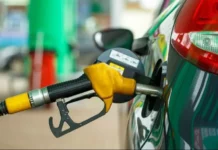
“Fuel dispensers must deliver the quantities customers pay for, prices must be clearly displayed and accurately applied, products must meet the required specifications and quality, and staff must be equipped to serve customers safely and professionally,” he said in an address during the Consumer Week Celebration by the National Petroleum Authority (NPA) in Kasoa on Thursday, November 5 on the Theme: “Safe Downstream, Confident Consumers”.
For his part, the CEO of the National Petroleum Authority (NPA), Godwin Edudzi Tameklo, said that petroleum safety is everyone’s responsibility.
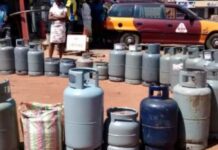
As more Ghanaian households and businesses adopt LPG as a cleaner cooking fuel, he said public understanding of its safe handling must grow alongside its use.
“The transition to cleaner energy must also be a transition to safer energy practices,” he said.
Mr Tameklo said that public education is not simply about speaking to people.
“It is equally about listening to them. During our engagements, consumers have raised several concerns about the products and services they receive. Some have questioned the accuracy of fuel pumps and whether they receive the quantities for which they pay. Others have expressed concerns about the cost of LPG, the quality of petroleum products and the procedures for lodging complaints,” he said.
He further stated that these concerns are important because they reflect the everyday experiences of the people we are mandated to protect.
“We have therefore taken the feedback from our engagements to the relevant quality assurance, inspection and monitoring teams for the necessary attention and follow-up,” he said.
He added “I must acknowledge that some consumers continue to report suspected under-deliveries at filling stations. Thankfully, the approved ten-litre measuring can, popularly known as the Ntease Kuruwa, is available at filling stations to help consumers verify quantities where doubts arise. We encourage consumers to request its use whenever they have reasonable concerns about the quantity of fuel dispensed.
“We are equally mindful that sensitisation alone cannot resolve every challenge in the downstream petroleum industry. Public education must be supported by effective inspections, monitoring, enforcement and accessible complaints procedures. An informed consumer is an important partner in regulation. When consumers know their rights and report suspected wrongdoing, they help the Authority identify problems and act more effectively.”