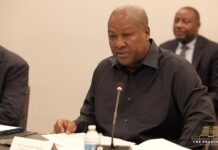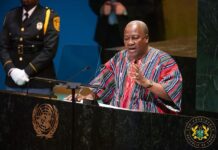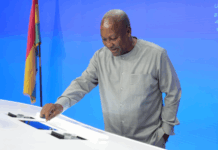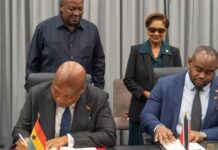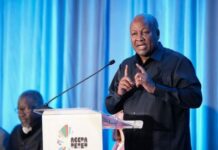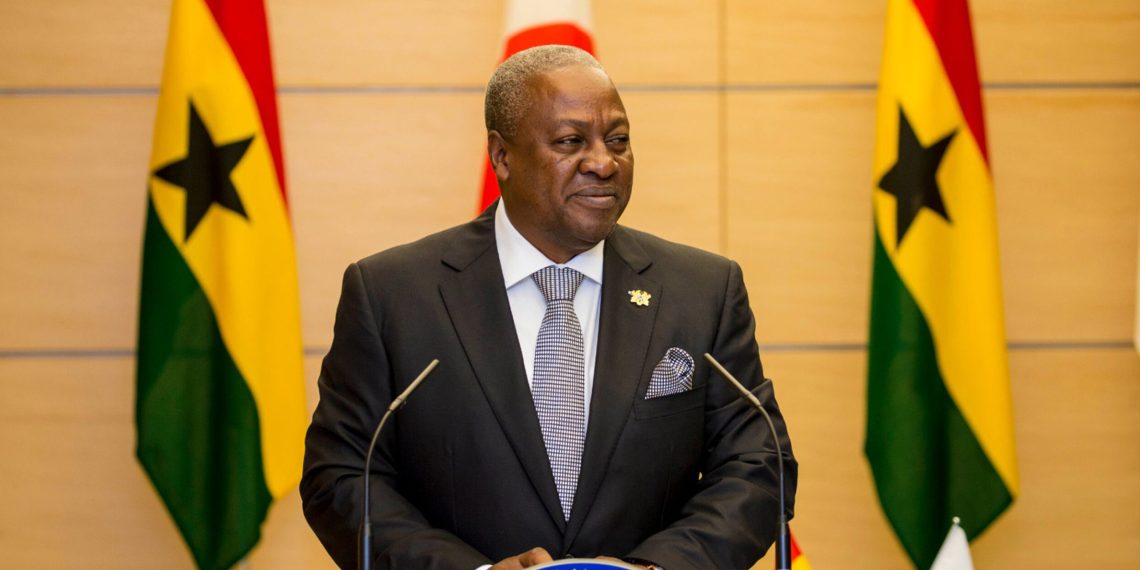

President John Dramani Mahama says he has directed the Attorney-General and Minister of Justice, Dr. Dominic Akuritinga Ayine, to draft a new bill to strengthen the protection of state assets, following Cabinet’s approval of the State Assets Protection Bill.
According to him, the proposed legislation would establish clear guidelines for the disposal of any state asset, including lands, buildings, factories and industries.
“It shows the guidelines under which any state asset can be disposed of, including lands, buildings, state assets, factories, industries, so that no government just capriciously disposes of state assets,” President Mahama said during the Ghana Civil Society Forum 2026, on Thursday, June 25.
He further revealed that Cabinet has approved the National Ethics and Anti-Corruption Plan 2026–2030 (NEACAP), a policy framework designed to guide efforts to strengthen the fight against corruption over the next five years.
The approval of the anti-corruption plan, the President indicated, demonstrates his administration’s commitment to deepening transparency and building public trust.
The NEACAP 2026–2030 has been under development through extensive stakeholder consultations across the country. It aims to address shortcomings identified in the previous strategy, which ran from 2015 to 2024.
The announcement builds on earlier moves by the administration to tighten oversight of state lands and property. In February 2026, President Mahama disclosed plans to introduce legislation requiring parliamentary approval before any public property could be sold.
The proposed law would ensure that any sale, transfer or privatisation of state-owned lands, factories and other assets must secure explicit parliamentary approval.
“I have asked the Attorney-General to work on something,” President Mahama said during an engagement with the Ghanaian diaspora community in Lusaka, Zambia, in February.
The President had previously revealed that investigations uncovered instances where prime government lands were acquired for as little as GH¢150,000 and later resold for up to $2 million.
In January 2025, President Mahama directed the Lands Commission to halt the sale, lease and processing of transactions involving state and public lands. The temporary ban was lifted in September 2025, with strict verification and oversight processes put in place.
‘You can’t do this in Paul Kagame’s Rwanda’ – Gyampo on alleged State capture