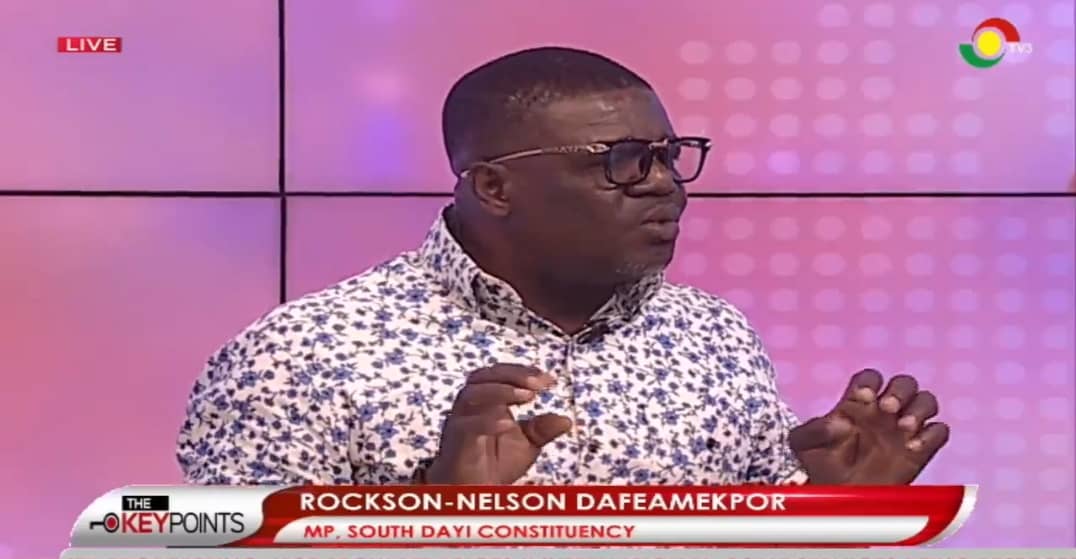

The Majority Chief Whip, Rockson-Nelson Dafeamekpor, has strongly defended government’s proposal to reform Ghana’s legal education system, insisting that the planned changes are aimed at improving quality while expanding access in line with constitutional requirements.
A new bill to decentralise legal education in the country is in the offing. The bill, once passed, would move professional legal education and training from the Ghana School of Law to accredited universities, taking away the monopoly.
Speaking on the matter on TV3’s Ghana Tonight, Tuesday, February 3, Mr. Dafeamekpor said the current legal education regime constrains access to training, despite Article 25(1)(e) of the 1992 Constitution guaranteeing equal access to educational facilities offered by the state.
“The essence of this reform is to actually enhance the quality but in doing so increase access because in consonance with Article 25 (1) (e), we have the fundamental rights to have equal access to educational facilities that the nation has to offer. But the current regime constrains that.
“There have been some problems with the existing regime,” he stated, stressing that the right to education must not be undermined by structural barriers within the existing system.
The Majority Chief Whip further raised concerns about alleged irregularities in admissions into the Ghana School of Law under the current system. He referenced a 2019 decision by the General Legal Council (GLC) to set up an ad hoc committee to investigate complaints surrounding the admissions process.
According to Mr. Dafeamekpor, the committee reportedly identified at least 11 students who gained admission without writing the required entrance examinations or attending interviews. He questioned the lack of transparency surrounding the findings and outcomes of the investigation.
“For instance, some time in 2019, the General Legal Council itself saw it necessary to institute an ad hoc committee to look into some complains of irregularities concerning the admissions that were being done.
“They established as 11 students or more who didn’t write the entrance exams at all nor attended interview and yet got admitted. I have been asking what has become the fate of those students till today, nobody will answer me, he said, adding that repeated requests for the committee’s report had gone unanswered.
He alleged that the report has not been made public because its contents were “damning,” and underscored the need for reforms to restore credibility, fairness, and public confidence in legal education.
“I have been asking for the copy of the report that the Ad hoc committee instituted by the General Legal Council itself, they won’t disclose it because the content of the report were damning,” he stated.
Mr. Dafeamekpor noted that he has been at the forefront of advocacy for changes to the legal education framework and welcomed the renewed momentum toward reform.
While supporting expanded access to legal education, he was emphatic that standards would not be compromised.
“Quality will not be sacrificed,” he assured, maintaining that the proposed reforms seek to balance merit, fairness for admissions into the Law School.