
Ghana’s State-Owned Enterprise (SOE) sector recorded a significant financial turnaround in 2025, with total revenue across the SOE sector increasing by 28.12% to GH¢176.43 billion, up from GH¢137.64 billion in 2024.
This was contained in the State Interests and Governance Authority (SIGA) 2025 State Ownership Report.
According to the report, SOEs broke a four-year cycle of consolidated net losses, posting a GH¢19.80 billion net profit after tax, compared with a GH¢2.25 billion net loss recorded in 2024.
The growth in the sector was driven largely by the agricultural, manufacturing and infrastructure subsectors, which recorded revenue increases of 203.71%, 114.74% and 92.24%, respectively.
The improved revenue performance also translated into stronger operating results, with Profit Before Interest and Tax (PBIT) rising to GH¢25.49 billion in 2025.
This represents a continued recovery from the sector’s GH¢502 million loss in 2023 and a partial rebound to GH¢5.80 billion in 2024.
Ten SOEs, including the Ghana Ports and Harbours Authority, Bui Power Authority, Ghana National Gas Company, BOST Energies Company, Minerals Income Investment Fund and TDC Company Ltd, maintained profitability throughout the five-year period under review.
The report also highlighted the impact of the stronger Ghana cedi on the financial performance of state-owned enterprises.
SOEs recorded net foreign exchange earnings of GH¢11.72 billion in 2025, a significant reversal from the GH¢12.01 billion foreign exchange loss recorded in 2024.
Finance costs also declined by 42.49% during the period.
Despite the improved profitability, however, the overall balance sheet of the SOE sector contracted modestly.
The report says total assets fell by 5.86% to GH¢407.84 billion, with the decline largely attributed to the Electricity Company of Ghana (ECG), Volta River Authority and COCOBOD.
Total liabilities also declined by 4.31% to GH¢281.99 billion, with ECG alone accounting for GH¢82.31 billion of the liabilities.
The report, however, cautioned that significant risks remain concentrated within some state-owned enterprises.
Five SOEs consisting ECG, Ghana Cylinder Manufacturing Company Ltd, GNPA Ltd, Graphic Communications Group Company and Ghana Digital Centre recorded losses in every year from 2021 to 2025.
Six entities, including AirtelTigo Ghana Ltd, Gihoc Distilleries and Tema Oil Refinery also maintained negative equity throughout the five-year period.
The report further noted a decline in dividend payments to government despite the overall improvement in profitability.
Only Ghana Reinsurance Company Ltd and TDC Company Ltd paid dividends to government in 2025, with combined payments amounting to GH¢16 million, representing a 29.36% decline from the previous year.
The figures indicate a marked improvement in the overall financial performance of Ghana’s SOE sector, while highlighting the continued financial vulnerabilities of several individual state-owned enterprises.
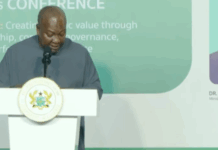
Director-General of SIGA, Prof. Michael Kpessa-Whyte said the report is “significant because it documents the performance of Specified Entities for the first year of President Mahama’s second administration.”
According to him the report gives a full picture of how these Specified Entities are contributing to the broader economic reset agenda.
He said the report will “help drive meaningful dialogue around the future of our State-Owned Enterprises, Joint Venture Companies and Other State Entities, ensuring they fulfil their potential as catalysts for economic growth and development.”
“The gains of 2025 must not become a temporary rebound,” the report concludes.
“They must become the foundation for a more efficient, competitive, inclusive and sustainable State-owned sector that creates value for the Ghanaian taxpayer and contributes meaningfully to national development.”