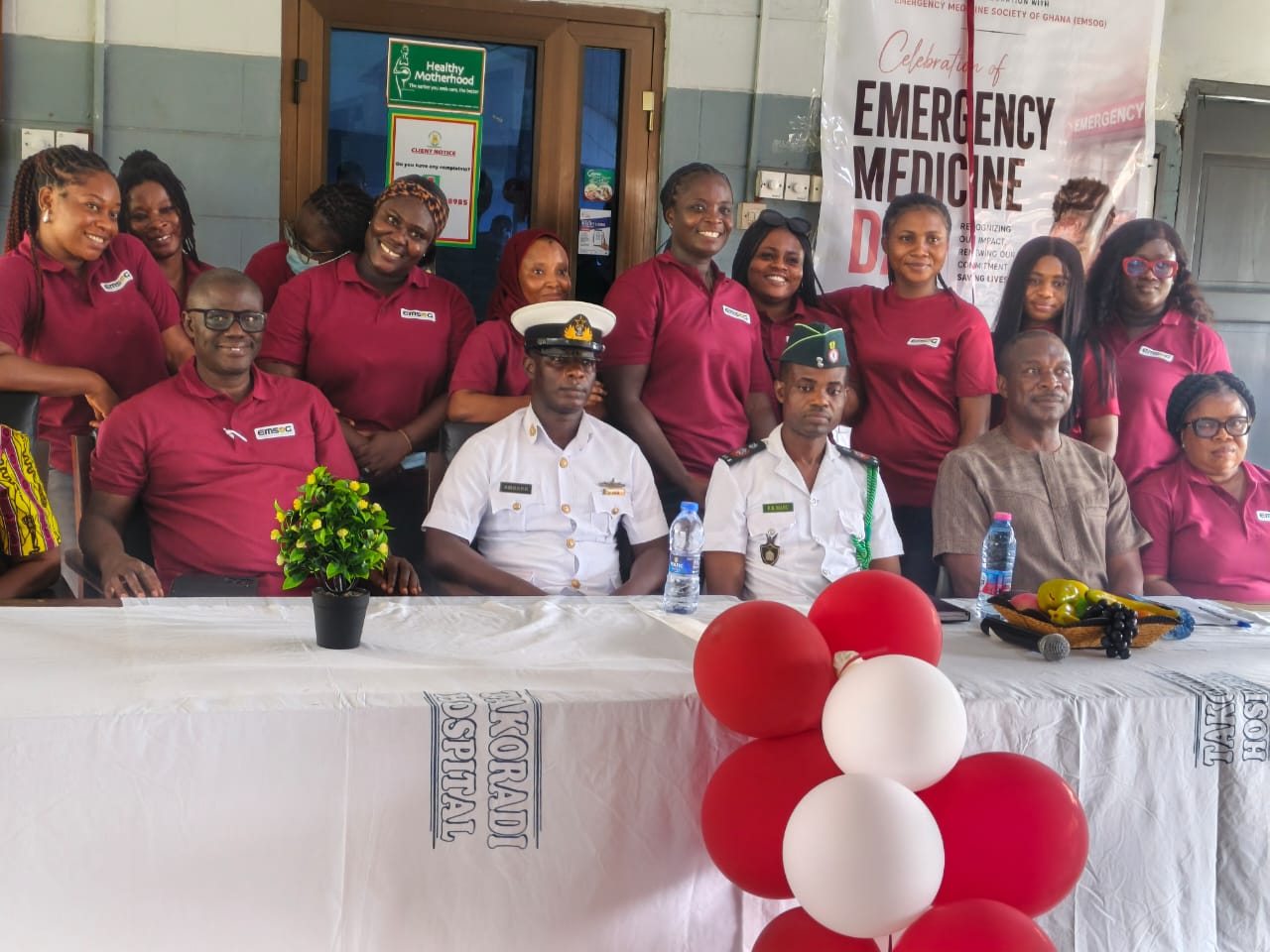

Health professionals at the Takoradi Emergency Unit have made a passionate appeal to the public to stop acts of violence, threats, and verbal abuse against emergency healthcare workers.
They have warned that such actions are negatively affecting quality healthcare delivery.
The appeal was made during activities marking World Emergency Medicine Week, a celebration aimed at highlighting the critical role emergency care professionals play in saving lives and sustaining hope.
Speaking during the event, Emergency Nurse Specialist Matilda Naana Eshun expressed deep concern over the growing hostility directed at emergency health workers by some patients’ relatives and sections of the public.
According to her, emergency care professionals are specially trained to assess and prioritize critically ill patients, yet misunderstandings about how emergency systems operate often create tension between health workers and families.
“We are trained to know what emergency situations require immediate attention, but sometimes people become aggressive when they feel their relatives are not being attended to quickly enough,” she explained.
She noted that verbal attacks, intimidation, and even physical threats create fear and emotional stress among healthcare workers, ultimately affecting patient care.
“Sometimes relations think that once they arrive at the emergency ward, everything must stop for their patient. But professionally, we have to assess and prioritize cases based on severity,” she said.
Matilda Naana Eshun admitted that communication gaps between health workers and patients’ relatives can sometimes fuel anxiety and frustration. However, she stressed that no misunderstanding should lead to abuse or assault of health personnel.
“We understand their fears because they are worried about their loved ones, but we are also doing our best to save lives. We appeal to the public to allow us to work professionally and to speak to us calmly if they have concerns,” she added.
She further called on individuals who use radio and television platforms to insult health workers to desist from such actions and instead support emergency professionals who work tirelessly under difficult conditions.
The Sekondi-Takoradi Metropolitan Director of the Ghana Health Service, Dr. Pious Seth Mensah, also used the occasion to advocate for safer working environments for emergency teams.
“The theme is ‘Safe Place for Emergency Teams, Stop Violence.’ We have realized over time that when people bring patients to the hospital, they can become violent because their expectation of emergency care differs from ours as professionals,” he explained.
Dr. Mensah acknowledged that while some healthcare workers may occasionally fail in communication or attitude, it still does not justify verbal or physical abuse.
“By and large, that does not call for violence. We are there in the best interest of patients, and we render the care needed professionally,” he stated.
Touching on the often-criticized “no bed syndrome,” Dr. Mensah explained that the phrase is sometimes used when hospitals lack the required logistics, specialists, or capacity to handle certain cases.
“It is not always about beds. Sometimes we simply do not have the resources or specialists needed to manage a case, so referrals become necessary,” he clarified.
As part of Emergency Medicine week celebrations, health professionals renewed calls for greater investment in emergency care infrastructure, more training opportunities, and stronger public support for frontline workers.
They emphasized that emergency care remains the frontline of medicine the thin line between life and death and urged society to protect the doctors, nurses, paramedics, and ambulance personnel who dedicate their lives to saving others.
“Every life is precious, and every second counts,” the health workers stressed.
Ebola outbreak in DR Congo declared global health emergency by WHO
By Portia Cudjoe