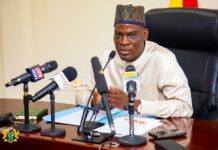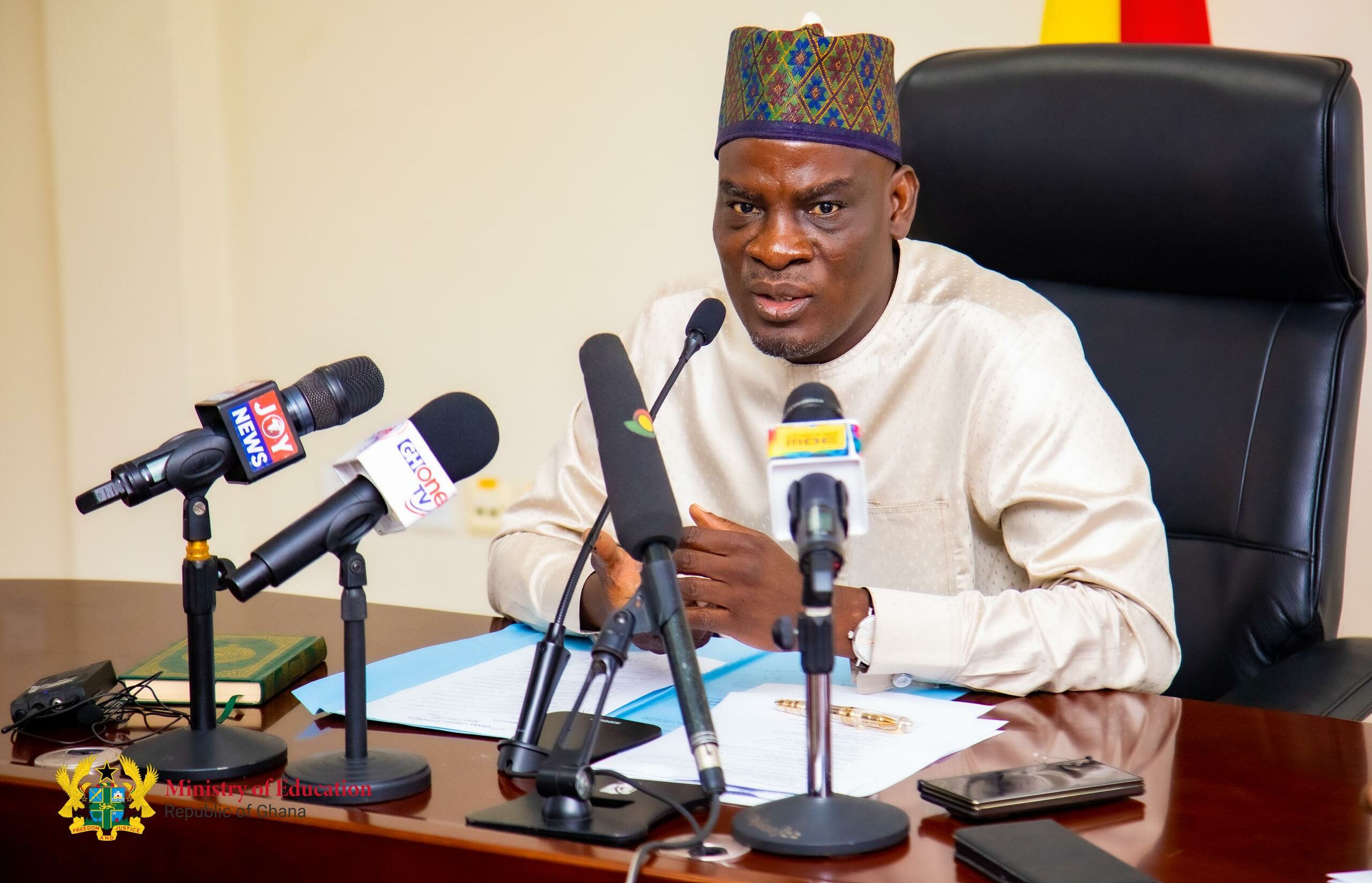

The Ministry of Education has dismissed claims suggesting that the study of English has been cancelled in schools, emphasizing that English remains a core subject in Ghana’s education system.
In a statement issued by the Ministry on October 29, officials reaffirmed that the ongoing discussions around the use of mother tongue alongside English are not part of a new policy, but rather a reinforcement of a long-standing educational principle.
“The policy on the use of children’s home languages with additional languages such as English is not new,” the Ministry said. “It has existed since independence, though its implementation has not always been effective.”
The Ministry explained that the renewed commitment seeks to strengthen foundational learning by ensuring that children begin their education in a language they understand, while gradually developing proficiency in English and other international languages.
“Our education system must equip learners with the foundational skills they need to navigate an increasingly complex and uncertain world,” the statement continued. “All learners should develop the skills required to thrive, pursue further studies, and transition responsibly into adulthood.”
Citing international research, the Ministry pointed out that children who are taught in their home or playground languages tend to perform better across all subjects.
“There is strong global evidence that teaching children in a language they understand, alongside English, enhances their performance in all subjects,” the Ministry noted. “Conversely, teaching in a language that learners do not understand creates major barriers to literacy and comprehension.”
To this end, the Ministry is revisiting the language policy from Kindergarten to Basic Year 3, drawing lessons from successful local initiatives such as the Complementary Basic Education (CBE) programme, which effectively incorporates community participation and local languages in early learning.
“Through consultation, our goal is to ensure that by the end of Basic Year 3, Ghanaian children are well-grounded in their home or playground language,” the Ministry added. “This will serve as a solid foundation for learning English and other languages as they progress.”
The statement also highlighted global examples—such as China, Finland, Japan, and Malaysia—where strong home language proficiency supports the acquisition of other languages and fosters national identity and cultural appreciation.
“Proficiency in one’s first language is key to mastering others,” the Ministry said. “It also helps young learners develop a sense of identity and respect for cultural values.”
Reaffirming its commitment to inclusive education, the Ministry underscored that every learner has the right to quality education that meets both local and global standards.
“The Ministry of Education is keen to ensure that no learner is left behind. We respect their right to quality education,” the statement concluded. “Therefore, the Ministry has not, and will not, cancel the study of English or any other international language.”