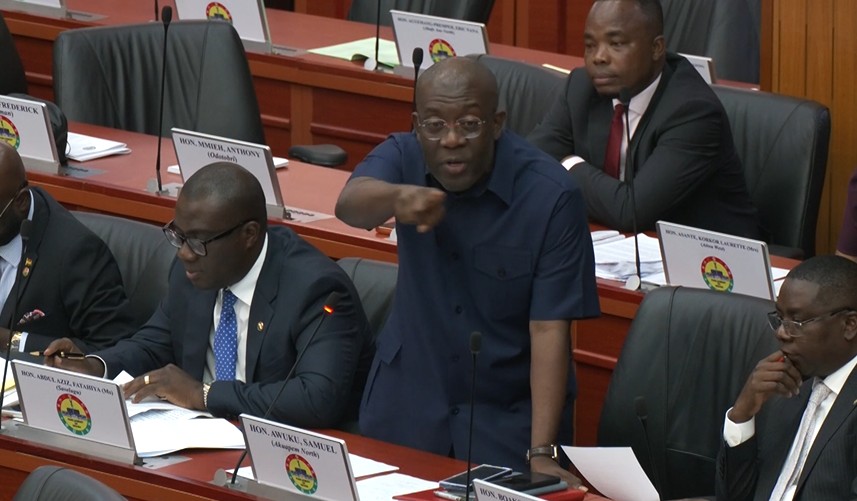

Member of Parliament for Ofoase Ayirebi, Kojo Oppong Nkrumah, has said that the Cocoa Board Bill, which has been passed by Parliament, will create difficulties for cocoa farmers.
He says it is the view of the Minority that this bill, in its current form, will worsen the plight of Ghana’s cocoa farmers in the years to come, as it removes the biggest incentive for cultivating this vital cash crop and undermines its contribution to rural development.
“Last night, the NDC Majority sought to rush through a very important Cocoa Bill under a certificate of urgency. The Minority urged that we take the time to engage cocoa farmers and other stakeholders before proceeding.
“Once again, our views were disregarded. It is our view that this bill, in its current form, will worsen the plight of Ghana’s cocoa farmers in the years to come, as it removes the biggest incentive for cultivating this vital cash crop and undermines its contribution to rural development,” he wrote on X after his submission on the Bill.
Parliament passed the Ghana Cocoa Board Bill, 2026, on Thursday, July 30.
The passage allows for major reforms in Ghana’s cocoa sector, including a guarantee that cocoa farmers will receive not less than 70 per cent of the Free on Board (FOB) export price by the Ghana Cocoa Board (COCOBOD).
Presenting the objectives of the Bill on the floor of Parliament on Thursday, July 30, Deputy Finance Minister Thomas Nyarko Ampem said the legislation sought to establish the Ghana Cocoa Board as the statutory body responsible for regulating, overseeing and monitoring activities across the cocoa value chain.
He explained that the Bill also mandates COCOBOD to support cocoa cultivation, undertake the buying, selling and export of cocoa, and promote value addition within the sector.
According to him, the legislation provides a clear legal framework for the Producer Price Review Committee and its associated technical structures, strengthening the process for determining producer prices.
“This bill is coming out with a new funding model, which will let COCOBOD source funding locally to purchase our cocoa beans from our hardworking farmers. This bill is bringing out new arrangements where the beans will be available for our local processing companies. 70% of the FOB price of cocoa will go to the farmers. The bill is to protect our cocoa farms and environment,” he said.
The Bill also addresses longstanding compliance and enforcement challenges within the cocoa sector by providing statutory backing for regulatory functions that have largely been implemented through administrative guidelines.
These include regulations governing disinfestation procedures, quality inspections, service charges, cocoa take-over processes and certification requirements, which he said will now have stronger legal enforceability.
The Bill noted that the legislation also resolves governance and oversight inconsistencies that have seen COCOBOD move between different supervising ministries over the years.
The Bill formally places COCOBOD under the supervision of the Ministry of Finance, giving legal effect to the government’s March 2025 policy directive transferring oversight from the Ministry of Food and Agriculture.
The Bill further seeks to create an enabling environment for public-private partnerships and increased local value addition by encouraging collaboration with domestic and international partners, including initiatives involving the European Union, the World Cocoa Foundation and the Côte d’Ivoire-Ghana Cocoa Initiative.
It also introduces regulatory flexibility to support small-scale chocolatiers and cocoa by-products manufacturers, addressing operational barriers that have constrained domestic processing and innovation.