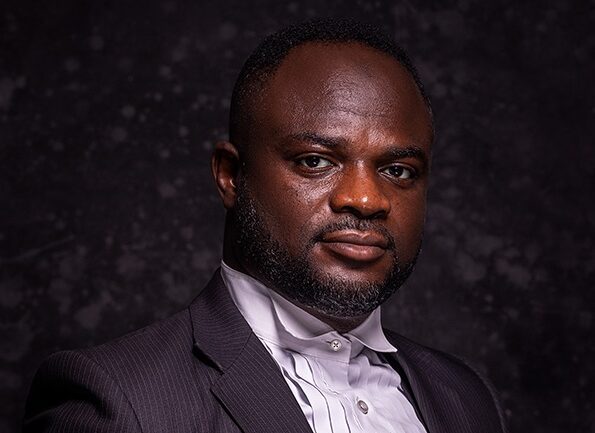

A lecturer at the Law Faculty of the University of Professional Studies, Accra (UPSA), Justice Abdulai, has said the High Court should have waited on its ruling on the prosecutorial powers of the Office of the Special Prosecutor (OSP).
He says the court should have exercised restraint, allowing the Supreme Court to pass its judgement on the matter since the same issue is before it for adjudication.
Speaking on Ghana Tonight on TV3 on Monday, April 20, 2026, the legal practitioner said the Supreme Court’s ruling, if it had come first, would have influenced the High Court’s decision, making it the proper sequence for the matter.
According to him, the High Court’s verdict has preempted the judgement pending at the apex court.
“The [High] Court ought to have reserved this matter to the Supreme Court for interpretation because the Supreme Court is already seized with jurisdiction over those issues which is pending and awaiting determination so this preempt whatever outcome the Supreme Court would bring up,” he stated.
He questioned the waiting period of the matter before the Supreme Court, at the time where the case has been preempted.
“Now that you’ve brought this, where lies the waiting period for instance, assuming we are to wait for the Supreme Court on this matter. If the court had waited for the decision the Supreme Court is already on its way of making, it would then have influenced this court’s decision on where to go and that would have been a wonderful approach to address this matter,” he explained.
Meanwhile, the Deputy Attorney-General and Minister of Justice, Dr. Justice Edem Srem-Sai, has explained why the High Court went ahead to deliver its ruling on the matter, despite a similar matter pending before the Supreme Court.
According to Dr. Srem-Sai, the trial judge initially exercised caution and paused proceedings to await guidance from the Supreme Court on related legal questions.
“The judge initially stayed the case for the Supreme Court to decide, which was a reasonable step,” he explained.
However, he says the situation changed due to developments in the trial court where the accused person was being prosecuted by the OSP.
He explained that the same applicant had sought to halt proceedings in that court pending the Supreme Court’s decision, but the OSP opposed the request and continued with the prosecution.
This, he noted, prompted the applicant to return to the High Court to request that it also proceed with the matter rather than wait.
The Deputy A-G explained that the argument was essentially about fairness, saying the High Court proceeded with the trial since the prosecution would not wait at the trial court.
Dr. Srem-Sai indicated that while the Attorney-General’s office was not party to the case and was not involved in any, the orders of the High Court were directed at the office after the court found merit in the argument of the applicant and decided to move forward with the case.
“In the circumstances, the judge decided that it was fair to proceed and give a ruling,” he said.
He further explained that while it is often prudent for lower courts to await the Supreme Court on matters of constitutional interpretation, they are not strictly bound to do so in every case.
The High Court, he noted, retained the discretion to continue with proceedings, particularly where delays could prejudice one of the parties.
The Deputy Attorney-General dismissed suggestions that the judge acted improperly, maintaining that from the records of proceedings, the decision followed procedural logic based on how the case evolved.
He said this was not a situation where the court ignored the Supreme Court. It initially stayed proceedings but later proceeded due to the conduct of the parties and the need for fairness.