
In the remote community of Abease, located in Ghana’s Bono East Region, a profound lack of opportunities has created a generational cycle of poverty.
For many residents, survival is not just a struggle it is a trap that continues to push them to the brink of desperation.
This harsh reality is reflected in the lives of people like Akosua Tweaa and Kwadjo, whose personal stories shed light on the systemic failures plaguing the area.
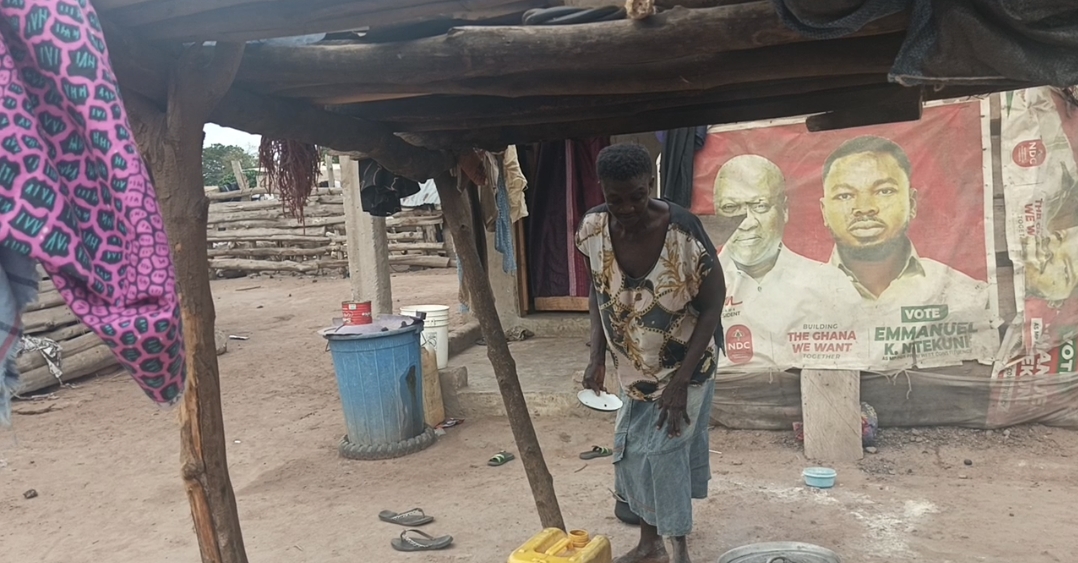
At 70 years old, Akosua Tweaa is raising her grandson in conditions that seem to offer little hope for a better future. She speaks with the weariness of someone who has endured decades of hardship.
“The struggle for survival here is tough,” she said, her voice heavy with resignation.
She fears that the absence of meaningful opportunities has left the youth vulnerable.
“This environment has left the youth with little to no hope, making them receptive to social vices,” she added.
The same sense of despair is echoed by Kwadjo, a farmer in his 60s. Despite dedicating his life to farming and raising ten adult children along with fifteen grandchildren, he feels he has nothing to show for his decades of toil.
His only hope now is migration.
“I want to help my son travel for greener pastures,” he confessed.
Kwadjo’s desire to see his children leave mirrors a broader national trend. According to a 2023 Population and Housing Census (PHC) Thematic Report on Migration, nearly 77 percent of Ghanaians aged 20–49 expressed the intention to leave the country in search of better opportunities abroad.
For communities like Abease, this exodus has left behind a shrinking pool of skilled and able-bodied workers, further weakening the local economy and deepening poverty.
The growing migration wave underscores the lack of hope in rural Ghana. While government and development organizations have pledged to improve rural livelihoods, the residents of Abease remain trapped in a cycle that migration alone cannot solve.
As poverty persists and opportunities dwindle, the dream of escaping through migration remains the only beacon of hope for many families leaving behind communities struggling for survival.